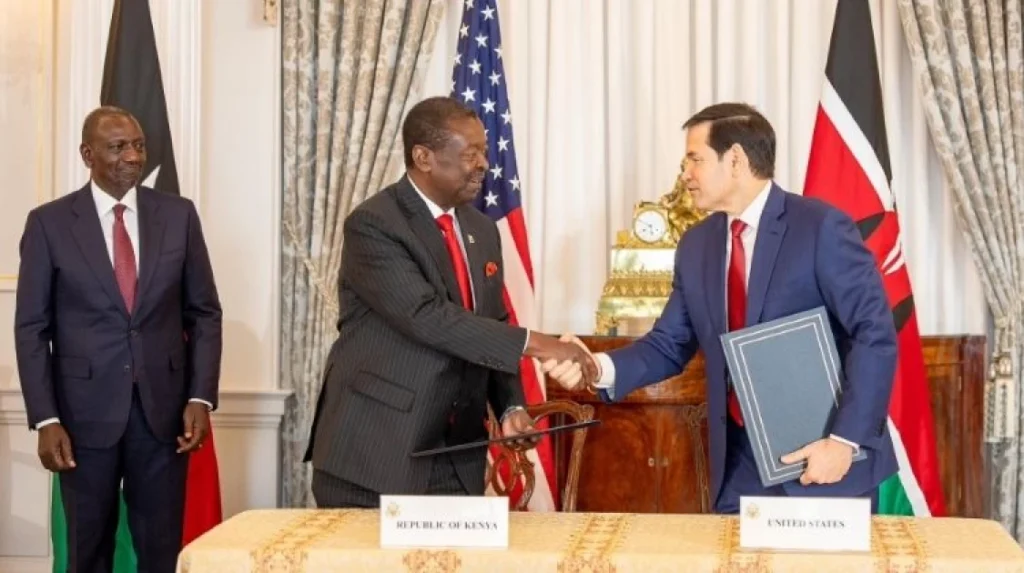
Kenya has concluded a five-year health cooperation agreement worth US$2.5 billion with the United States, becoming the first African nation to secure a new bilateral pact under Washington’s revised global health strategy.
Under the framework, Kenya stands to receive up to US$1.6 billion in American funding to support programmes targeting HIV/AIDS, tuberculosis, malaria, maternal and child health, polio eradication and epidemic preparedness. In parallel, the Kenyan government has committed to gradually increasing its own contribution, pledging US$850 million in domestic health financing over the same period.
The agreement outlines a phased handover of key health inputs, including the procurement of medical commodities and the financing of frontline health workers, from US funding to the national payroll. It also provides for the nationwide rollout of electronic medical records to strengthen disease surveillance and improve the efficiency of public health programmes.
“This cooperation framework marks a clear break from the past and will deliver long-term gains for healthcare across the country,” said Dr Ouma Oluga, Principal Secretary for Medical Services.
The new arrangement also brings private and faith-based health facilities into the fold through redesigned reimbursement systems, signalling a shift towards a more integrated national health ecosystem rather than reliance on public facilities alone.
Also Read: World Bank Says Kenya’s Ageing Telecom Rules Tilt the Field in Favour of Big Players
Brad Smith, Senior Advisor at the US State Department’s Bureau of Global Health Security and Diplomacy, said the new model reflects months of global consultations aimed at ensuring America’s health funding delivers measurable impact while advancing its strategic interests.
Early this year, the Trump administration cancelled 83 percent of USAID programmes and formally moved to dismantle the agency, citing alleged inefficiencies and weak results since the end of the Cold War. The cuts placed clinics around the world at risk of closure, disrupted access to essential medicines and raised fears of setbacks in HIV treatment and broader public health gains.
A Lancet study estimates that USAID interventions have saved more than 90 million lives globally over the past two decades, largely through reduced deaths from HIV/AIDS, malaria and neglected tropical diseases.
Against that backdrop, the new Kenya-US deal signals a recalibration of America’s global health engagement, shifting towards performance-driven, state-to-state partnerships rather than broad, open-ended funding to NGOs.
The agreement was signed in Washington by US Secretary of State Marco Rubio and witnessed by President William Ruto.
