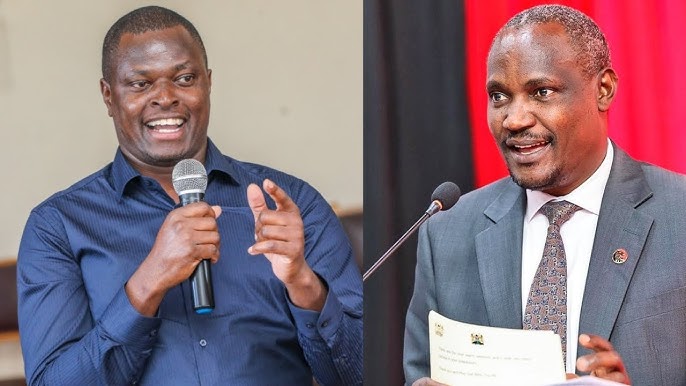
Kiharu Member of Parliament Ndindi Nyoro has challenged the government’s plan to sell its 15% stake in Safaricom, warning that the transaction risks short-changing the public if it proceeds under the current terms.
Nyoro questioned how the National Treasury arrived at a valuation of KSh 34 per share, arguing that the telecommunications firm had been significantly undervalued. He claimed the proposed pricing could wipe out as much as KSh 150 billion in potential value, costing taxpayers billions.
The legislator raised concerns that Safaricom’s market price may have been deliberately suppressed ahead of the sale, noting that market pricing appeared to be the primary benchmark used. He cautioned against disposing of a strategic national asset without exhausting options that could maximise returns for Kenyans.
Nyoro called for a competitive bidding process and suggested that the government consider listing Safaricom on a major international exchange, such as the London Stock Exchange, to attract a broader pool of investors and achieve a stronger valuation. He also questioned the implications of the immobilisation of 16 billion Safaricom shares by a prospective buyer in June 2025, asking whether any trades had taken place during that period.
Responding to the criticism, Treasury Cabinet Secretary John Mbadi dismissed Nyoro’s remarks, describing them as speculative and lacking substance. Speaking to NTV, Mbadi challenged the MP to present a credible valuation model to support his claims, arguing that share valuation is a technical exercise rather than a matter of political rhetoric.
Mbadi insisted that Nyoro had not demonstrated how the shares were undervalued, adding that equity pricing could not be reduced to casual market comparisons.
As the government moves ahead with plans to offload part of its stake, Safaricom has sought to reassure the public over its future ownership and operations. The company stated that the proposed transaction would not affect its daily operations, governance structures, or regulatory obligations, and reaffirmed that it would remain a Kenyan company.
Also Read: Nedbank Targets Majority Stake in NCBA in Major Regional Banking Deal
Safaricom chief executive Peter Ndegwa told legislators that the company played no role in setting the share price, noting that the decision rested entirely with the National Treasury. He added that the partial divestment would not alter Safaricom’s national identity or compliance framework.
Concerns have nonetheless been raised in Parliament over the potential implications of increased foreign ownership, particularly around control of data and the M-Pesa platform. If the transaction proceeds, Vodacom would hold a 55% controlling stake, prompting questions about data security and strategic oversight should the sale be approved.