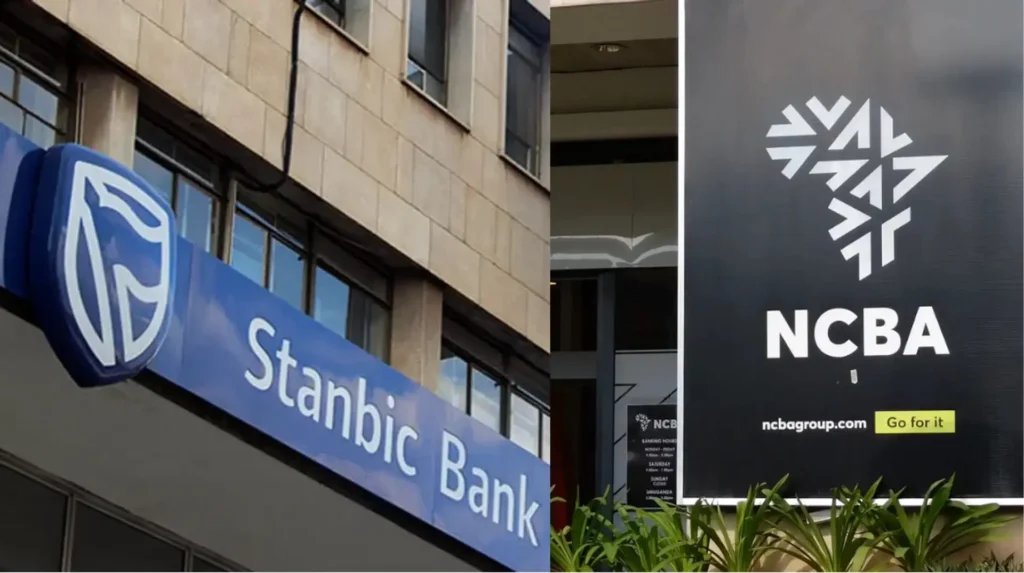
Negotiations between Stanbic Bank and NCBA appear to have collapsed over branding, with insiders indicating that Stanbic’s insistence on absorbing NCBA under its own name ultimately scuppered the deal.
The proposed transaction, backed by Stanbic’s parent company Standard Bank Group, would have created Kenya’s third-largest lender with assets exceeding KSh1.1 trillion (about US$8.5 billion). Under the structure being discussed, Stanbic, currently the country’s eighth-largest bank by assets, was expected to fold NCBA, the fourth-largest, into its operations in a horizontal merger.
NCBA balked at the prospect. According to sources familiar with the talks, the lender was unwilling to surrender its brand identity, while Standard Bank was pushing firmly for a rebrand. One insider summed it up bluntly: NCBA did not want to change its name, Standard Bank did.
Instead, NCBA opted for a majority acquisition by South Africa’s Nedbank, a rival to Standard Bank. That deal, which is subject to regulatory approval, will involve a mix of cash, equity participation, and board representation for Nedbank.
The Nedbank agreement came only months after reports emerged that NCBA and Standard Bank were deep into negotiations, following years of speculation about a possible deal. Standard Bank Group, Africa’s largest lender by assets and the majority owner of Stanbic Holdings Plc, has long signalled its intention to expand its Kenyan footprint, including through acquisitions. Industry observers had linked several senior leadership changes in the region to these ambitions.
Among them was the appointment of former KCB Group CEO Joshua Oigara as Stanbic’s managing director in Kenya, before his promotion to a regional role in late 2025. The move was widely interpreted as part of broader succession planning at Standard Bank ahead of the anticipated retirement of group CEO Sim Tshabalala and CFO Arno Daehnke by 2027.
Also Read: Kenya’s Top Banks Diverge on KESONIA and CBR as Loan Pricing Reform Takes Hold
Explaining NCBA’s decision, Group Managing Director John Gachora said Nedbank offered stronger strategic alignment. He noted that the deal gives NCBA access to a deeper capital base and positions it as the platform for Nedbank’s East African expansion.
Crucially, NCBA executives have emphasised that the Nedbank transaction avoids operational overlap. Nedbank currently has no presence in the markets where NCBA operates, reducing the risk of painful integration. While some policy changes, staff integration, and new product launches are expected, NCBA has been clear that its brand will remain intact.
Under the agreement, Nedbank will appoint at least two directors to the NCBA board, while NCBA shareholders will gain representation on Nedbank’s board. The transaction underscores intensifying competition among African banks, particularly Nigerian and South African lenders seeking entry into Kenya largely through acquisitions rather than greenfield investments. FirstRand Bank, Africa’s largest lender by market value, has also disclosed plans to enter the Kenyan market.
Looking ahead, NCBA says it remains open to further mergers and acquisitions in Kenya and across its operating markets, alongside longer-term ambitions to expand into countries such as the DRC and Ethiopia. For now, the priority is securing regulatory approvals for the Nedbank deal, which management says is expected to deliver shareholder value through improved liquidity and broader risk diversification.