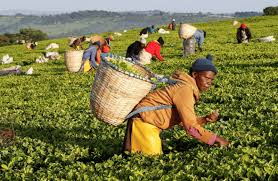
Kenya’s tea industry is increasingly looking to renewable energy and efficiency upgrades as escalating electricity prices and dwindling wood fuel supplies threaten the profitability of one of the country’s key export crops.
The African Development Bank (AfDB), via its Sustainable Energy Fund for Africa, has launched a technical study to explore clean energy solutions for factories under the Kenya Tea Development Agency (KTDA). The goal is to develop a pipeline of investment-ready projects that could lower energy costs and modernise operations across the sector.
Tea processing is highly energy-intensive, with power and fuel making up roughly 25% of black tea production costs. Across 71 factories, annual energy consumption is estimated at around 150 gigawatt-hours of electricity and 900,000 cubic metres of biomass (equivalent to roughly 1,575 gigawatt-hours), leaving the sector heavily dependent on wood fuel to meet thermal demands.
The six-month study aims to create a phased roadmap for energy transition in KTDA-managed factories, potentially forming one of East Africa’s largest agro-industrial decarbonisation projects.
Energy costs for the 2023-2024 financial year reached approximately KSh7.8 billion. Although electricity accounts for just 9% of total energy use, high tariffs make up nearly 60% of costs, squeezing factory margins and reducing earnings for smallholder farmers.
The AfDB-backed project will review energy consumption across KTDA factories and assess renewable and efficiency technologies, including solar PV, solar thermal systems, biomass optimisation, biogas production, waste-heat recovery, and industrial energy storage. Hybrid energy solutions providing both electricity and thermal heat for tea drying will also be evaluated.
Also Read: NTSA Launches Automated Instant Fines System for Traffic Offenders
A multidisciplinary team of energy, financial, and regulatory experts will conduct the study, analysing factory energy use, evaluating technologies, and estimating the financial viability of potential investments. The initiative is focused on preparing investment-ready projects rather than immediate construction, offering feasibility studies with cost-benefit analysis, lifecycle emissions reductions, and implementation timelines.
Thermal energy needs are largely met through wood fuel, but supplies have been tightened by drought, logging restrictions, and limited land for fuel plantations. Factory tree-planting programmes have sometimes fallen short of demand.
Modernising energy use has become a broader policy issue, as factories contend with high operating costs and ageing equipment. A parliamentary inquiry into tea pricing highlighted that many factories operate with outdated machinery and expensive fuel, urging adoption of alternative energy and efficiency improvements to remain competitive.
The inquiry also noted growing disparities between factories, with some hampered by stalled infrastructure projects, including incomplete hydropower schemes that tie up capital without delivering cheaper energy.
The AfDB study will also review Kenya’s regulatory framework for renewable energy and industrial power generation, assessing financial metrics such as capital costs, operating expenses, payback periods, and internal rates of return for prospective technologies.