KCB Group, alongside a relatively unknown investor and two influential businessmen, is poised to earn more than Sh42 billion over a 21-year period from the smart driving licence initiative, with recently introduced instant traffic penalties and licensing fees expected to generate most of the revenue.
The consortium formed by the bank and Pesa Print has committed about Sh42 billion as capital for the public-private partnership (PPP) project. The investors aim to recover the amount within the 21-year concession period. Individuals familiar with the arrangement say the project’s financiers anticipate returns of at least 120 percent over that time.
If realised, this would translate to roughly Sh50.4 billion in gross returns against the initial Sh42 billion investment.
Pesa Print, which launched the initiative in 2017 in collaboration with the National Bank of Kenya, is partly owned by Jabir Abdul Nassir Abdalla Al-Kindy and Faryd Abdulrazak Sheikh. The company’s founder, David Njane, holds a 58.83 percent stake through his investment vehicle Kenya Twelve Ventures.
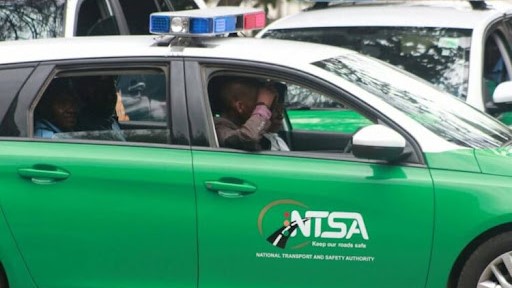
As the project falls under a PPP framework, with the National Transport and Safety Authority (NTSA) acting as the contracting authority, private investors will recover their funds through user charges. These include a Sh3,000 fee for issuing smart driving licences and fines paid instantly by motorists who violate traffic regulations.
According to NTSA, the PPP structure creates a self-financing model in which private partners recoup their initial investment through revenues generated from penalties, licensing fees, and service charges.
Under the new system, penalties will vary depending on the offence. Drivers caught speeding or operating vehicles without a valid inspection certificate could face fines of up to Sh10,000. Failure to stop when instructed by police may attract a Sh5,000 penalty, while not wearing a seatbelt while the vehicle is in motion carries a Sh500 fine.
The project’s investors plan to inject the Sh42 billion within the first two to three years of implementation. Authorities say the initiative is designed to reduce road accidents by tackling speeding and other traffic violations.
Another key objective is to transition the country to second-generation driving licences fitted with biometric and digital security features during the 21-year concession period.
Kenya first introduced chip-enabled driving licences in March 2017 after NTSA signed a Sh2.03 billion agreement with a consortium led by the National Bank of Kenya to supply five million smart card licences. The contract was later transferred to KCB following the sale of NBK to Nigeria’s Access Bank.
More than 1,000 intelligent cameras are scheduled to be deployed across Kenyan roads as part of the project. The system will include 700 fixed cameras placed along major highways and high-risk sections, as well as 300 mobile units targeting accident-prone zones and speeding hotspots.
Meanwhile, a Nairobi motorist has moved to court seeking to halt the automated traffic fines system. Kennedy Maingi Mutwiri filed a constitutional petition at the High Court’s Constitutional and Human Rights Division, arguing that the system penalises motorists without granting them an opportunity to contest the charges in court. His request for an injunction was declined, and the case is scheduled for mention on April 9.
With government finances under strain, authorities have increasingly turned to private investors to fund large-scale public projects, ranging from roads and energy infrastructure to airports.
Under the current plan, the consortium intends to produce five million smart driving licences during the concession period. At a fee of Sh3,000 per licence, the initiative could generate about Sh15 billion in revenue shared between the investors and NTSA.
Treasury data shows that between July 2020 and June 2024 the government collected an average of Sh1.7 billion annually from traffic fines. However, the adoption of instant fines is expected to significantly boost those figures.
Corporate registry records indicate that Faryd and Jabir collectively acquired a 41.17 percent stake in Pesa Print through Simbabanc Investments and Cropharmony Africa, companies registered in August and October 2023, shortly after the Treasury approved the project’s feasibility study in July that year.
The project was originally scheduled to run for three years ending in March 2020 but has since fallen four years behind schedule, according to Auditor-General Nancy Gathungu.
Following the Kenya Kwanza administration’s rise to power in 2022, the government intensified its use of PPP arrangements as a strategy for financing infrastructure and public services.
It was during this period that Faryd and Jabir joined the venture by acquiring a significant stake in Pesa Print. Founder David Njane previously said Faryd was brought on board due to his technical expertise. He noted that Faryd owns Greenbo Africa, a company involved in supplying prefabricated materials for smart terminal construction and manufacturing industrial towers.
Also Read: How Ruto–Sakaja Sh80 Billion Nairobi Additional Funds Will Be Spent, Sakaja Reveals
Njane, who established Pesa Print more than a decade ago, said the company originally secured a competitive tender in 2015 during the previous administration to supply smart licences. In 2021 the government later opted to convert the arrangement into a PPP model to ease fiscal pressure, by which time it owed Pesa Print nearly Sh2 billion in pending payments.
According to Njane, progress on the PPP stalled for years under the previous administration and only began moving again after the Kenya Kwanza government took office, though slowly. He maintained that the political affiliations of other shareholders had no influence on the company’s operations, describing Pesa Print as a wholly Kenyan firm offering local solutions.
“We designed the licences from scratch using Kenyan artists,” he said.