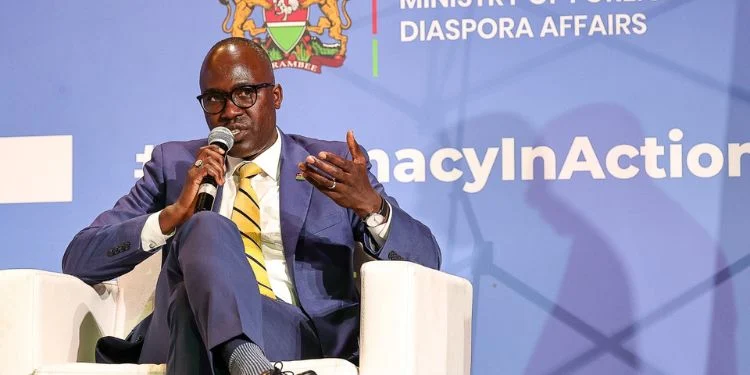
Kenya’s Principal Secretary for Foreign Affairs, Korir Sing’oei, has defended the country’s involvement in facilitating travel documents for Sudanese figures amid growing scrutiny over claims that Kenyan passports were issued to Sudanese generals linked to the ongoing conflict.
Speaking during an interview on 14 May, Sing’oei said Kenya’s actions must be viewed within the wider context of regional peace mediation and humanitarian intervention tied to the war in Sudan.
He noted that while he does not directly oversee Kenya’s passport department, the country remains actively involved in efforts to restore peace in Sudan, describing the neighbouring nation as strategically important to regional stability.
According to the PS, Kenya continues to support mediation initiatives under the Intergovernmental Authority on Development framework following the outbreak of fighting between the Sudanese Armed Forces (SAF) and the Rapid Support Forces (RSF).
Sing’oei explained that the conflict has evolved into a prolonged and highly complicated crisis, requiring sustained diplomatic engagement by regional leaders, including President William Ruto and other East African heads of state seeking a political solution.
He said the war has displaced numerous political leaders, activists and civil society figures, many of whom fled Sudan and sought refuge in neighbouring countries, including Kenya, under humanitarian protection arrangements.
The PS firmly rejected allegations that Kenya distributes passports recklessly or outside legal procedures.
“Passports are not handed out casually,” he said, dismissing suggestions that Kenyan travel documents are issued indiscriminately.
Sing’oei clarified that any form of travel documentation assistance is only considered under exceptional circumstances, particularly where conflict victims have lost access to their identification papers while fleeing violence.
He added that such cases are common in conflict zones globally, where displaced individuals often leave behind or lose critical documents, forcing governments and humanitarian actors to arrange temporary travel facilitation mechanisms.
Also Read: Finance Bill 2026 Targets Card Payment Fees After KRA’s Supreme Court Setback
According to him, any documentation support connected to Kenya’s systems is tightly controlled and intended solely to enable lawful movement for humanitarian, diplomatic or mediation-related purposes.
The PS further noted that Kenya’s peace role in Sudan inevitably involves interaction with various stakeholders affected by the war, some of whom may require temporary travel support during negotiations or relocation efforts.
Sing’oei also pointed to historical international precedents where political figures in exile or conflict situations travelled using documents facilitated by foreign governments under extraordinary conditions.
He maintained that Kenya’s actions should not be interpreted as routine citizenship processing or standard passport issuance, but rather as part of broader diplomatic and humanitarian obligations linked to conflict resolution.
The Foreign Affairs PS reiterated that any travel facilitation measures remain subject to strict security checks, diplomatic considerations and humanitarian necessity.
