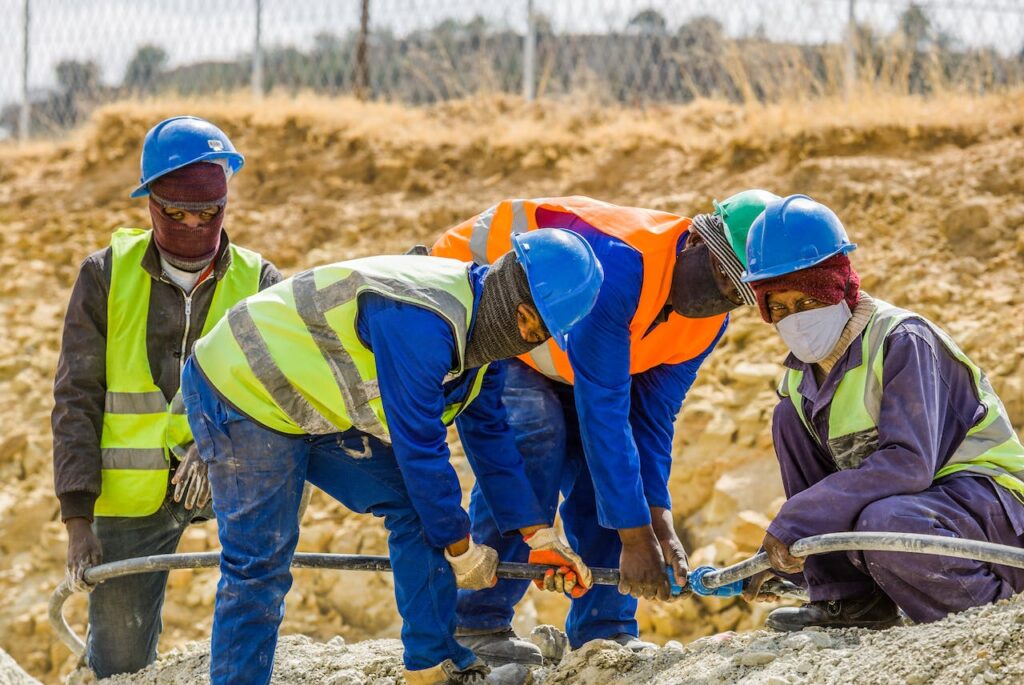
Kenya’s construction industry continues to expand rapidly, but workers are seeing only limited improvements in pay, with salary growth struggling to match the rising cost of living despite the sector’s strong recovery.
According to the Economic Survey 2026, wages in the construction sector increased in 2025, extending the rebound that began after the pandemic and was driven by infrastructure projects, private real estate investments and renewed building activity nationwide.
However, the rise in earnings remained relatively muted compared to the pace at which the industry itself is growing, indicating that contractors and developers are benefiting more from the boom than the workers on site.
The report shows that skilled and semi-skilled employees experienced the strongest wage gains, underscoring the growing value of technical expertise as the industry increasingly adopts mechanised and specialised construction practices.
Monthly earnings for unskilled workers rose marginally by 1.1% to KSh 29,876 in 2025, up from KSh 29,559 the previous year. Semi-skilled labourers posted a 3% increase to KSh 41,163, while skilled workers, including Grade I builders and plant operators, earned KSh 53,629 compared to KSh 53,113 a year earlier.
The latest figures extend a steady upward trend recorded since 2021, when average monthly wages stood at KSh 26,270 for unskilled workers, KSh 35,697 for semi-skilled labourers and KSh 47,437 for skilled employees.
The data points to a construction industry that is becoming increasingly capital-intensive, with firms directing more resources into machinery, equipment and large-scale developments rather than labour costs.
Over the past five years, skilled workers’ wages have risen by more than KSh 6,000 per month, reflecting growing demand for technically trained personnel as investment in roads, housing and industrial projects intensified.
Even so, the pace of wage growth slowed considerably in the past year despite a broader sector rebound.
The Economic Survey 2026 indicates that construction activity grew by 6.8% in 2025 after shrinking by 0.7% the previous year. The recovery was largely supported by lower borrowing costs and renewed private sector confidence, which helped revive previously stalled developments. Cement production climbed to 10.4 million tonnes in 2025 from 8.85 million tonnes the year before.
Also Read: Laikipia Senator Rejects Proposed Ebola Quarantine Facility In Nanyuki Amid Public Concern
The mismatch between booming construction activity and modest wage increases highlights growing pressure in the labour market, where a large supply of workers continues to limit salary growth even as demand for labour rises.
For unskilled workers especially, the latest wage increment offered little relief against persistently high food, transport and housing expenses that have eroded household purchasing power in recent years.
The figures further suggest that Kenya’s construction expansion is increasingly favouring investment in capital and equipment, while earnings growth at the lower end of the workforce remains sluggish.
The Central Bank of Kenya’s interest rate cuts in 2025 also played a major role in reviving the sector by reducing financing costs for developers and improving access to credit for businesses.