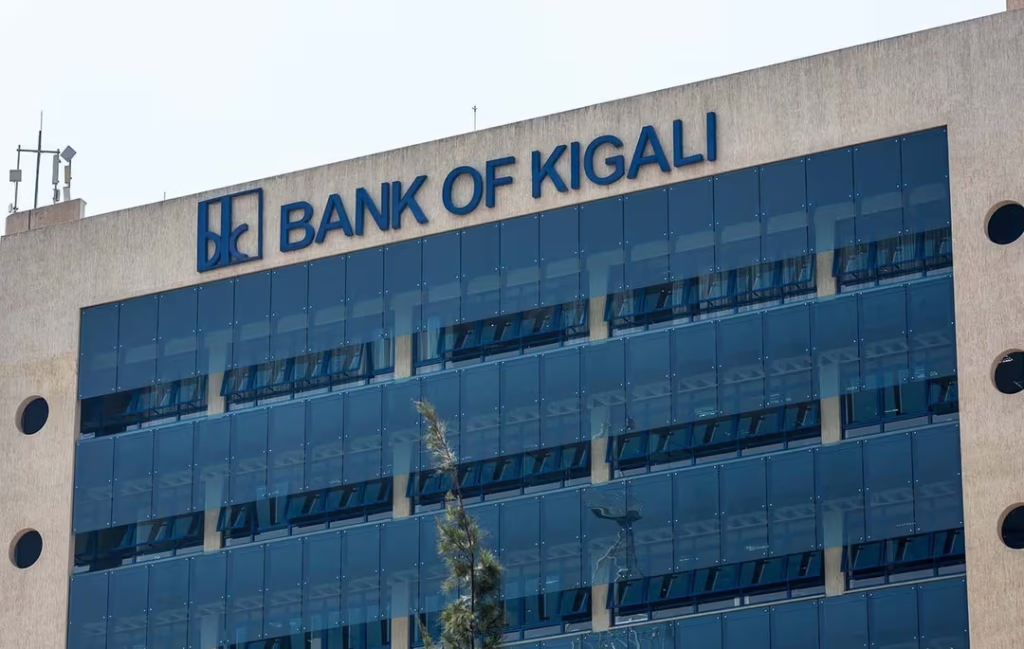
BK Group, Rwanda’s largest lender by assets and the only Rwandan firm listed on the Nairobi Securities Exchange, began 2026 on a strong footing, delivering its highest quarterly revenue performance in three years.
Net profit increased by 6.9% to KSh 2.38 billion during the first quarter, although earnings growth was moderated by a sharp rise in operating expenses. Administrative and general costs jumped 54.2%, driving total recurring operating expenses up 22.6% and pushing the cost-to-income ratio to 36.6% from 33.9% a year earlier.
Total operating income rose 13.8% to KSh 6.37 billion, supported by a 15.2% increase in net interest income to KSh 5.12 billion. The improvement was aided by a significant decline in funding costs, with the bank’s cost of funds falling to 2.4%, its lowest level in recent years, compared with 3.7% in the first quarter of 2022.
The group’s balance sheet continued to expand, with total assets surpassing RWF 2.9 trillion (approximately KSh 261 billion) for the first time, reflecting a 13.1% year-on-year increase.
Non-interest revenue also strengthened, as fee and commission income rose 26.7%. The growth was partly attributed to increased digital banking adoption at Bank of Kigali, where the proportion of digitally active retail customers climbed to 62.9%, up from 50.3% in the corresponding period last year.
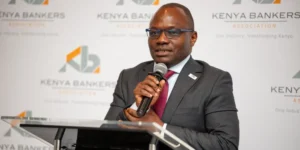
Group Chief Executive Officer Dr. Uzziel Ndagijimana said the lender maintained positive momentum despite absorbing higher operating and tax expenses while operating in a more challenging credit environment.
Management noted that while cost pressures remain under close watch due to ongoing investments in the group’s operating infrastructure, the cost-to-income ratio improved from 41.6% recorded in the final quarter of 2025.
However, asset quality weakened during the period. The non-performing loan (NPL) ratio rose to 4.8%, up from 2.9% at the end of 2025 and 3.6% a year earlier, marking the sharpest quarterly deterioration since the COVID-19 era. Corporate lending declined by 6% as the bank shifted focus toward retail and small and medium-sized enterprises (SMEs), which recorded growth of 6% and 9% respectively.
Also Read: HFCB Delivers Record First-Quarter Profit as Earnings Jump 45%
The NPL coverage ratio fell to 49.5%, the lowest level in the bank’s history, down significantly from a peak of 210.9% in the first quarter of 2023. The decline indicates a reduced provisioning cushion at a time when credit risk management remains critical.
Despite the rise in bad loans, BK Group maintained a strong capital position. Its core capital ratio improved to 22.1% of risk-weighted assets, comfortably above regulatory requirements, while liquid assets accounted for 40.6% of total assets.
According to Ndagijimana, the robust capital base provides sufficient capacity for continued investment across the group’s banking, insurance, investment, and technology businesses, with sustainable growth and prudent risk management remaining key priorities as Rwanda’s financial sector continues to evolve.