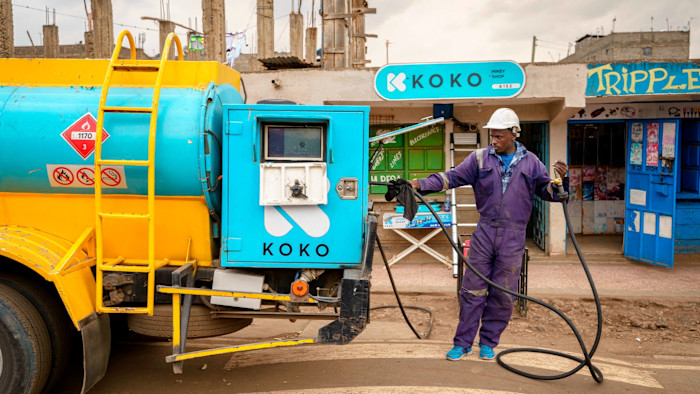
A standoff over how many carbon credits Koko Networks could offload on international markets, and how many Kenya was prepared to approve, lay at the heart of the clean cooking firm’s collapse.
Trade Cabinet Secretary Lee Kinyanjui said the government declined to grant Koko licences to trade carbon credits after concluding that the volumes it sought would effectively consume Kenya’s entire allocation in global compliance markets, sidelining other eligible players.
He argued that approving Koko’s claims in full would have crowded out firms in agriculture, manufacturing and other sectors that also qualify to generate and trade credits. The dispute culminated in Koko filing for administration on February 1 after failing to secure the letters of authorisation required to sell credits under Article 6 of the UN Paris Agreement. Without access to the higher-priced compliance market, the company was unable to generate the revenues needed to sustain operations.
Under UN rules, countries have capped volumes of carbon credits they can transfer abroad to help other nations meet emissions targets. These credits fetch around $20 in compliance markets, far more than prices in the voluntary market, which Koko had relied on but which has struggled with credibility concerns. Kenyan officials also raised questions about the transparency and integrity of Koko’s credit calculations, which are based on estimates of emissions avoided when low-income households switch from charcoal to bioethanol.
Also Read: Katiba Institute Urges Nyakang’o to Stop Pay for Ruto Advisers
Although Kenya signed an investment framework agreement with Koko in June 2024 to facilitate compliance market sales, it stopped short of issuing the formal authorisations through the National Environment Management Authority. The government maintained that endorsing Koko’s requested volumes would have exhausted Kenya’s allowable share, leaving no room for other projects.
Kinyanjui’s remarks offer the clearest public account yet of the government’s position and hint at its likely defence should the matter escalate into a legal battle. Koko’s investment was insured by the Multilateral Investment Guarantee Agency, a World Bank arm that provides political risk cover. The $179.6 million policy, issued last March, covers losses arising from government breach of contract, and Kenya could face compensation claims if MIGA upholds the company’s case.
Koko had invested roughly $300 million in Kenya over nearly seven years, deploying about 3,000 bioethanol refilling machines and serving around 1.5 million households. Its model hinged on selling subsidised clean cooking fuel and stoves to low-income families, then monetising the resulting emissions reductions through carbon credit sales.
The government insists Kenya does not have unlimited access to compliance markets and must manage its allocation carefully. Officials say efforts were made to resolve the impasse but that the firm’s business model ultimately proved untenable under the existing framework.
Following the administration filing, PwC announced that Muniu Thoithi and George Weru had been appointed joint administrators of Koko Networks and its Kenyan affiliate from February 1. The company’s exit leaves open the possibility of a Sh23.1 billion exposure for taxpayers if compensation is triggered under the World Bank-backed guarantee.
In the government’s view, the clean cooking mission was laudable, but the arithmetic of carbon credit allocation proved decisive.