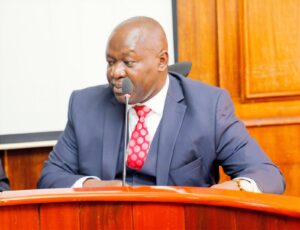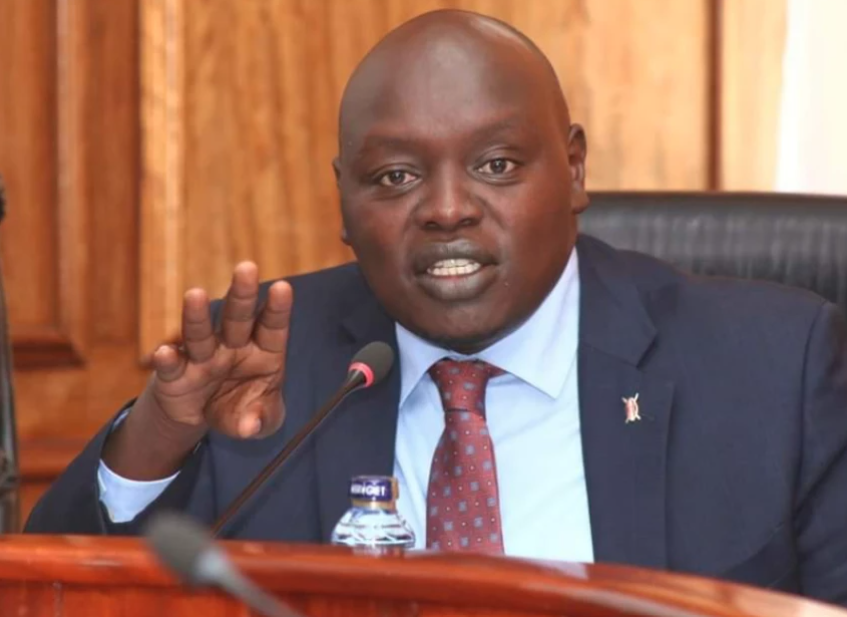
Nandi Senator Samson Cherargei has challenged a High Court decision declaring Section 6 of the Presidential Retirement Benefits Act unconstitutional, arguing that the provision is a necessary safeguard against the continued exercise of political power by former presidents.
Cherargei, who participated in the case as an Interested Party, said he disagreed with the judgment delivered by the High Court in Kiambu on Monday, September 21, 2026.
The senator pointed to an earlier High Court decision delivered on September 3, 2026, in Constitutional Petition No. E154 of 2023, which upheld the constitutionality of the same provision.
According to Cherargei, the two decisions have created conflicting positions on the interpretation and constitutionality of Section 6, making appellate intervention necessary.
He argued that Section 6 does not bar retired presidents from participating in politics, belonging to political parties, expressing political views or engaging in political discourse.
Instead, he said, the provision addresses the narrower issue of a former president continuing to hold a formal political party office beyond six months after leaving the presidency.
“This distinction is critical. Section 6 does not remove the political rights of a retired President. Rather, it regulates the holding of formal political party office by a person who has previously occupied the highest constitutional office in the Republic,” Cherargei said.
The senator maintained that political rights guaranteed under Article 38 of the Constitution do not automatically exclude Parliament from imposing limitations that meet the requirements of Article 24.
He said the earlier judgment had recognised the provision’s stated objective of protecting democratic governance and preventing the indirect continuation or consolidation of presidential power through formal political structures.
Cherargei argued that the constitutional position of a retired president was unique because former heads of state may retain considerable public influence even after leaving office.
“Having exercised the executive authority of the Republic and served as Head of State and Government, a former President may retain significant public and political influence after leaving office,” he said.
He maintained that Parliament was therefore entitled to establish safeguards regulating the continued occupation of formal party leadership positions by former presidents.
According to the senator, Section 6 was designed to facilitate an orderly transition from the presidency into retirement while allowing former presidents to remain active participants in political life.
“Its purpose is therefore not to silence or exclude retired Presidents from political life, but to safeguard the orderly transition of political power and guard against its continued or indirect exercise after retirement,” he said.
Cherargei said the Kiambu decision had removed what he described as an important legislative safeguard and raised broader questions about Parliament’s constitutional authority to regulate the post-presidential exercise of political power.
He called for the conflicting High Court decisions to be subjected to appellate review to establish a definitive interpretation of the law.
“I respect the authority of the Judiciary, but I strongly disagree with the Kiambu High Court’s decision to invalidate Section 6,” Cherargei said.
He said an authoritative appellate determination was necessary to provide clarity, consistency and certainty on the legal framework governing retired presidents in Kenya.
READ ALSO;
Kenya Launches Mediation Hub For Peace And Security In Learning Institutions