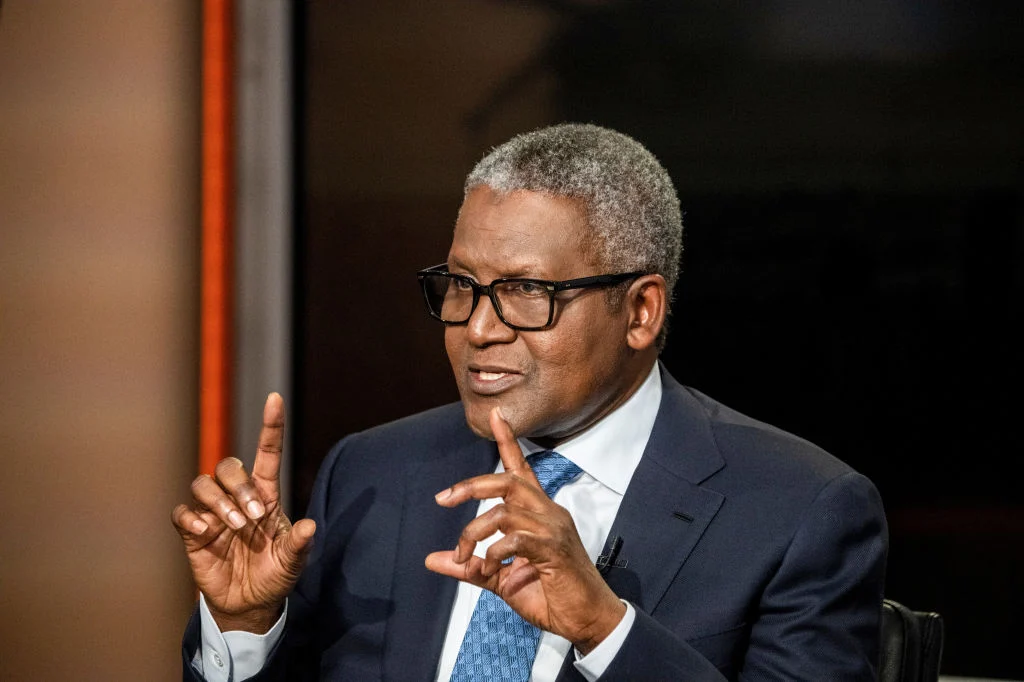
Nigerian billionaire Aliko Dangote is planning to inject an additional US$1.5 billion (approximately KSh194.8 billion) into expanding Kenya Pipeline Company’s (KPC) petroleum transportation infrastructure after acquiring nearly a quarter of the NSE-listed firm for KSh42.5 billion.
The Financial Times reported the proposed investment on Wednesday, October 21, following Dangote’s remarks at the FT Africa Summit in London. The planned expansion is expected to target KPC’s approximately 1,300-kilometre pipeline network, strengthening his business interests in East Africa’s fuel distribution sector.
The announcement also identified the investor behind a major block trade at the Nairobi Securities Exchange (NSE) on Monday, October 19. The transaction involved approximately 4.5 billion KPC shares, equivalent to 24.76 per cent of the company’s 18.17 billion issued shares.
“We bought 25 percent of their pipeline network for their distribution of petroleum products,” Dangote said.
President William Ruto had disclosed during Mashujaa Day celebrations on Tuesday that private investors had acquired a 25 per cent stake in KPC from public institutions, although he did not identify the parties involved.
Business Daily reported that at least eight state-backed institutions participated in the sale. Among the major public-sector investors following KPC’s initial public offering (IPO) in March were the National Social Security Fund (NSSF), the Public Servants Pension Scheme, the County Workers Pension Fund and the Unclaimed Financial Assets Authority (UFAA).
However, the specific institutions that sold their shares remain undisclosed. Dangote has also not revealed which company within his business group completed the acquisition.
Dangote’s Investment Exceeds KPC’s Expansion Budget
The proposed KSh194.8 billion investment is approximately 77 per cent higher than the KSh110 billion capital expenditure programme KPC outlined in its IPO prospectus for projects scheduled through 2030.
The company’s existing expansion plans include constructing a new Mombasa-Nairobi pipeline and an Eldoret-Malaba-Kampala pipeline, alongside developing liquefied petroleum gas (LPG) storage facilities in Nairobi and crude oil storage infrastructure in Mombasa.
KPC had planned to finance these projects through internally generated funds, borrowing, joint ventures and other strategic partnerships.
Also Read: Kenya Hotel Bookings Improve as Businesses Consider Hiring Despite Rising Costs
The company currently operates 1,342 kilometres of pipelines with an annual handling capacity of approximately 14 billion litres, supplying petroleum products to Kenya and neighbouring East African markets.
During the financial year ended June 2026, KPC transported 10.61 billion litres of petroleum products, representing a seven per cent increase.
Its revenue grew by 8.8 per cent to KSh42.98 billion, while net profit rose by 13.1 per cent to KSh11.58 billion.
Dangote Expands His African Petroleum Ambitions
The KPC acquisition comes weeks after Dangote broke ground on a proposed US$16 billion oil refinery in Kenya’s Lamu archipelago, which is expected to process 700,000 barrels of crude oil daily.
The project is intended to replicate the scale of his refinery near Lagos, Nigeria, as part of a broader strategy to expand petroleum refining, storage and distribution across the African continent.
According to the Financial Times, Dangote also outlined plans to establish a 330-million-litre petroleum storage facility in Namibia, alongside additional distribution infrastructure in Djibouti and Cameroon. The investments are intended to serve markets including Ethiopia and countries across West Africa.
His business group is targeting US$50 billion in investments and annual revenues of US$100 billion by 2030.
The KPC acquisition gives Dangote’s business interests a substantial minority stake in one of East Africa’s key petroleum infrastructure operators.
The Kenyan government retained a 35 per cent ownership stake following the company’s IPO, while the Uganda National Oil Company acquired 20.15 per cent.
Details of the legal entity that acquired the shares, the public institutions that sold them, any potential board representation for Dangote’s group and the specific projects covered by the proposed pipeline investment have yet to be disclosed.