The Government has adopted a comprehensive long-term strategy anchored on the Flood Resilience Masterplan worth Sh47.2 billion under the Nairobi Rising Programme.
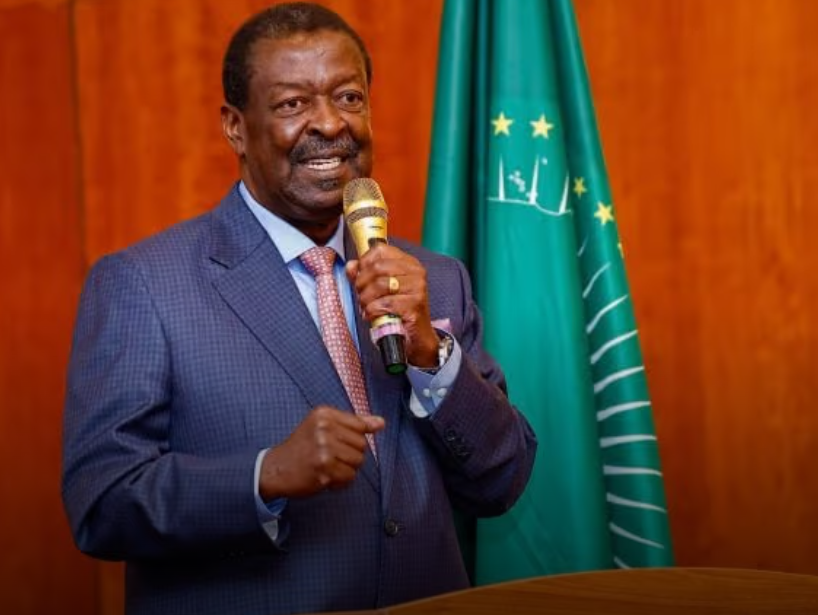
Prime Cabinet Secretary, Musalia Mudavadi told Parliament that the strategy is designed to deliver a coordinated, climate-resilient transformation of Nairobi’s urban systems and is part of long term measures to improve stormwater drainage, flood control and climate resilient infrastructure.
He said the Masterplan is grounded in a “Sponge City” design philosophy, which shifts the approach from rapid drainage of stormwater to its absorption, retention and controlled reuse as part of an integrated urban water management system.
“The strategy is structured in three progressive phases to ensure both immediate response and long-term sustainability,” Mudavadi told the National Assembly.
He said Phase I (2026) focuses on emergency stabilization through rapid rehabilitation of critical drainage systems, establishment of flood early warning mechanisms, development of flood risk mapping, and strengthening of coordinated emergency response capacity across the city.
Phase II (2026–2028) transitions to structural resilience by delivering comprehensive drainage solutions across all river subcatchments, rehabilitating key river corridors like Mathare and Ngong, constructing underground flood retention infrastructure, and embedding green infrastructure into the urban fabric to reduce runoff and enhance water absorption.
Similarly, Phase III (2028–2032) he said advances long-term climate adaptation through city-wide deployment of resilient infrastructure systems, expansion of green corridors along river networks, and establishment of a dedicated Climate Resilience Investment Fund to sustain ongoing interventions.
“The National Government and the Nairobi City County Government are jointly implementing key infrastructure projects under the Cooperation Agreement, including large-scale roads and drainage upgrades, expansion of sewer and sanitation infrastructure and the integration of urban flood mitigation systems within transport and housing developments,” he explained.
At the same time, he said the Nairobi Rising Programme is implementing transformative infrastructure investments, including expansion of stormwater drainage and sewer systems, upgrading of roads integrated with drainage, regeneration of the Nairobi River, strengthening of urban planning and zoning frameworks.
Expansion of water and sanitation systems to support a rapidly growing Nairobi urban population, is also underway.
He assured that the Government has placed renewed emphasis on enforcement of existing legal and planning frameworks, including full operationalization of the Nairobi Integrated Urban Development Master Plan, strict protection of riparian reserves, establishment of a public compliance register for development approvals and introduction of mandatory flood risk disclosure requirements.
“It is important to underscore that the challenge facing Nairobi is not the absence of policy or legal instruments, but the historical lack of enforcement.
The current approach therefore prioritizes compliance, institutional accountability, and coordinated implementation across all levels of government,” Mudavadi explained.
On environmental and ecosystem-based solutions, Mudavadi said the strategy also incorporates ecosystem-based interventions, including River corridors regeneration, Urban Greening initiatives to enhance permeability and reduce runoff and Waste-to-Energy programmes aimed at minimizing solid waste accumulation that contributes to drainage blockages.
He said that the programme integrates a Metropolitan policing framework to support enforcement of zoning regulations, safeguard critical infrastructure, and enhance overall urban safety, thereby reinforcing the effectiveness and sustainability of all flood resilience interventions.
Mudavadi stated that the Government is aware that flooding in Nairobi is a structural challenge requiring a Whole-of- Society response, combining emergency action, coordinated planning and long-term investment.
Through the Nairobi Rising Programme and the Flood Resilience Masterplan, he assured that the Government has put in place a comprehensive, well-financed, and enforceable framework to address both the immediate and underlying causes of flooding.
“I wish to assure this House that the Government remains fully committed to safeguarding lives, protecting property, and transforming Nairobi into a modern, resilient and globally competitive capital city.
The measures outlined will not only mitigate current flooding but will fundamentally reposition Nairobi as a model for sustainable urban development in the region,” he affirmed.
Mudavadi said that in response to the ongoing flooding, the Government has undertaken a series of multi-agency emergency and short-term interventions, including Immediate clearance and rehabilitation of primary stormwater drainage systems across flood-prone areas such as Mathare, Mukuru, Eastleigh, South B and the Central Business District to restore water flow and reduce flooding.
A coordinated emergency response units comprising the National Government, County disaster teams and security agencies to support evacuation, rescue operations and humanitarian assistance has also been established.
Similarly, he said there has been deployment of real-time flood monitoring and early warning systems, including river level monitoring and public alert mechanisms through SMS and media platforms.
“On riparian enforcement and evacuation measures, immediate demarcation and protection of riparian reserves, alongside targeted evacuation of residents in high-risk flood zones to prevent further loss of life,” he said.
He was responding to a question by Embakasi West Mp, Mark Mwenje, who said that the recent floods experienced in March 2026 have underscored the urgent need for a coordinated, well-financed and enforcement-driven approach to urban flood management.
“The floods, which resulted in loss of life, displacement of residents and significant infrastructure damage, were not merely a consequence of extreme weather events, but largely a manifestation of systemic urban planning and enforcement inadequacies.
It is against this backdrop the Government has activated both immediate response mechanisms and long-term structural interventions, anchored within the Nairobi Rising Programme, a landmark cooperation framework between the National Government and the Nairobi City County Government entered into on February 17,” Mudavadi explained.
He said the Government has established robust coordination mechanisms to ensure that infrastructure development does not exacerbate flooding and that drainage considerations are fully integrated into all projects.
These mechanisms are anchored within the aforementioned Nairobi Rising Programme, a Sh80 billion cooperation agreement formalized in February 2026 between the National Government and Nairobi City County Government
READ, ALSO;