The Kenyan government has introduced a new dimension to the fallout from the collapse of clean cooking firm Koko Networks, questioning the credibility of the carbon credits at the centre of the dispute after the World Bank-backed startup blamed the State for its failure.
President William Ruto’s chief economic adviser, David Ndii, suggested that Koko’s downfall stemmed from a mix of issues, including doubts over the validity of cookstove carbon credits and concerns about transparency in the company’s business model. In a post on X, Dr Ndii described the case as complex, citing factors such as the Paris Agreement framework, the reliability of cookstove credits, Kenya’s national climate commitments and carbon market regulations, the firm’s disclosure practices, and what he termed diplomatic interference.
Koko entered administration on Saturday, arguing that it was forced to shut down after the government failed to issue letters of authorisation needed to sell carbon credits in compliance markets, cutting off a critical revenue stream. Dr Ndii’s remarks point to deeper disagreements that may have led the government to withhold approval and also hint at the State’s likely defence in an expected compensation claim.
Under an agreement with the World Bank’s Multilateral Investment Guarantee Agency, which provides political risk insurance, Kenya is required to compensate investors if government actions obstruct trade. Koko is expected to file a claim with Miga, alleging breach of contract. In March last year, Miga insured Koko’s investment for $179.6 million, or Sh23.1 billion, in the world’s first political insurance cover linked to carbon credits, explicitly protecting against government breach.
At the heart of the dispute now appears to be disagreement over the authenticity and valuation of the credits. This raises the possibility that the State either questioned whether the credits genuinely existed or believed they were undervalued in a way that disadvantaged the government under revenue-sharing arrangements.
Also Read: Traders Gain Relief as KRA Liberalises Electronic Cargo Tracker Seal Market
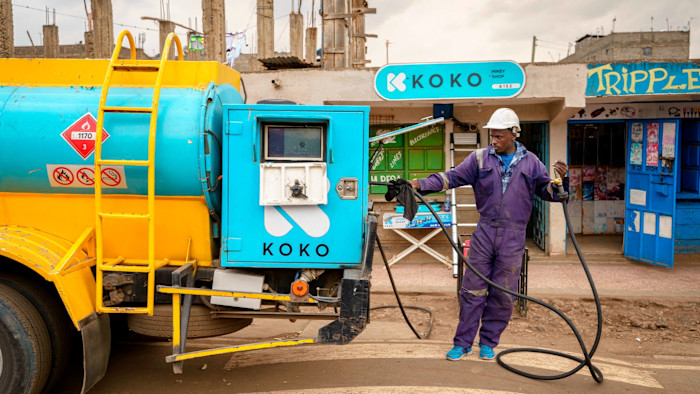
Koko invested about $300 million in its operations, with roughly half of that spent on building infrastructure to supply bioethanol to around 1.5 million low-income urban households. Its investors include the Microsoft Innovation Fund, Mirova and Rand Merchant Bank. The company sold subsidised cooking stoves and fuel through a partnership with Vivo Energy, relying on carbon credit sales to offset losses. The credits were based on estimates of avoided deforestation and emissions as households shifted from charcoal to sugarcane-based bioethanol.
Although the credits were certified by Gold Standard, cookstove credits have faced growing scrutiny. Researchers at the University of California, Berkeley, concluded in a 2024 peer-reviewed study that such stoves cut only a small fraction of the emissions typically claimed. Koko has consistently defended its methodology, arguing that access to compliance markets was essential to its model.
Carbon credits are mainly traded in compliance markets, where governments cap allowable emissions, though voluntary markets also exist for firms that choose to offset emissions. Concerns about cookstove credits have been amplified by recent legal cases. In 2024, a US court charged two senior executives of C-Quest Capital Impact Investors, which operates in Kenya, with fraud linked to cookstove projects in Malawi, Zambia and Angola. Prosecutors alleged the firm secured credits worth tens of millions of dollars through false emissions reductions, ultimately raising more than $100 million from buyers seeking to exceed their emissions limits.
US Attorney Damian Williams said the credits were sold to unsuspecting buyers in the global carbon market, despite the stoves failing to deliver the promised emissions cuts.
Over the weekend, Koko told the Financial Times that it had begun an orderly wind-down process, informing its roughly 700 employees and 1.3 million customers that it was ceasing operations. All staff are set to lose their jobs.
When underwriting Koko’s projects in Kenya and Rwanda, Miga sought to prevent abuse by requiring host governments to commit to compensating investors if found to have frustrated carbon credit trading. Its 2024 letter of authorisation template states that governments must cover investor losses arising from non-compliance, with compensation assessed in a fair and transparent manner based on market values and estimated revenue losses.
The template, introduced in November 2024 for projects seeking access to compliance markets under Article 6 of the Paris Agreement, also outlines how host governments earn fees from allowing private firms to sell carbon credits abroad, including upfront payments and revenue sharing.