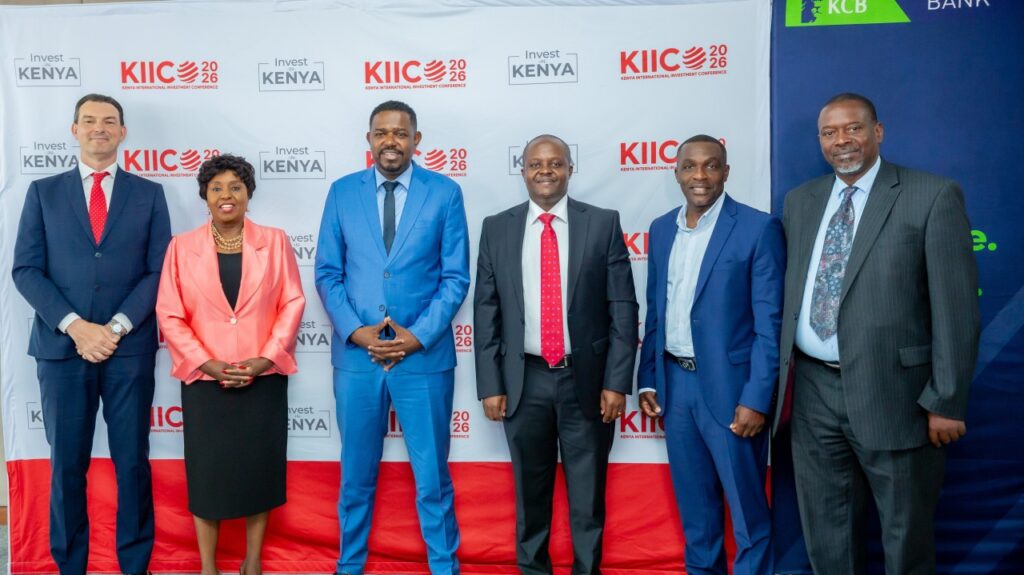
At the opening of the Kenya International Investment Conference (KIICO) 2026 in Nairobi, the government rolled out an ambitious pipeline of nearly 50 public-private partnership (PPP) infrastructure projects spanning roads, ports, and energy, in a clear bid to attract private capital.
Officials noted that the projects are at varying stages, from early feasibility studies to procurement, negotiations, and active implementation. The investment pipeline was unveiled alongside more than US$2.9 billion worth of deals announced during the event’s opening, led by William Ruto.
According to Kefa Seda, 20 projects have already been grouped under a single infrastructure cluster, while 12 are still undergoing feasibility studies and are expected to be investor-ready before year-end.
In addition, four projects are currently in procurement, two are in advanced negotiations set to conclude within months, and one reached commercial closure in December and is awaiting final financing conditions. Around 10 projects are already under implementation, operation, or maintenance.
Seda added that private sector participation will be bolstered by the newly introduced National Infrastructure Fund, designed to pool capital for key projects while easing pressure on public debt. Since 2013, PPP initiatives have mobilised over US$1 billion in private investment, with more than US$100 million secured in the last financial year alone.
The infrastructure pipeline is heavily anchored in transport, with flagship projects including the planned upgrade of the 461-kilometre Nairobi–Mombasa highway into a toll road at an estimated cost of KSh 468 billion. The corridor, part of Trans-African Highway No. 4, is also envisioned as a broader economic zone incorporating logistics hubs and special economic zones.
Another major road project targets the 243-kilometre Mau Summit–Malaba corridor, positioned as a key regional trade route and backed by feasibility support from the Asian Infrastructure Investment Bank. The project is expected to cost around KSh 130 billion.
Port development also features prominently, with several assets under the Kenya Ports Authority earmarked for private investment. These include container terminals and berths at both the Port of Mombasa and Lamu Port, as well as the Lamu Special Economic Zone. The first batch alone is estimated to require about KSh 195 billion to enhance cargo handling capacity and regional trade links.
Energy infrastructure forms another core pillar, with plans to roll out new electricity transmission lines across the country to improve access and distribution. Key projects, including the Kiambere–Maua–Isiolo and Kwale–Shimoni lines, are projected to cost approximately KSh 71.5 billion.
Beyond transport and energy, the government is also pitching large-scale water and agricultural projects. These include the proposed Kibuka Falls dam, a KSh 156 billion multipurpose project expected to generate 700 megawatts of power while supporting irrigation and water supply across several counties.
Investors are also being courted for a KSh 106 billion desalination plant in Lamu, the Suswa geothermal project, and multiple dam and irrigation schemes across counties such as Turkana, Murang’a, Kericho, Isiolo, Samburu, and Embu.
Also Read: Court Upholds SHA, but Chaotic Rollout and System Gaps Raise Fresh Concerns
Among the more unconventional proposals is a planned commercial spaceport in Malindi, still at feasibility stage, with an estimated cost of US$124 million. Its location near the equator is seen as a strategic advantage for satellite launches, potentially making it one of East Africa’s first such facilities.
The PPP Directorate also highlighted opportunities in industrial development, including the KSh 28.4 billion Life Sciences Park in Machakos and the KSh 89.9 billion Galana Kulalu project spanning Kilifi and Tana River counties.
Officials urged investors to tap into these opportunities, emphasising that they are concentrated in high-growth sectors with increasing competitiveness and potential for scale. The broader goal is to raise manufacturing’s contribution to GDP to 20%, supported by industrial parks, special economic zones, and export processing zones offering tax incentives and duty exemptions.