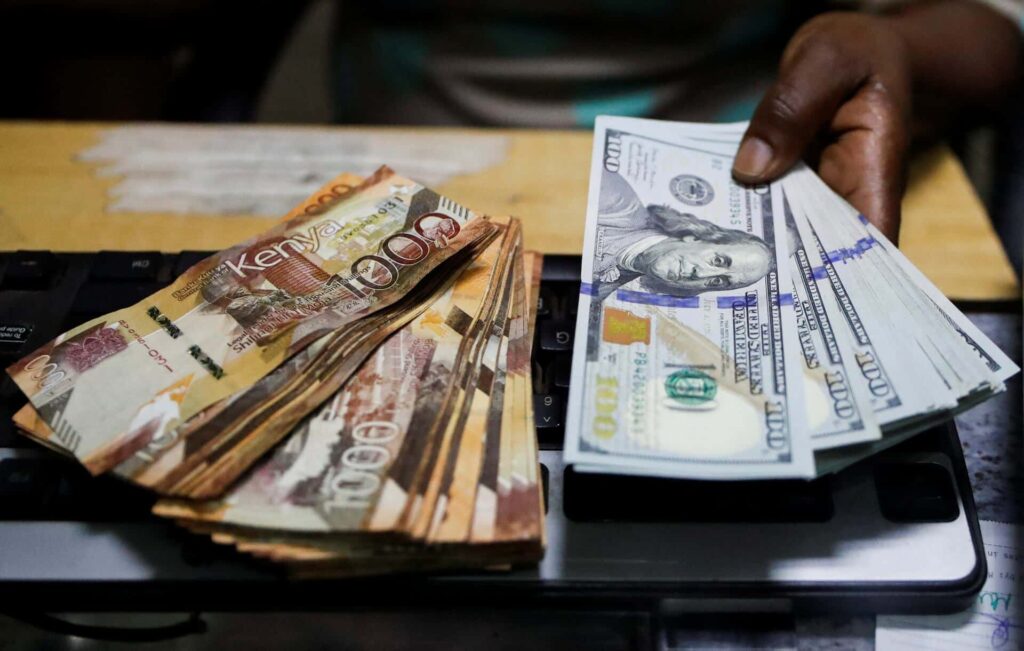
The Kenyan shilling has slipped slightly against the US dollar after holding steady for several months. This shift follows a recent visit from officials of the International Monetary Fund, who raised concerns about the currency’s long-term resilience.
Data released by the Central Bank of Kenya on Tuesday, 18 November, showed the shilling losing ground to the dollar, marking the end of a five-month run where it barely moved between KSh129.23 and KSh129.26.
A reduction in the supply of US dollars in the local market on Friday, 14 November, pushed the shilling to its weakest point in more than half a year. CBK figures placed it at an average of KSh129.35 on that day. By Monday, commercial banks reported a slight further dip to around KSh129.38.
As of Tuesday, 18 November, the CBK indicated an exchange rate of KSh129.51 to the dollar.
Geopolitical economist Aly-Khan Satchu argued that the shilling is undervalued when measured against global market trends. He suggested that the IMF’s scrutiny stemmed from the currency’s behaviour bucking broader patterns, noting that many emerging market and African currencies strengthened against the dollar through 2025, whereas the shilling’s trajectory appeared artificially restrained.
According to Satchu, the IMF implicitly questioned whether the CBK was maintaining a deliberately weak shilling. He placed the shilling’s fair value roughly five percent above its current rate.
IMF officials held meetings in Nairobi in mid-October with President William Ruto, Treasury Cabinet Secretary John Mbadi, the Kenya Revenue Authority leadership, and other policymakers. They were reportedly unsettled by how unnervingly stable the currency had remained, describing it as “too steady”.