Kenya has edged closer to its long-range economic ambitions after the Cabinet greenlit the creation of a KSh 5 trillion National Infrastructure Fund, envisioned as a flagship financing engine for the country’s sweeping modernisation drive.
Under the plan, the Fund will be set up as a limited liability company, pooling state resources and proceeds from privatisation to bankroll large infrastructure ventures. These span transport networks, water projects and power generation, according to a Cabinet brief released on Monday.
The government estimates that each shilling committed by the Fund could unlock as much as ten times that amount from pension schemes, private equity firms, development financiers and foreign sovereign investors.
Among the priority initiatives earmarked for support are the construction of 50 large dams, 200 mid-sized dams and more than 1,000 small-scale water projects aimed at expanding irrigation. Financing will also go towards dual carriageways covering 2,500 kilometres, the paving of 28,000 kilometres of roads, extending the Standard Gauge Railway to Malaba, and delivering an additional 10,000 megawatts of electricity over the next seven years.
Management of the Fund will rest with an independently recruited board and chief executive, backed by a governance structure meant to promote openness and curb abuse.
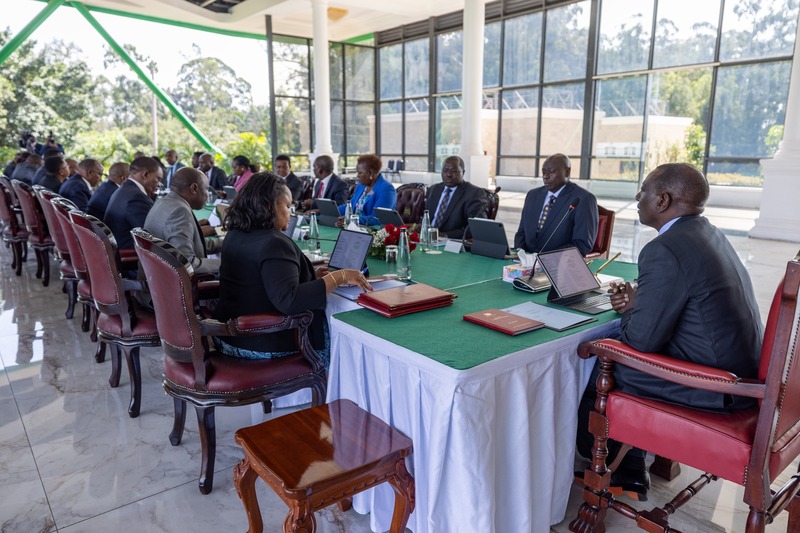
International backing has already begun to line up. In November, the World Bank publicly supported Kenya’s move, citing the Fund’s potential to accelerate investment in roads, rail, irrigation and energy. During talks at State House, World Bank Africa Executive Director Zarau Kibwe reiterated the institution’s commitment to Kenya’s social sectors, including education, healthcare, social protection and skills development.
The Infrastructure Fund will operate alongside the newly sanctioned Sovereign Wealth Fund, which is tasked with managing revenues from natural resources and selected privatisation receipts to strengthen fiscal buffers and safeguard future generations. Together, the two vehicles are being pitched as the financial spine of Kenya’s push towards high-income, industrialised status.
The Fiscal Squeeze
Government figures show public debt climbed to KSh 12.06 trillion by September 2025, with domestic borrowing now making up 55 percent of the total, up from 52 percent a year earlier. While this pivot has reduced exposure to external shocks, it has intensified pressure on local financial markets to absorb government financing needs, much of which goes towards recurrent spending.
Also Read: Carrefour Hits 34 Stores in Kenya After Rapid 2025 Expansion
The 2025/26 budget has drawn criticism for the stark tilt towards consumption over development. Out of the total allocation, development spending stands at just KSh 693.2 billion.
Strained finances have pushed the state towards public-private partnerships to plug infrastructure gaps, but these arrangements have proved contentious. Concerns over opaque contracts and constitutional hurdles have dogged several deals, most notably last year’s cancellation of proposed agreements with Adani Group firms to upgrade JKIA and hundreds of kilometres of power transmission lines after public backlash.
In response, the government has experimented with alternative financing tools, including a KSh 44.79 billion infrastructure bond to fund Talanta Sports Stadium and bond issuances by the Kenya Roads Board backed by Road Maintenance Levy revenues.
Critics argue that such innovations sidestep deeper issues of inefficiency and waste in public spending. The National Infrastructure Fund may face similar headwinds, particularly as plans to sell state stakes in firms like Safaricom and Kenya Pipeline, whose proceeds are intended to feed the Fund, continue to encounter political and public resistance.