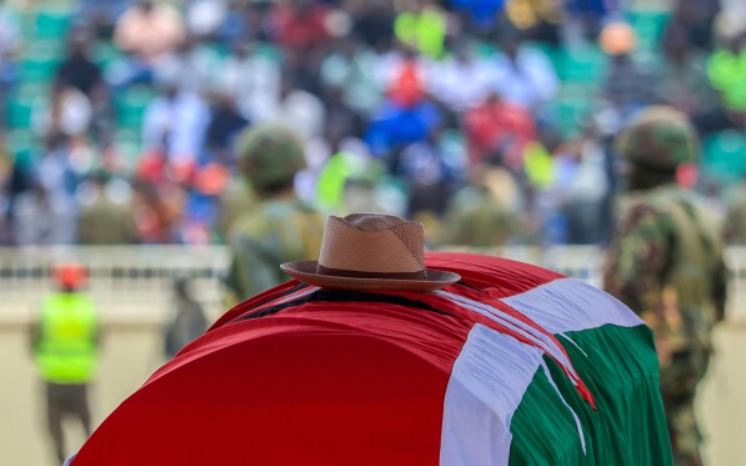
As dawn broke over Bondo Sunday, a heavy stillness settled across the region. Everyone was preparing for the final journey of not just a statesman, patriot, reformist but also the son of Jaramogi Oginga Odinga.
Raila Odinga‘s death evoked sorrow that transcended politics, uniting a nation in grief.
While news of his death had spread across every corner of the republic, his elder brother Oburu Odinga flew home on Thursday to formally break the sad news to Raila’s clan.
It is called Kelo Yuak and signals the start of mourning.
It paves way for relatives and friends to converge at the homestead, a move that embodies the Luo belief that grief, like joy, is shared.
In the Luo tradition, death is not an end but a passage.
The funeral, or liel, is a sacred journey that ushers the soul into the world of the ancestors while restoring harmony among the living. Each rite — spiritual and communal — affirms identity, kinship, and continuity.
For the Odinga family, interring Raila beside his father at Kang’o Kajaramogi carried deep symbolism — a return to ancestral soil and the eternal bond between father and son.
Next comes Kunyo, the digging of the grave, led by the eldest male relative — an act of respect and spiritual connection.
In the past, burial followed swiftly, but today, families hold Budho, an overnight vigil of songs, storytelling, and reflection.
When the body is brought home, golo, mourners line the roads waving green leaves — oboke — and chanting jowi, a cry of collective grief.
The arrival is both spiritual and emotional, marking the reunion of the departed with his origins. Viewing the body allows the community to confront loss and find closure.
Tragedy As Two Villagers Are Shot And Killed In Attack In Merti, Isiolo County