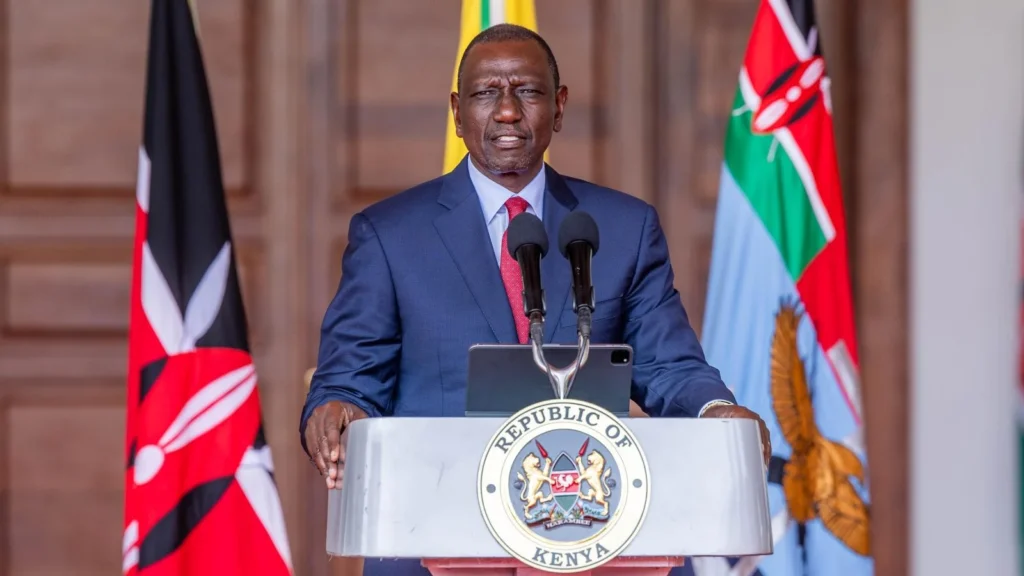
President William Ruto’s Cabinet could be suspended after a coalition of civil society organisations returned to the High Court seeking enforcement of a judgment requiring him to reconstitute his Cabinet within 120 days.
Katiba Institute announced on Tuesday, November 10, that it had filed a fresh application alongside CREAW Kenya, TISA Kenya, Crawn Trust Kenya and Crawn Trust Kenya and World March of Women Kenya, accusing the President of failing to comply with a court ruling delivered on June 30, 2026.
The court had given Ruto 120 days to reconstitute his Cabinet, with the deadline expiring on October 28. Following the lapse of the deadline, the petitioners moved back to court seeking orders against the President and his Cabinet.
The High Court has certified the application as urgent, paving the way for a legal battle over the alleged disobedience of court orders.
Among the orders sought, the organisations want the court to suspend the Cabinet and bar Cabinet Secretaries from discharging their official duties.
They are also seeking orders preventing the Secretary to the Cabinet from convening or facilitating Cabinet meetings, documenting decisions made during the meetings or communicating resolutions reached.
Additionally, the petitioners want the Controller of Budget restrained from authorising the payment of Cabinet Secretaries’ salaries and benefits, as well as approving expenditure related to Cabinet operations, with the restrictions taking effect from October 28, 2026.
The organisations have further asked the court to summon the Attorney-General to explain why the President has failed to implement the June 30 judgment.
They also want the court to declare that the President’s failure to comply with the ruling amounts to deliberate disobedience of court orders and constitutes contempt of court.
However, the petitioners have requested that any punishment or personal liability against Ruto be deferred until he completes his presidential term.
Katiba Institute said the matter will be heard by a three-judge bench on December 1, 2026.
The latest legal challenge comes days after human rights organisations and three individuals filed a separate petition against senior security officials over alleged failure to contain growing political violence ahead of the 2027 General Election.
The petition was lodged by the Kenya Human Rights Commission (KHRC), Katiba Institute and the Independent Medico-Legal Unit (IMLU), together with Kwamchetsi Makokha, Mary Kambo and Elphas Osoro, who are victims of political violence.
In a joint statement issued on Wednesday, October 28, the organisations said they had approached the court seeking to compel security agencies to investigate attacks targeting political, civic and religious gatherings, identify those behind the incidents and prosecute individuals allegedly involved in organising, recruiting and financing the violence.
Also Read: Murkomen Calls For Investment In Refugee-Hosting Areas To Boost Economic Growth
The case names Interior Cabinet Secretary Kipchumba Murkomen, Inspector General of Police Douglas Kanja and National Intelligence Service Director-General Noordin Haji as respondents.
The Attorney-General has also been listed as a respondent, while the Independent Electoral and Boundaries Commission (IEBC) and the Kenya National Commission on Human Rights (KNCHR) are interested parties.
The petitioners accuse the security agencies of failing to address organised violence despite repeated warnings from senior government officials. They argue that authorities have not responded promptly to attacks, conducted effective investigations or ensured those responsible face prosecution.
According to the organisations, the alleged inaction has allowed perpetrators to continue operating without accountability.
They further warn that the continued violence threatens constitutional freedoms and could undermine efforts to ensure a free, fair and peaceful 2027 General Election.