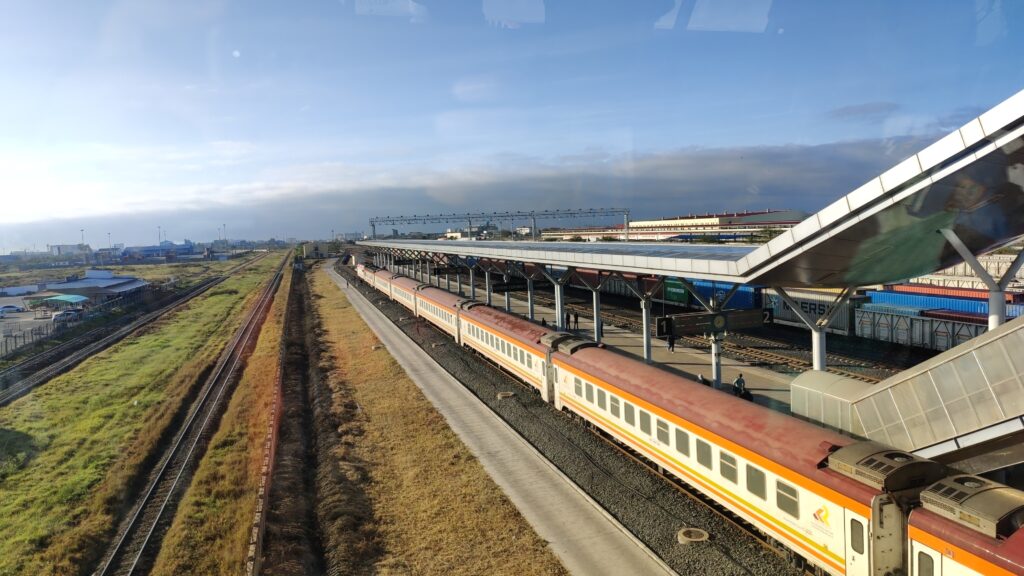
The government has trimmed about Sh3 billion from several spending lines tied to the Standard Gauge Railway (SGR), redirecting resources toward extending the modern rail line to Malaba at the border with Uganda.
In the first supplementary budget for the financial year ending June 30, 2026, the Treasury reduced allocations for multiple SGR-related items, including security infrastructure along the Mombasa–Naivasha corridor. Among the cuts is Sh1.6 billion that had been earmarked for a digital monitoring and protection system intended to oversee and safeguard the railway.
Previously, the State had set aside Sh2.3 billion in June for installing a unified security network covering Phase 1 and Phase 2A of the SGR. Scaling back these security upgrades could expose the railway to higher risks, given the long distances it covers and the persistent threat of vandalism or sabotage.
The budget for acquiring locomotive wheelsets, which are the wheel-and-axle assemblies used by SGR trains, has also been halved. Kenya Railways Corporation will now receive Sh1.1 billion instead of the earlier Sh2.2 billion allocation. Funding for a planned passenger ticketing system has also been reduced from Sh300 million by half.
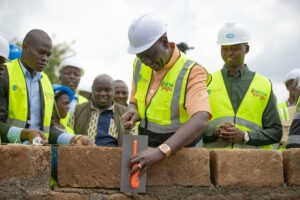
While some operational expenses have been pared down, the extension of the SGR from Naivasha to the Ugandan border has received a significant boost of Sh14 billion. The move signals the administration of William Ruto pushing to complete a section of the railway that currently stops abruptly at Suswa, limiting its effectiveness for regional cargo transport.
With the additional funding, the total budget for the extension in the current financial year rises to Sh30 billion, up from the initial estimate of Sh16 billion. According to Treasury projections, completing the line from Suswa to Malaba could cost roughly Sh502.9 billion.
Also Read: Gov’t Turns to Eurobonds, Stake Sales to Avoid IMF Borrowing
The government expects most of the financing, around Sh455.35 billion, to come from foreign investors whose identities have not yet been disclosed. At the same time, Kenya is pursuing a securitised bond worth about Sh390 billion ($2.6–3.0 billion) to fund the Naivasha–Malaba segment by leveraging future tax revenues rather than relying solely on conventional external borrowing.
To support the expansion, Kenya Railways plans to acquire more than 5,000 acres of land along the proposed route. Across the border, Uganda has also begun preparations to build its portion of the SGR to Tororo, which connects to Malaba.
Officials believe completing the extension could revitalise the railway, which currently faces stiff competition from road transport. The abrupt end of the line in Suswa has limited its usefulness, particularly for traders seeking seamless freight movement to landlocked countries in the region.
Back in 2014, Kenya signed a tripartite agreement with Rwanda and Uganda to construct a regional SGR corridor linking Mombasa to Kampala and eventually to Kigali. Progress stalled when the railway halted in Suswa after China reportedly declined to finance the final stretch amid unresolved financing arrangements with Uganda.