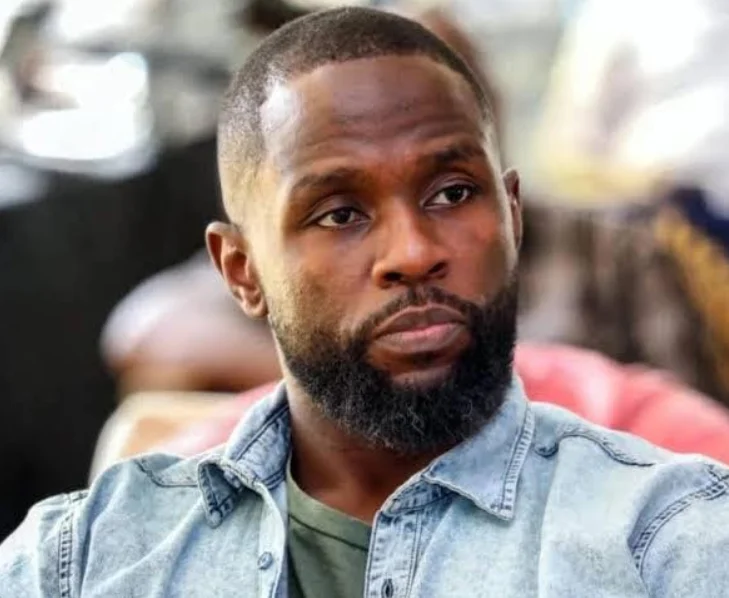
An accountant who featured prominently in Africa Uncensored’s corruption exposé Beg, Borrow, Steal: Kenya’s Budgeted Corruption and The China Connection has moved to court seeking to permanently restrain the publication of the documentary, claiming he was recorded under duress and his identity exposed despite fears for his safety.
George Makuthi Thomas, who is now a prosecution witness in a pending murder-conspiracy case, has filed an urgent constitutional petition at the High Court in Machakos, accusing journalist John-Allan Namu and Africa Uncensored of turning recordings allegedly procured by an accused person into a public spectacle that could jeopardise his life.
The documentary was pulled from YouTube on Thursday following conservatory orders issued by Justice Justice Noel Adagi.
In the petition filed through advocate Betty Wamukore Irungu, Makuthi disputes the portrayal of him as a whistleblower and an insider in an alleged corruption network, arguing that the recordings used in the film were obtained through deceit, coercion, threats, intimidation and duress.
The case introduces a potentially contentious intersection between investigative journalism, witness protection, privacy rights and the use of recordings sourced from individuals facing criminal charges.
Recordings made by accused man
The disputed recordings were allegedly made in 2023 by Musaari Kahiga Syong’oh, who is facing charges of conspiracy to murder and extortion of Sh50 million from businessman Chetan Gohil.
Syong’oh and his co-accused, Alvin Nzomo Muthami, are respondents in Makuthi’s petition.
Court documents indicate that Makuthi was arrested alongside the two men in July 2023. The charges against him are now being withdrawn as he transitions into a prosecution witness in the case.
Makuthi alleges that before that transition, Syong’oh recorded him under circumstances that were neither voluntary nor consensual.
He says he subsequently recanted the recordings in a sworn statement made at the Directorate of Criminal Investigations offices in Parklands on July 15, 2023, which the Office of the Director of Public Prosecutions has reportedly filed in a separate constitutional case.
According to the petition, Africa Uncensored’s documentary did not disclose the recantation but instead presented the recordings as confessions by a key operative in an alleged corruption scheme.
Makuthi further maintains that he never met Namu and did not consent to the recording, editing or broadcast of the material.
Letter sent ahead of documentary
The petition also details correspondence between Africa Uncensored and Makuthi shortly before the documentary’s publication.
Four days before the premiere, Namu and Africa Uncensored reportedly sent him a letter titled Publication – Whistleblower Confession & Operational Details, seeking confirmation of his 2023 police statement and whether he had entered into a witness protection agreement.
He was reportedly given until November 13 to respond.
Makuthi claims that the following morning, Syong’oh forwarded the same letter to him, urging him to get in touch at the earliest opportunity.
He reported the incident at Parklands Police Station on November 12, 2026, under OB No. 82/12/11/2026, three days before the documentary was published.
Claims of exposure to danger
Makuthi argues that the documentary exposed him to serious security risks by publicly identifying him as an alleged insider in a corruption scheme said to involve more than Sh30 billion and Chinese state-owned enterprises.
The petition points to portions of the documentary in which Syong’oh reportedly recounts statements attributed to Makuthi suggesting that he feared being eliminated.
Makuthi argues that the documentary acknowledged the alleged threat to his life yet proceeded to broadcast his face, voice and identity to hundreds of thousands of viewers.
The film reportedly attracted more than 455,000 views within five days of publication, while promotional interviews on KTN News and SpiceFM generated an additional 157,000 views.
His lawyer argues that the continued circulation of the material creates an irreversible exposure that cannot adequately be remedied through monetary compensation.
Constitutional challenge
The petition invokes Articles 26, 28, 29 and 31 of the Constitution, which protect the right to life, dignity, security of the person and privacy.
Makuthi also relies on the Data Protection Act, 2019, arguing that the journalistic exemption under Section 52 cannot legitimise the publication of material allegedly obtained through coercion and presented without critical contextual information.
He further invokes the Witness Protection Act and the Victim Protection Act, arguing that his rights and safety as a prosecution witness must be protected against intimidation and harmful exposure.
Google, X Corp. and Meta have also been named as interested parties, with the petitioner seeking orders compelling the platforms to disable access to the disputed material.
Namu vows to defend investigation
Africa Uncensored has not yet filed a response to the petition but has complied with the court orders by pulling down the documentary.
Namu, however, has defended the investigation, maintaining that the organisation stands by its reporting and the facts presented in the documentary.
He said the orders were issued before Africa Uncensored had been heard and that the organisation would make its case in court.
Namu maintained that corruption remains a serious crime and pledged to continue exposing wrongdoing.
The dispute is likely to test the boundaries between the public interest in investigative reporting and the constitutional rights of individuals whose identities and recordings feature in media investigations, particularly where they are witnesses in ongoing criminal proceedings.
Makuthi is scheduled to testify on December 8 and 9, 2026, against the same individuals he alleges were involved in procuring the recordings subsequently broadcast in the documentary.
The court is expected to consider the petition further during the inter partes proceedings.