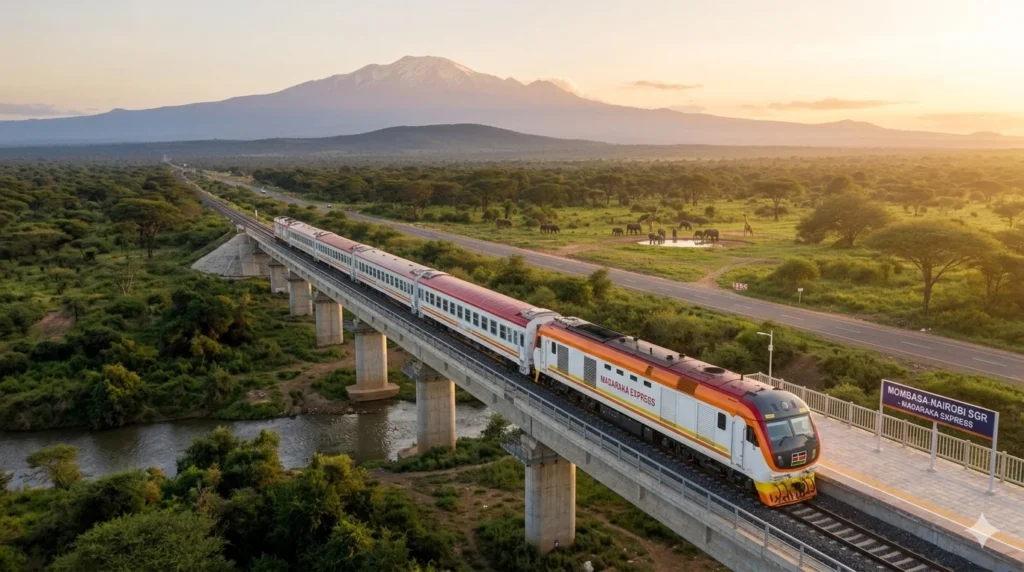
Kenya spent significantly more money per kilometre constructing its Standard Gauge Railway (SGR) compared with similar railway projects in Tanzania and Ethiopia, according to a new World Bank report.
The findings, contained in the lender’s 34th Kenya Economic Update, indicate that the Mombasa-Nairobi railway cost approximately US$7.6 million (KSh983.4 million) per kilometre to construct.
The diesel-powered railway was considerably more expensive than Tanzania’s electrified Dar es Salaam-Dodoma line, which cost US$5.7 million (KSh737.7 million) per kilometre.
Ethiopia’s electrified railway connecting Djibouti to Addis Ababa was cheaper still, with construction costs estimated at US$5.3 million (KSh686 million) per kilometre.
Kenya Could Have Saved KSh116.6 Billion
The World Bank estimated that Kenya could have saved as much as US$900 million (approximately KSh116.6 billion) during the initial construction phase if the project had been implemented at the same unit cost as Tanzania’s railway.
“With the same cost metric as the Tanzanian line, Kenya could have saved up to US$900 million in initial construction costs,” the report stated.
The lender attributed at least 30 per cent of the additional expenditure to governance weaknesses rather than geographical conditions or engineering challenges.
Among the shortcomings identified were the use of direct contracting instead of competitive bidding, speculation involving land along the railway corridor and fraudulent practices in land ownership documentation, property valuation and compensation payments.
Also Read: IEBC Warns Hassan Omar Over Electoral Code Breach Following Mombasa Rally Remarks
The SGR has also been highlighted in a 2026 Transparency International Kenya report as particularly vulnerable to corruption.
The assessment, which employed the Infrastructure Corruption Risk Assessment Tool (ICRAT), identified significant corruption risks associated with the railway project.
Plans to Extend SGR to Malaba
Kenya’s existing SGR network comprises two completed sections, connecting Mombasa to Nairobi and Nairobi to Naivasha.
The government has long pursued plans to extend the railway westwards through the Rift Valley, with proposed connections to Kisumu and eventually Malaba, along the Ugandan border.
The planned expansion is intended to strengthen regional transport links by connecting the Port of Mombasa to landlocked countries across East Africa.
However, the World Bank’s findings on construction costs are likely to intensify scrutiny of future railway investments, particularly regarding procurement procedures, project management and the need to ensure value for public money.