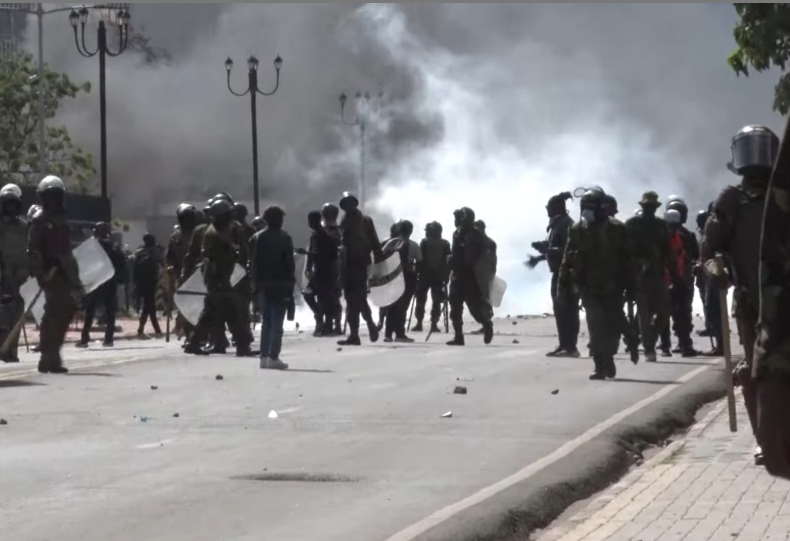
A scathing report by the Independent Policing Oversight Authority (IPOA) has revealed alarming levels of police misconduct, excessive use of force, and systemic failures during the nationwide protests that rocked Kenya in June and July 2025.
The protests, driven by outrage over the death of Albert Ojwang’ in police custody, the anniversary of the Gen-Z Anti-Finance Bill demonstrations, and the 35th Saba Saba commemorations, left 65 civilians dead, 342 injured, and caused significant destruction of property.
The IPOA report, released this week, paints a grim picture of how law enforcement responded to largely peaceful demonstrations with disproportionate and often unlawful force.
The Authority documented the deaths of 65 civilians, injuries to 342 others, and 171 injuries among police officers.
In total, 1,126 arrests were made across the country during the protests, many under questionable circumstances.
The protests, which erupted in multiple counties including Nairobi, Mombasa, Kisumu, Nyeri, and Embu, saw widespread vandalism, looting, and clashes between demonstrators and police.
IPOA reported that during the June 25 protests alone, 23 civilians were killed and 195 were injured.
The July 7 Saba Saba protests proved even deadlier, with 41 civilians killed, 146 injured, and 760 arrested.
Police behavior during the protests raised significant legal and ethical concerns.
IPOA monitors observed officers operating without visible name tags or service numbers, in direct violation of CAP 84 of Kenyan law.
Many officers also concealed their faces and vehicle identification, and some used live ammunition, rubber bullets, and tear gas even near hospitals and medical camps.
Disturbingly, the National Police Service (NPS) failed to report 60 of the 65 protest-related deaths to IPOA as required by law.
The Authority also noted that many protests were treated as riots from the outset, undermining the constitutional right to peaceful assembly as enshrined in Article 37 of the Constitution.
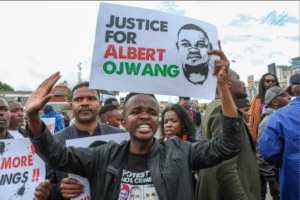
Amid the unrest, IPOA also documented the role of infiltrators and counter-demonstrators who contributed to violence and looting.
In locations such as Nairobi, Uasin Gishu, and Meru, supermarkets, police stations, banks, and government offices were vandalized or set ablaze.
In Juja, Meru, Kakamega, and Bungoma, police vehicles were damaged, and in Kitengela, a hospital and a Red Cross vehicle were attacked.
One high-profile case mentioned in the report is that of Boniface Mwangi Kariuki, a civilian shot dead in Nairobi on June 17.
IPOA has recommended prosecution, and officers involved have already been charged.
IPOA condemned the lack of police medical support during deployments, noting that officers were not supplied with meals, water, or basic welfare provisions, further aggravating the volatile situations.
The absence of police ambulances during operations also highlighted poor preparedness and disregard for both civilian and officer welfare.
In response to its findings, IPOA has issued a series of urgent recommendations, including:
- Respect and Facilitate Peaceful Protests – Security agencies must uphold constitutional rights and avoid the unnecessary use of force.
- Adopt Modern Tools – Implement body-worn cameras for officers and ensure all police vehicles are clearly marked.
- Protect Medical Services – Guarantee the safety of medical personnel and provide first aid during protests.
- Engage with Protest Organizers – Foster dialogue to prevent violence and ensure crowd control measures are proportionate and lawful.
The report also proposes long-term structural reforms to strengthen policing in Kenya.
IPOA is urging the National Police Service Commission (NPSC) to address the overstretched police-to-citizen ratio currently at 1:600 by recruiting more officers to reach the recommended 1:450 ratio.
It also calls for a national policy framework to guide the management of public assemblies, the establishment of functional County Policing Authorities, and increased funding for IPOA to decentralize operations and improve oversight.
IPOA Chairperson Ahmed Issack Hassan stressed the need for professionalism and accountability in the police service, citing the recently released Policy Directive No. 1 of 2025 on the Use of Force and Firearms, which emphasizes legal compliance and the protection of human rights.
“The use of disproportionate force and the failure to protect public safety during these protests undermines constitutional policing principles,” the report concludes.
“If addressed, these findings and recommendations can serve as a roadmap to enhance operational readiness and restore public trust in policing.”
The report stands as a stark warning and a call to action for Kenya’s security institutions, underscoring the urgent need for reform to prevent future tragedies and protect citizens’ constitutional rights.
EACC Recovers Grabbed Kenya Airports Authority’s Sh104 Million Land