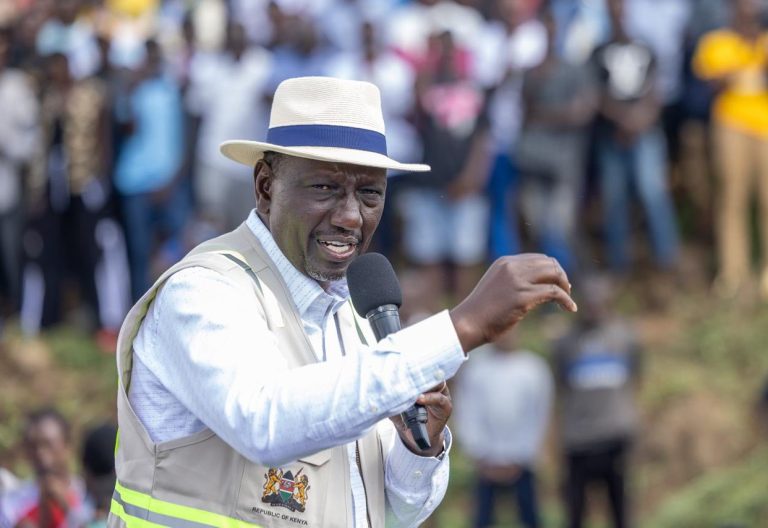
President William Ruto has unveiled a KSh 100 billion fertiliser manufacturing project in Nakuru County, marking a major step toward reducing Kenya’s dependence on imported fertiliser and stabilising prices for farmers.
The KenGen-Kaishan Olkaria Green Fertiliser Plant, a partnership between the Kenya Electricity Generating Company (KenGen) and China’s Kaishan Group, will be built in Naivasha’s Olkaria region. Ruto presided over the groundbreaking ceremony on Monday, November 3, 2025, describing it as a milestone in Kenya’s green industrial revolution.
“This transformative project will generate more than 2,000 jobs, save the country over KSh 60 billion annually in import costs, and cement Kenya’s position as a leader in green growth and climate-smart innovation in Africa,” Ruto said during the launch.
Plant Capacity and Economic Impact
The facility, valued at USD 800 million (KSh 100 billion), is designed to produce over 480,000 tonnes of fertiliser annually. The locally made fertiliser will be cheaper and more stable in price, protecting farmers from the volatile global market.
According to Ruto, Kenya’s ultimate goal is to achieve self-sufficiency in fertiliser production, reducing its reliance on costly imports that have burdened both farmers and the national budget.
Fertiliser Imports and Declining Dependence
Data from the Kenya National Bureau of Statistics (KNBS) shows a decline in fertiliser imports for the second straight year.
| Period (Jan–June) | Volume Imported (Tonnes) | Value (KSh Billion) |
|---|---|---|
| 2024 | 445,857 | 27.71 |
| 2025 | 443,701 | 25.63 |
Ruto noted that the trend reflects the government’s success in encouraging local production and stabilising the market. “Every shipment is an expense to our national coffers and a missed opportunity for Kenyan jobs. This plant is our declaration of independence from dependency,” he remarked.
Background: Fertiliser Prices and Subsidy Programme
Kenya experienced record imports in 2023 under the government’s subsidy scheme, which ballooned the import bill. Since then, Ruto’s administration has doubled its allocation for imports, from four million bags in 2023 to eight million in 2024, while steadily pushing for domestic manufacturing.
In July 2023, the government cut fertiliser prices to KSh 2,500 per 50kg bag, down from a high of KSh 7,500. Ruto maintained that strengthening local production is the surest route to affordable food and long-term food security.
Also Read: Trump Administration Ends Automatic Work Permit Extensions for Kenyans and Other Foreign Nationals
“High fertiliser costs have depressed yields and strained household incomes. By producing locally, we’re not just lowering costs, we’re securing our nation’s agricultural future,” he stated.
The Bigger Picture
The Olkaria Green Fertiliser Plant forms part of Kenya’s broader strategy to promote renewable energy-driven industries. Powered by geothermal energy from Olkaria’s vast reserves, the facility will produce green ammonia-based fertiliser, aligning with global climate targets while boosting Kenya’s manufacturing output.
Ruto’s initiative is expected to position Kenya as a regional hub for sustainable agriculture and agro-industrial innovation, signalling a shift from import dependency to industrial self-reliance.