Kenya is on the brink of a major mining boom after British firm Shanta Gold Kenya Limited announced the discovery of massive gold deposits valued at approximately KSh 683 billion in Ikolomani Constituency, Kakamega County.
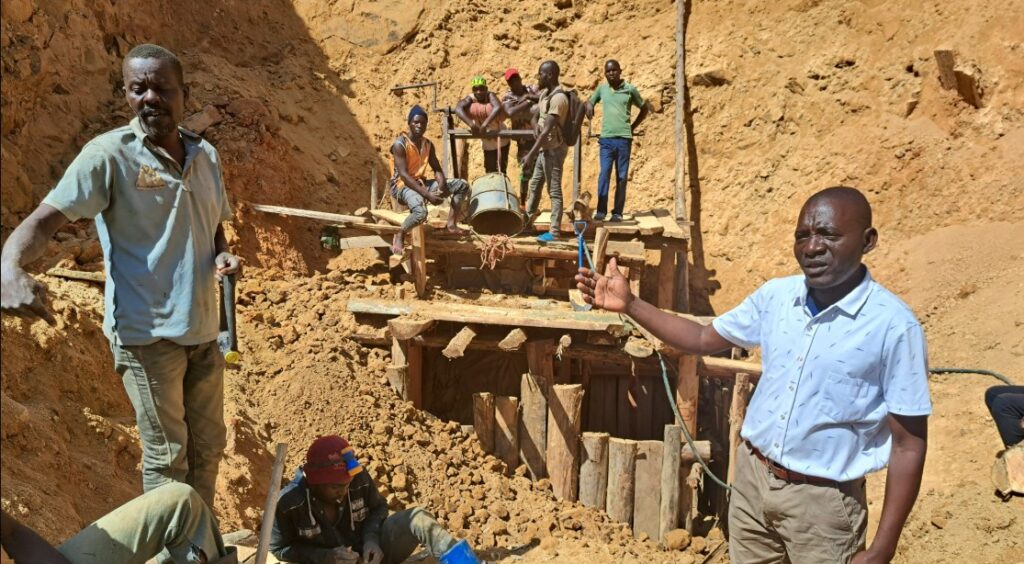
The company, which operates as a subsidiary of Shanta Gold, based in the British Isles’ Guernsey, has submitted an Environmental Impact Assessment (EIA) report to the National Environment Management Authority (NEMA) seeking clearance to establish an underground gold mine and processing facility in the Isulu-Bushiangala region.
In a public notice, NEMA confirmed receiving the report, stating:
“NEMA has received an EIA study report from Shanta Gold Kenya Limited for the proposed Isulu-Bushiangala underground gold mining project in Musoli and Isulu locations, Kakamega South sub-county.”
The firm has set aside $208 million (KSh 26.87 billion) for the project and estimates production to last over eight years. The deposits are part of Shanta’s West Kenya Project, which spans seven prospecting licences across parts of Kakamega, Vihiga, and Siaya counties.
According to geological data, the deposits at Isulu and Bushiangala contain around 1.27 million ounces of high-grade gold, hosted within sheared basalt formations flanked by mudstones, sandstones, and volcanic rocks.
Given the global gold price averaging $4,111.39 (KSh 530,985) per ounce, the discovery is valued at KSh 683.04 billion, equivalent to 4.1% of Kenya’s GDP and more than twice Kakamega County’s total economic output.
Also Read: Government Moves to Reassure Kenyans After Ruto’s Power Rationing Remarks
Shanta Gold projects that it will pay the government between KSh 555 million and KSh 607 million annually in royalties, in addition to KSh 193.7 million in Mineral Development Levy.
The company also revealed plans to invest $137 million (KSh 17.7 billion) in a separate mining venture in Ramula (Siaya), East Gem, and Mwivona (Vihiga).
Meanwhile, the discovery adds to Kenya’s growing mineral wealth portfolio. At Mrima Hill, in Kwale County, deposits of rare earth minerals, used in renewable energy systems, electronics, and electric vehicles, are estimated to be worth KSh 8 trillion, making the site one of the most valuable in Africa.