Kenya has unveiled plans to extend the metre gauge railway (MGR) to South Lokichar in Turkana County at an estimated cost of Sh220 billion, abandoning the earlier proposal to construct a pipeline to move crude oil from the region.
Papers presented before Parliament indicate that about 640 kilometres of railway will be built from Rongai in Nakuru to South Lokichar by December 2031. The line is expected to support the evacuation of crude oil beginning January 2032, when production is projected to rise sharply to about 50,000 stock barrels per day.
Previously, the government had intended to build an 892-kilometre pipeline linking the South Lokichar oil fields to the port of Mombasa.
However, concerns over securing the required $1.5 billion (about Sh193.87 billion) financing for the pipeline, coupled with fears that the project might stall, prompted a change in strategy as Kenya pushes to end a 14-year wait to become an oil-exporting nation.
Under the revised plan, Gulf Energy is expected to begin extracting crude from Block 10BB and Block 13T in the South Lokichar basin by December. In the initial phase of the project, running from 2026 to 2032, early production will be transported by road to the port of Mombasa.
Project documents note that the rail extension marks a clear departure from the earlier plan to build a crude oil pipeline to Lamu, previously estimated to cost about Sh193 billion.
Ongoing feasibility studies are examining whether the extension should rely on the metre gauge railway or the standard gauge railway (SGR), assessing factors such as construction costs, technical challenges and long-term demand before the government settles on the final approach.
Preliminary comparisons suggest that extending the SGR from Rongai to South Lokichar would cost more than Sh300 billion, making it significantly more expensive than expanding the existing MGR network.
Also Read: Weak Loan Demand Leaves Banks Flush with Cash as CBK Absorbs Sh62.8bn Daily
Currently, the MGR stretches about 1,082 kilometres from Mombasa to Malaba, passing through major towns including Nairobi, Nakuru, Naivasha and Kisumu. The line also runs alongside the SGR between Mombasa and Naivasha.
Under the proposal, crude oil could be transported entirely by MGR freight trains from South Lokichar to the port or transferred to SGR wagons in Naivasha for the final leg of the journey.
The railway is also expected to extend to Nakodok at the Kenya–South Sudan border, following the Lodwar highway toward the frontier.
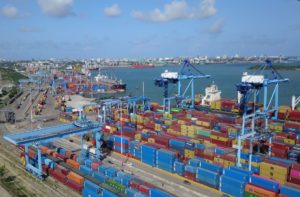
In the second phase of the project, starting in 2032, roughly 155 insulated and steam-heated rail wagons will be loaded daily to transport the crude oil to storage tanks at Kenya Petroleum Refineries Limited in Mombasa.
Before the railway becomes operational, the first phase will rely on trucks to move the crude. About 600 trucks are expected to handle the transport, with 100 trucks operating on a six-day schedule to move around 20,000 barrels per day.
Gulf Energy aims to ship two vessels of Turkana crude every month once the project reaches its second phase, when daily production is expected to more than double from the current early target of 20,000 barrels.
The company has indicated that establishing a rail transport system before January 2032 will be crucial in avoiding logistical bottlenecks associated with moving crude oil by road.
The change in strategy has raised concerns among officials linked to the Lamu Port–South Sudan–Ethiopia Transport (LAPSSET) corridor, who had anticipated that the proposed Lokichar–Lamu pipeline would also carry crude from South Sudan to the port of Lamu.
According to the documents presented to lawmakers, LAPSSET officials warned that dropping the pipeline component could weaken the integrated design of the corridor and complicate coordination within the broader regional infrastructure plan.
Gulf Energy acquired Block T6, formerly known as 10BB, and Block T7, previously 13T, from Tullow Kenya BV in a deal worth $120 million (Sh15.5 billion) finalised in October 2025.
The Cabinet has since approved the Field Development Plan submitted by Gulf last year. The plan is now awaiting ratification by Parliament within 90 days, a step that will allow the company to commence commercial oil production.
Gulf has also secured an onshore drilling rig from the UAE-based Great Wall Drilling Company under a long-term lease valued at $15 million (Sh1.93 billion).