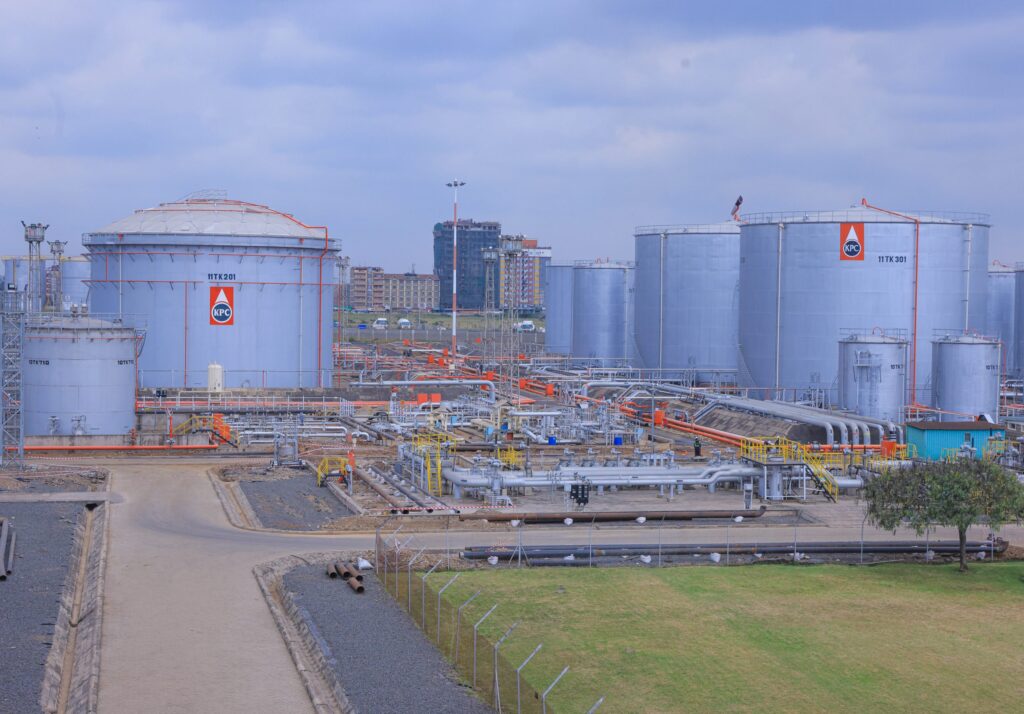
Kenya Pipeline Company Plc (KPC) has become the fifth most valuable company on the Nairobi Securities Exchange after its shares edged slightly higher on the first day of trading, giving investors another option among the market’s large-cap counters.
The stock ended yesterday’s session at Sh9.18 per share, a modest increase from its initial public offering (IPO) price of Sh9, placing the company’s market valuation at about Sh166.8 billion.
That valuation positions KPC behind Safaricom, which leads the market with a capitalisation of Sh1.19 trillion, followed by Equity Group at Sh279.2 billion, KCB Group at Sh250.6 billion and East African Breweries Limited (EABL) at Sh201.6 billion.
The government offloaded a 65 percent stake in the pipeline operator through the IPO, raising Sh106.3 billion in what became Kenya’s first major share sale in nearly twenty years.
Despite being oversubscribed, the offer saw limited participation from foreign investors, retail buyers and oil marketers. The transaction was largely supported by Uganda and local institutional investors.
Market analysts noted that the subdued price movement on the first day of trading reflected the dominance of institutional investors in the shareholding structure. Previous listings such as Safaricom recorded sharper swings in price due to strong participation from retail investors.
In the KPC offer, about 73,000 retail investors purchased only 2.56 percent of the shares, equivalent to Sh4.1 billion, far below their allocation of Sh21.2 billion.
Local institutional investors, however, invested Sh67 billion, exceeding their allocation of Sh21.1 billion by more than three times.
Kenne Belgrade, the lead transaction adviser for the IPO from Faida Investment Bank, previously noted that the share price was unlikely to fall significantly given the strong presence of long-term institutional investors.
According to him, institutions typically hold shares for extended periods, reducing price volatility that would otherwise be driven by a larger pool of retail traders.
During its first trading session, about 2.08 million KPC shares changed hands, placing the counter sixth in terms of trading volume after Kenya Airways, Equity Group, KCB Group, Safaricom and Eveready East Africa.
Also Read: Gov’t Drops Pipeline Plan, Opts for Sh220bn Rail to Move Turkana Oil
Investor bids for the shares ranged between Sh8.66 and Sh9.50, while sellers quoted prices between Sh9 and Sh9.60.
The listing of KPC expands the range of large-cap stocks available to investors on the Nairobi exchange, which has been heavily concentrated around a few major companies.
Data from the Capital Markets Authority shows that the five biggest firms accounted for an average of 66.42 percent of total market turnover in the quarter ending December 2025. These companies include Safaricom, Equity Group, KCB Group, EABL and NCBA.
Such concentration, particularly above 50 percent, is considered high and reflects investors’ preference for large and liquid stocks that offer steady dividend payments and easier entry and exit.
The CMA noted that trading activity in the final quarter of 2025 was dominated by a small number of large-cap counters, especially Safaricom and leading banking stocks.
The IPO faced challenges during the offer period, including subdued investor interest, relatively low valuations among some banks and the decision to extend the subscription window.
Proceeds from the share sale will partly fund government projects, with between Sh15 billion and Sh20 billion earmarked for the expansion of Jomo Kenyatta International Airport.
Investor scrutiny also focused on KPC’s plan to cut its dividend payout ratio from an average of 94.5 percent of profits to about 50 percent, as well as the company’s future capital spending, including plans to build a new pipeline between Mombasa and Nairobi.
Nevertheless, strong demand from 465 local institutional investors, led by the National Social Security Fund and the Public Service Superannuation Fund, alongside Uganda’s state-owned oil firm, Uganda National Oil Company, ensured the success of the offer.
Without that support, analysts say the IPO could have faltered, potentially undermining the government’s efforts to diversify revenue sources away from taxes and public borrowing.
For the offer to proceed, the government needed to raise at least Sh53.1 billion from more than 250 investors. Uganda alone purchased shares worth Sh34.7 billion, exceeding its Sh21.2 billion allocation.
Employees of KPC subscribed to shares worth Sh98.1 million against an allocation of Sh5.3 billion, though their participation still surpassed that of some foreign investors and oil marketers.
Analysts at Standard Investment Bank have issued a buy recommendation on the stock for investors with a long-term outlook, noting that the share may hold less appeal for traders seeking quick short-term gains.