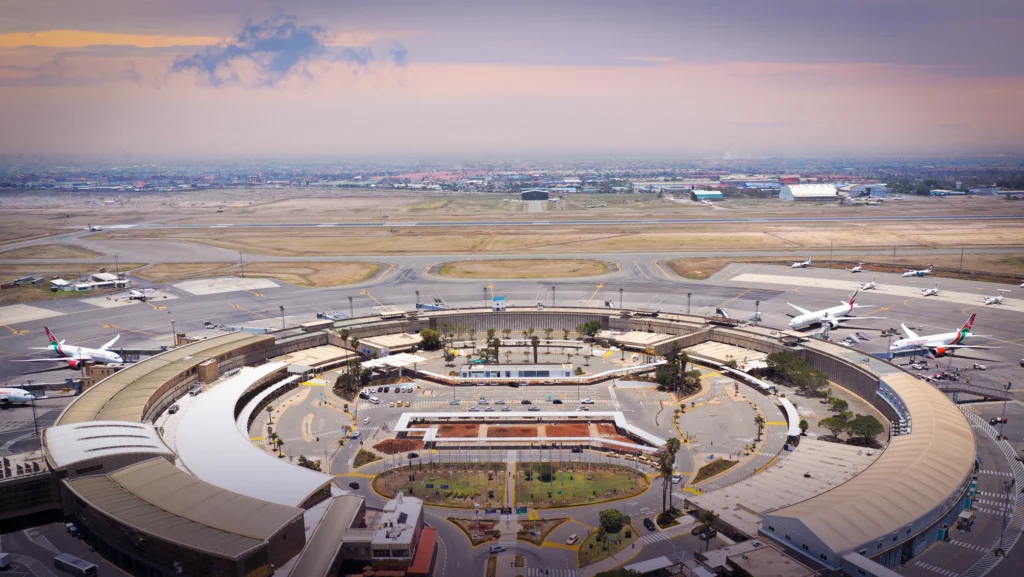
Air passengers in Kenya are bracing for a rather rough patch, as shrinking flight availability and rising fares begin to squeeze the aviation sector from both ends.
A slowdown in global airline capacity, largely driven by escalating tensions in the Middle East, is now filtering into international and regional travel, affecting both seat availability and ticket costs.
Data from the International Air Transport Association indicates carriers have started cutting back schedules amid airspace disruptions and safety concerns tied to tensions around Iran, forcing rerouting and cancellations.
Growth in global seat capacity, initially forecast at 5.2% for March, has been revised down to 3.3%.
The outlook for April appears even more constrained, with capacity expected to grow by just 2.7%, signalling a marked deceleration in the aviation sector’s recovery.
At the heart of the disruption sits the Middle East, a vital aviation corridor linking Asia, Europe, and Africa. Given its centrality to long-haul travel, instability in the region quickly reverberates across global flight networks.
For travellers, the consequences are rather inconvenient: fewer route options, extended travel times, and, more often than not, steeper fares.
Flights connecting Asia to Europe and Africa, many of which depend on Middle Eastern hubs, are among the most affected. Airlines are increasingly forced to take longer routes or cut back on flight frequency altogether.
Even before the latest tensions flared, airlines in the region were already showing signs of pressure. Passenger growth in the Middle East trailed global averages in February, while capacity outpaced demand, weakening load factors and hinting at underlying strain.
For Kenyan travellers, the global capacity crunch is colliding with another headache, surging fuel costs. Airlines are, quite plainly, passing the bill straight to passengers.
A clear local example comes from Skyward Express, which introduced a fuel surcharge on all tickets effective April 1, 2026. The airline cited persistent increases in global jet fuel prices as the reason behind the move.
In a passenger advisory, the carrier noted that imported aviation fuel makes up a significant share of its costs, leaving it particularly exposed to global price swings.
Also Read: ODM Condemns Petroleum Scandal, Calls For Accountability
“The aviation industry continues to grapple with rising global fuel costs,” the airline said, adding that the surcharge is necessary to sustain reliable operations.
Kenya’s exposure stems from its reliance on imported aviation fuel, much of it sourced from the Middle East. As a result, geopolitical tensions in that region quickly translate into higher operational costs for airlines serving both domestic and regional routes.
Industry estimates suggest fuel can account for up to a third of an airline’s operating expenses, making it one of the most volatile factors influencing ticket prices.
Globally, the strain is intensifying. Jet fuel prices have surged sharply in recent weeks, nearly doubling to around $197 per barrel as supply disruptions and geopolitical risks continue to rattle oil markets.