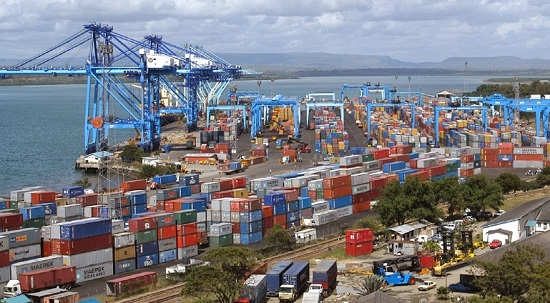
Kenyan firms are finding themselves increasingly entangled in global trade turbulence, with almost half of chief executives warning that tariffs could squeeze profitability over the coming year, according to Global CEO Survey report by PwC (Kenya insights).
Roughly 46% of CEOs expect net profit margins to deteriorate within the next 12 months as a direct result of tariff pressures, while a similar proportion anticipate stability rather than improvement. The findings place tariffs among the most pressing risks facing Kenyan corporates, with exposure levels notably higher than those reported in many other African markets.
The heightened concern is closely tied to Kenya’s deep integration into global supply chains and its reliance on preferential trade frameworks, particularly the African Growth and Opportunity Act (AGOA). That arrangement came under strain in late 2025 when it lapsed in September, briefly exposing Kenyan exports to standard US import duties, including an approximate 10% baseline tariff under broader reciprocal trade measures introduced earlier that year.
The sudden policy shift pushed up landed export costs, weakened competitiveness, and prompted US buyers to reconsider sourcing from Kenya in favour of cheaper suppliers in Asia and Latin America. Although AGOA was later reinstated temporarily in early 2026, the uncertainty has lingered, leaving exporters in a precarious planning environment.
PwC’s survey shows that sectors such as professional services, ICT, hospitality, financial services, and wholesale and retail are already feeling the strain from shifting trade policies. Export-heavy industries, especially textiles and apparel, remain particularly exposed given their dependence on preferential access to foreign markets.
Even though Kenya is structurally a net importer, which offers some buffer against tariff shocks, its export-oriented segments remain vulnerable to global policy swings. Business leaders report rising costs, supply chain disruptions, and persistent uncertainty, all of which are feeding into cautious corporate outlooks.
In response, firms are actively recalibrating their strategies. Many are restructuring supply chains, reducing overreliance on single-country sourcing, and increasing localisation of inputs where viable in order to build resilience.
Turning towards Africa’s internal market
At the same time, Kenyan companies are accelerating their focus on regional expansion, with Tanzania, Uganda, and Rwanda emerging as key investment destinations. This trend aligns with a broader surge in East African Community trade, which has more than doubled since 2016.
The report also highlights growing interest in intra-African trade and faster implementation of the African Continental Free Trade Area (AfCFTA) as critical buffers against external shocks, offering firms a pathway to reduce dependence on volatile global markets.
Despite external headwinds, sentiment among executives remains relatively upbeat. Around 68% of CEOs expressed confidence in domestic economic growth over the next year, up from 48% previously, buoyed by easing inflation, improved monetary stability, and a more predictable currency environment.
Also Read: Insurance Fraud Cartels Ride Sector Expansion as Reported Cases Triple in Three Months
Beyond immediate trade pressures, Kenyan corporates are also diversifying aggressively. About 62% of CEOs report entering new sectors within the last five years. Looking ahead, 27% plan expansion into technology, 22% into healthcare, and 16% into real estate, retail, and manufacturing.
Mergers and acquisitions also remain firmly on the agenda. While 32% of executives do not expect major acquisitions in the next three years, more than half anticipate completing at least one deal, with many pursuing multiple transactions aimed at expanding market share, entering new regions, and broadening product portfolios.