The government has approved 15 privately backed green hydrogen projects tied to roughly 5GW of dedicated renewable energy generation, underscoring the country’s boldest attempt yet to establish itself as a regional centre for clean industrial fuels and low-carbon manufacturing.
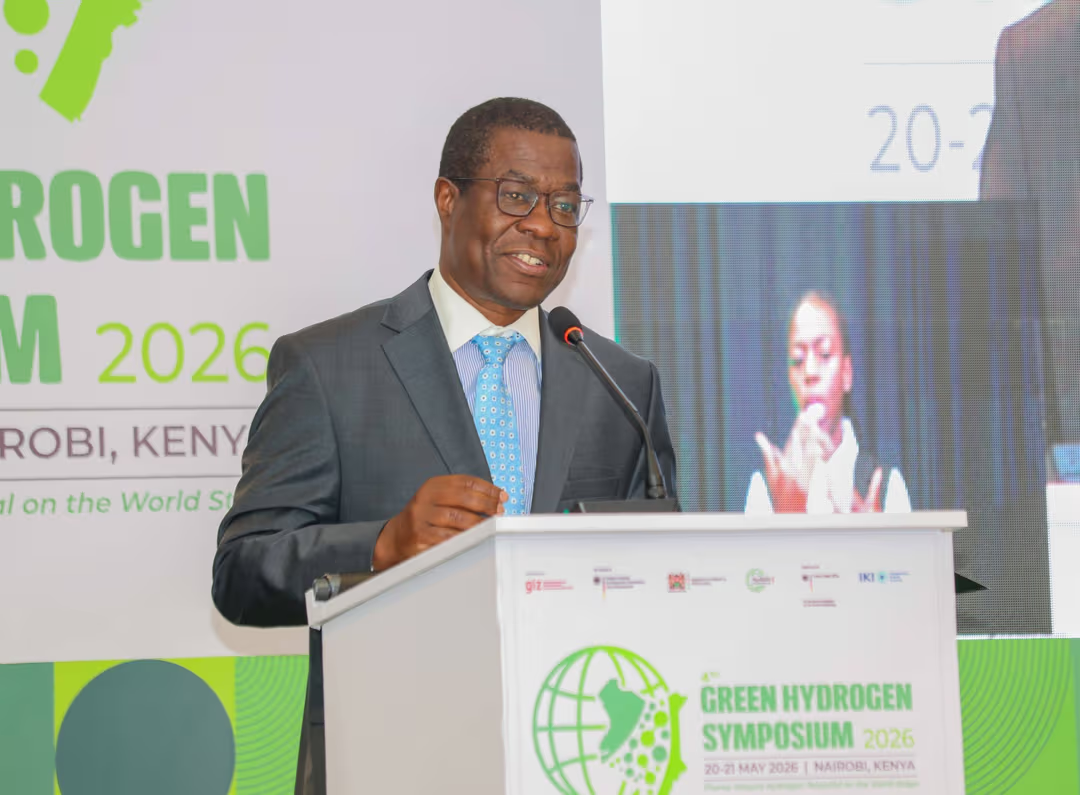
Energy Cabinet Secretary Opiyo Wandayi announced the approvals during the fourth Green Hydrogen Symposium held in Nairobi.
The projects span green ammonia, sustainable aviation fuel, methanol production, and hydrogen-powered steel manufacturing.
Most developments will depend on dedicated geothermal, wind, and solar energy plants as Kenya seeks to capitalise on its renewable energy surplus to enter the fast-emerging global hydrogen economy.
Industry players, however, continue to flag major hurdles including the high cost of renewable electricity required for hydrogen production, constrained access to affordable financing, and lingering uncertainty over future global demand.
“For Kenya, green hydrogen represents more than an emerging technology. It actually represents an opportunity for economic transformation,” Wandayi said.
The approvals arrive amid intensifying global investment in hydrogen infrastructure and cleaner industrial fuels as countries race to decarbonise heavy industries and transport systems.
Kenya believes it holds a competitive edge given that more than 90% of its electricity generation already comes from renewable sources such as geothermal, hydroelectric, wind, and solar power.
According to the Energy Ministry, the country’s hydrogen roadmap is designed not only to reduce emissions but also to create new industrial ecosystems around fertiliser manufacturing, green steel, shipping, heavy transport, and sustainable aviation fuels.
Officials see the sector as a potential engine for export-oriented industrialisation capable of embedding Kenya deeper into future clean-energy supply chains.
Projects Gaining Momentum
Among the notable initiatives already progressing is a partnership between KenGen and Kaishan Group at Olkaria, where geothermal energy is being channelled into green ammonia production.
Wandayi said the venture is expected to support approximately 165 megawatts of geothermal power linked directly to hydrogen-related industrial operations.
He also pointed to participation by the Catholic Diocese of Nyeri in renewable-powered hydrogen initiatives, signalling growing interest from unconventional investors and institutions.
Global Hydrogen Market Challenges Persist
Despite the growing momentum locally, the global hydrogen industry has experienced slower-than-anticipated progress as rising project costs, financing difficulties, and delays continue to affect major developments across Europe and other regions.
Sebastian Groth acknowledged that investor sentiment has cooled compared to the optimism seen three years ago.
“The mood around green hydrogen is more sober than it was three years ago,” Groth noted, adding that Kenya still needs more projects to transition from feasibility studies into active construction.
Nonetheless, both Germany and the European Union say they remain committed to supporting Kenya’s hydrogen ambitions as Europe increasingly looks abroad for future clean fuel imports.
Also Read: Ruto Directs Reduction Of Diesel Cost By Sh10, Calls For Patience To Address Fuel Crisis
Groth said Germany’s updated hydrogen strategy now places greater emphasis on imports and partnerships with producing nations, while the EU has expanded financing support through the European Hydrogen Bank.
Germany says it has already helped finance more than 470 megawatts of renewable energy capacity in Kenya and is now supporting hydrogen policy frameworks, technical skills development, and market readiness initiatives.
European firms are also exploring investment opportunities in Kenya, including discussions involving Bosch over possible hydrogen-related ventures.
Wandayi urged African countries to approach the hydrogen transition from a position of confidence and strategic influence rather than remaining passive participants.
“The opportunity is immense,” he said. “It could become a platform for green industrialisation, economic diversification, export growth and technological advancement.”