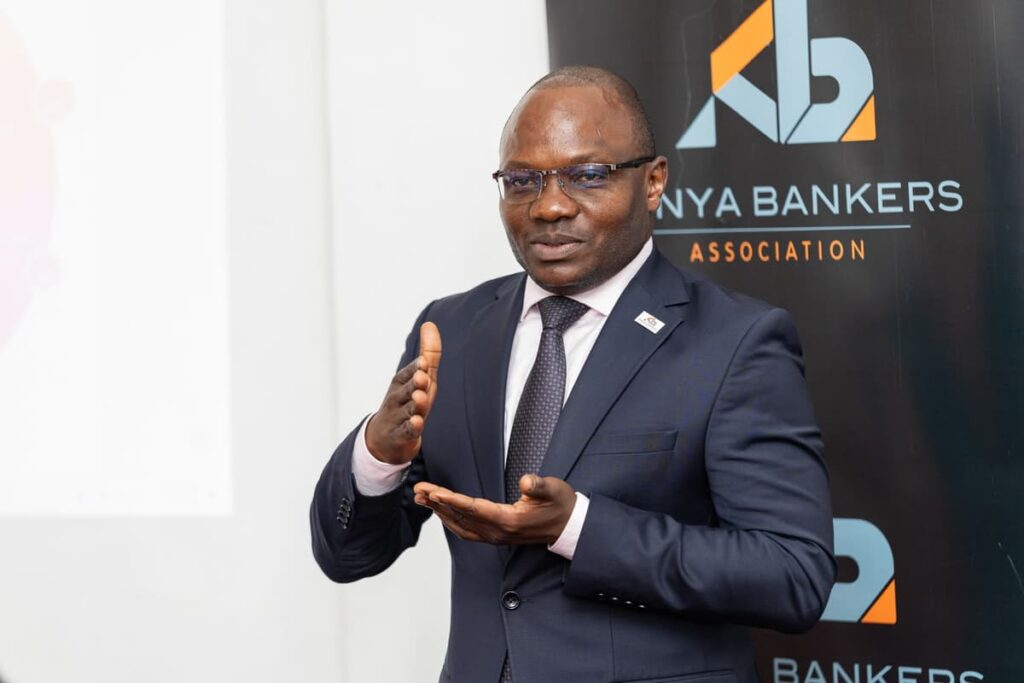
The Kenya Bankers Association (KBA) is urging the Central Bank of Kenya (CBK) to raise its benchmark interest rate at the Monetary Policy Committee meeting set for 9 June 2026, which would mark the first upward adjustment since December 2023.
The central bank has kept the Central Bank Rate steady at 8.75% for two consecutive meetings, following an extended easing cycle that saw ten straight rate cuts from August 2024, representing its longest period of monetary loosening on record.
In a research brief released on 3 June, the KBA’s Centre for Research on Financial Markets and Policy argued that an early rate increase would help stabilise inflation expectations and reinforce price stability over the medium term.
Inflation pressures have been building, with headline inflation rising to 6.7% in May 2026 from 4.4% in March, largely driven by higher fuel prices linked to geopolitical tensions in the Middle East.
The banking industry has warned that secondary effects from rising transport, production and distribution costs could push inflation closer to the upper bound of the CBK’s target range at 7.5%.
While underlying demand-side inflation remains subdued, averaging around 2.5% over the past six months, the KBA argues that supply-driven shocks now justify pre-emptive tightening to prevent broader price escalation.
At the same time, economic momentum has weakened. Kenya’s GDP growth slowed to 4.6% in 2025 from 5.7% in 2023, with projections indicating a further decline to about 4.5% in 2026. Business conditions have also deteriorated, as reflected in the Purchasing Managers’ Index, which remained below the 50-point growth threshold for a third consecutive month, registering 46.6 in May amid rising costs and weaker demand.
Also Read: Africa Finance Corporation Secures Record US$2 Billion Syndicated Loan for Infrastructure Expansion
Credit conditions show a mixed picture. Private sector lending growth recovered to 8.1% in March 2026, supported by earlier rate cuts that brought lending rates down to 14.7%. However, concerns persist over asset quality, with non-performing loans remaining elevated at 15.6%, raising fears that higher inflation could further strain borrowers and slow future credit expansion.
The Kenyan shilling has remained relatively stable at around KSh129.45 against the US dollar, supported by foreign exchange reserves of US$13.2 billion, equivalent to 5.6 months of import cover. However, pressure is building on the external position, as the current account deficit widened to 2.1% of GDP due to a rising import bill, signalling potential medium-term currency risks.