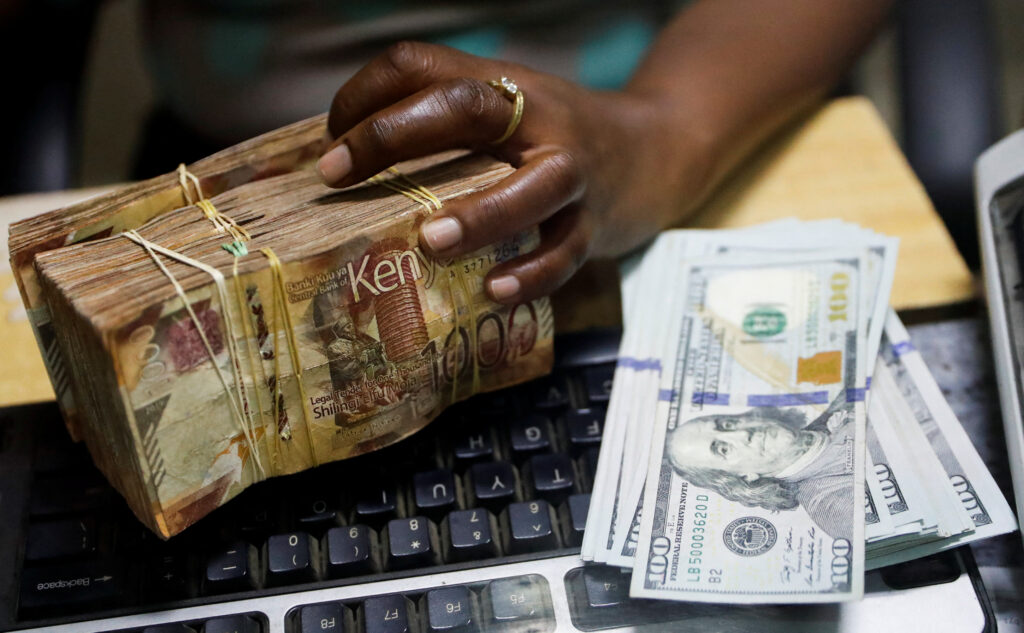
Money sent home by Kenyans living abroad recorded its steepest first-half decline since the aftermath of the 2008 global financial crisis, weighed down by conflict in the Middle East, a new US tax on outbound money transfers and labour market reforms in Saudi Arabia.
Data from the Central Bank of Kenya (CBK) shows diaspora remittances fell 3.03 percent to $2.442 billion (Sh315.75 billion) in the six months to June, compared with $2.518 billion (Sh325.58 billion) during the same period last year. The decline translates to a loss of $76.4 million (about Sh10 billion) in foreign exchange inflows.
It is the largest January-to-June contraction since 2009, when the global financial crisis led to widespread job losses in developed economies and caused remittances to Kenya to drop 11.4 percent.
The downturn followed a strong start to the year. Remittances rose 3.4 percent to $1.274 billion (Sh164.73 billion) during the first quarter, supported by higher inflows in February and March. However, momentum reversed between April and June, with inflows falling 9.2 percent to $1.168 billion (Sh151.02 billion), a decline of $118.2 million (Sh15.28 billion).
Monthly figures show the slowdown intensified through the second quarter, with remittances declining 5.9 percent in April, 10.4 percent in May and 11.2 percent in June, making June the weakest month of the year.
The deterioration coincided with escalating tensions involving Israel and Iran, which disrupted economic activity across the Middle East, where thousands of Kenyans are employed, particularly in Gulf countries. The conflict increased transport costs, disrupted supply chains and fuelled inflation, reducing disposable incomes among migrant workers.
In June, the CBK’s Monetary Policy Committee noted that the conflict had disrupted global supply chains, pushed up transportation costs and inflation, and moderated global economic growth.
CBK Governor Kamau Thugge had earlier warned that the conflict would directly reduce remittances from Gulf countries, which account for around 10 percent of Kenya’s diaspora inflows, while also slowing remittances from larger markets such as the United States through weaker global economic activity.
The World Bank also cautioned in June that as much as $40 million (Sh5.2 billion) in monthly remittances to Kenya was at risk because of the conflict.
The slowdown also followed the introduction of a one percent US excise tax on outbound money transfers, which came into effect on January 1, raising the cost of sending money overseas. Analysts say the tax could encourage migrants to reduce formal remittances or shift to alternative transfer channels, including cryptocurrencies.
Although the CBK has not yet released country-specific data for May and June, its latest figures show remittances from the United States, Kenya’s largest source of diaspora inflows, fell 8.4 percent to $813.6 million (Sh105.12 billion) in the first four months of the year from $888.4 million (Sh114.87 billion) over the same period in 2025.
Also Read: Nairobi Misses Out on Sh5.7bn World Bank Grants After Falling Short of Reform Targets
The $74.8 million (Sh9.67 billion) decline from the US accounted for nearly all of Kenya’s overall first-half reduction, highlighting the country’s importance to diaspora inflows. The US share of total remittances also dropped to 48.7 percent from 53.7 percent a year earlier, marking the first time in recent years that it contributed less than half of recorded inflows.
Before the tax took effect, Kenya Diaspora Alliance global chairman Shem Ochuodho warned that higher transfer costs could drive migrants towards cheaper or informal remittance channels.
Saudi Arabia, another key remittance source, also recorded a significant decline. Inflows from the kingdom fell 24.8 percent to $88.7 million (Sh11.47 billion) in the first four months of the year from $117.9 million (Sh15.24 billion) previously, reflecting labour reforms aimed at increasing employment among Saudi nationals alongside slower economic activity.
Despite weaker inflows from North America, where remittances declined 11.6 percent to $1.278 billion (Sh165.2 billion), stronger performance from other regions helped cushion the overall drop. Transfers from Europe rose 14.3 percent to $514.3 million (Sh66.5 billion), while remittances from the rest of the world increased 4.4 percent to $649.5 million (Sh83.98 billion). These gains partly offset declines from Kenya’s traditionally largest remittance markets.