A defence witness in the ongoing Shakahola massacre trial has told the High Court how he participated in burial activities within the forest settlement, describing a belief system that framed death in spiritual terms.
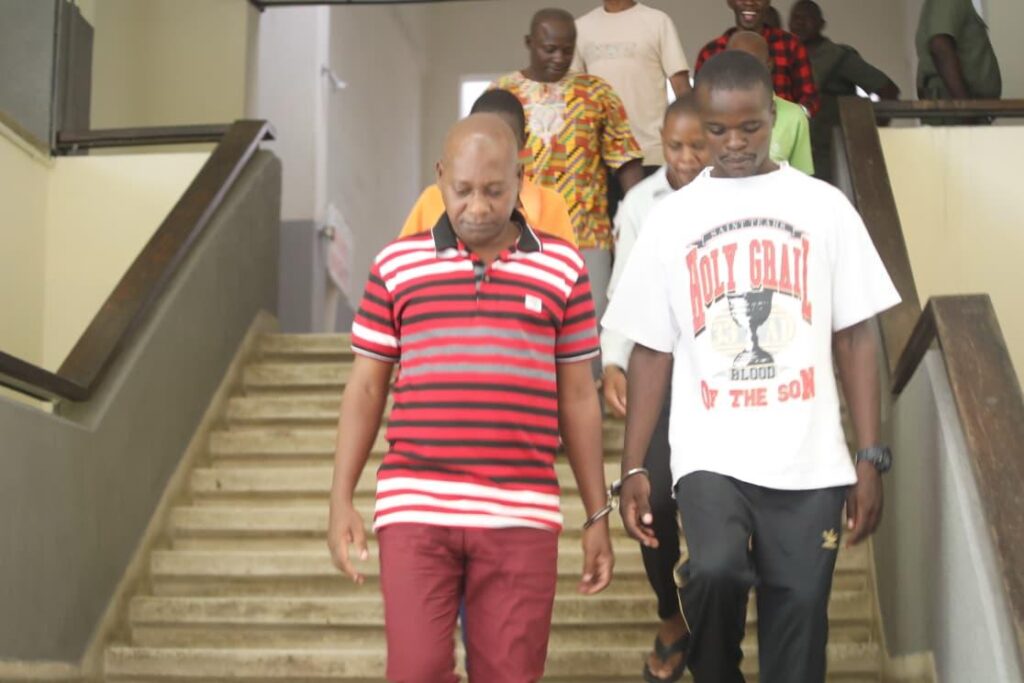
Steven Ngugi, one of the accused persons, was testifying before Justice Diana Kavedza at the Mombasa High Court, where he underwent cross-examination by Deputy Director of Public Prosecutions Jami Yamina.
Ngugi said he assisted in digging graves and burying individuals who had died at Shakahola, maintaining that he acted in “good faith” as a member of the community. He, however, told the court that he could not determine the exact causes of the deaths.
The witness explained that his religious convictions led him to abandon his university studies and relocate to Shakahola in 2023, where he acquired a piece of land for Sh1,500.
He described a strict belief system that discouraged formal education, medical treatment, and certain aspects of modern life, which were viewed as contrary to spiritual teachings.
Ngugi confirmed that prolonged fasting was a common practice within the group, which he said was rooted in religious teachings.
He admitted that he personally engaged in fasting and was at one point admitted to hospital for dehydration after spending extended periods in the forest without sufficient food or water.
He further told the court that within the settlement, deaths were referred to as “weddings,” symbolizing a belief that faithful followers do not die but transition spiritually.
He added that unique terms such as “kupanda mlima” and “kushuka mlima” were used to describe the start and end of fasting periods.
Earlier, Lucas Owino Ogok, an accused in the case, admitted under cross-examination that controversial preacher Paul Mackenzie persistently discouraged eating, framing it as sinful.
His account of being assaulted for refusing to fast further painted a picture of coercion and intolerance within the group, key elements that prosecutors have consistently argued defined life in Shakahola.
Owino further told the court he had embraced extreme beliefs, including the notion that education is evil because it “makes people think differently.”
The other accused to take the stand, namely Steven Sanga, alias Steve wa Mtwapa, described how he moved to Shakahola from Mtwapa following financial hardship during the Covid-19 pandemic.
He attempted to portray his stay in the forest as voluntary including working as a security guard after leasing a piece of land for Sh1000 without an agreement. Sanga then admitted to periodic fasting as a condition for ‘favourable judgement in heaven’.
The other testimony was from Mark Kiongera Kiarie, also an accused who told the court he attended meetings where residents openly confessed plans to starve to death and even assisted in burying a body without a coffin.
READ ALSO;
Night Guard Killed In Fight Over Woman In Kisumu’s Dunga Area