Kenyan households are still grappling with a high cost of living despite fresh data showing inflation moderated slightly in June.
Figures released by the Kenya National Bureau of Statistics (KNBS) on Tuesday indicate that annual inflation eased to 6.4 per cent in June from 6.7 per cent recorded in May, a development that would ordinarily signal some relief for consumers following the sharp increase witnessed the previous month.
However, the marginal decline has done little to ease financial pressure on households as prices of food, transport and other essential goods and services remain elevated.
The latest data shows that living costs continue to rise both month-on-month and compared to the same period last year, leaving many Kenyans worse off than they were in 2025.
Of the 13 expenditure categories used to calculate inflation, nine recorded increases in June, three remained unchanged, while only the housing, water, electricity, gas and other fuels category posted a decline.
Compared with June last year, every major category of goods and services is now more expensive, with transport registering the steepest annual increase at 16 per cent.
Inflation has been on an upward trajectory in recent months, largely driven by higher fuel prices and rising food costs.
According to KNBS, the biggest contributors to inflation remained food and non-alcoholic beverages, transport, and housing, water, electricity, gas and other fuels. Combined, these three categories account for more than 57 per cent of household spending, making them the most significant drivers of living costs.
Food inflation stood at 8.6 per cent in June compared with the same month last year, while transport costs increased by 16.1 per cent. Housing, water, electricity, gas and other fuel costs rose by 3.4 per cent over the same period.
On a monthly basis, the Consumer Price Index (CPI) edged up by 0.2 per cent, rising from 154.56 in May to 154.91 in June. This indicates that although the pace of inflation slowed, the overall price level continued to increase.
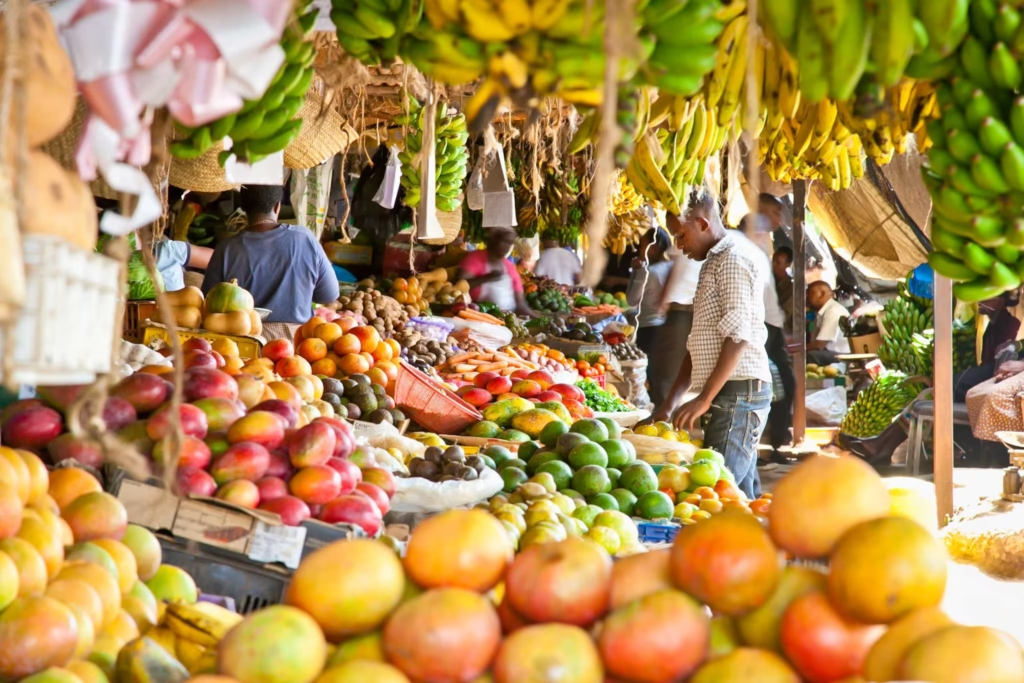
Consumers continued to pay more for several everyday food items despite price reductions in a few commodities.
The price of sukuma wiki rose to Sh114.44 per kilogram in June from Sh110 in May and Sh90 during the same month last year.
Cabbages averaged Sh73 per kilogram, up from Sh72 in May and Sh54 a year earlier.
Tomatoes were selling at about Sh118 per kilogram compared with Sh84 in June 2025, while green grams increased to Sh206.45 per kilogram from Sh191 over the same period.
The average price of beef with bones climbed to Sh760.75 per kilogram from Sh690.15 a year earlier, despite a slight decline from Sh761.20 recorded in May.
Although KNBS data shows the average price of a two-kilogram packet of sifted maize flour fell marginally to Sh159 from Sh160 a year ago, spot checks in retail outlets found popular brands selling for as much as Sh167 per packet.
Cooking oil prices also continued to rise, with a litre retailing at up to Sh360, compared with Sh355 in May and Sh347.17 in June last year.
Also Read: Fuel Consumption Rises 5.4% in Q1 as Economic Activity Strengthens Despite Market Headwinds
Sugar was among the few commodities to become cheaper, with the average price dropping from Sh184.13 to Sh166.62 per kilogram.
According to KNBS Director General Macdonald Obudho, the food and non-alcoholic beverages index increased by 8.6 per cent over the 12 months to June 2026.
Transport costs also remained high despite lower fuel prices during the June pricing cycle, although electricity charges declined over the month.
Beyond food and transport, KNBS noted that households also faced higher costs for healthcare, restaurants and accommodation, clothing, household goods and personal care products, underscoring the continued strain on consumers’ purchasing power.