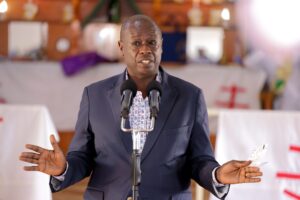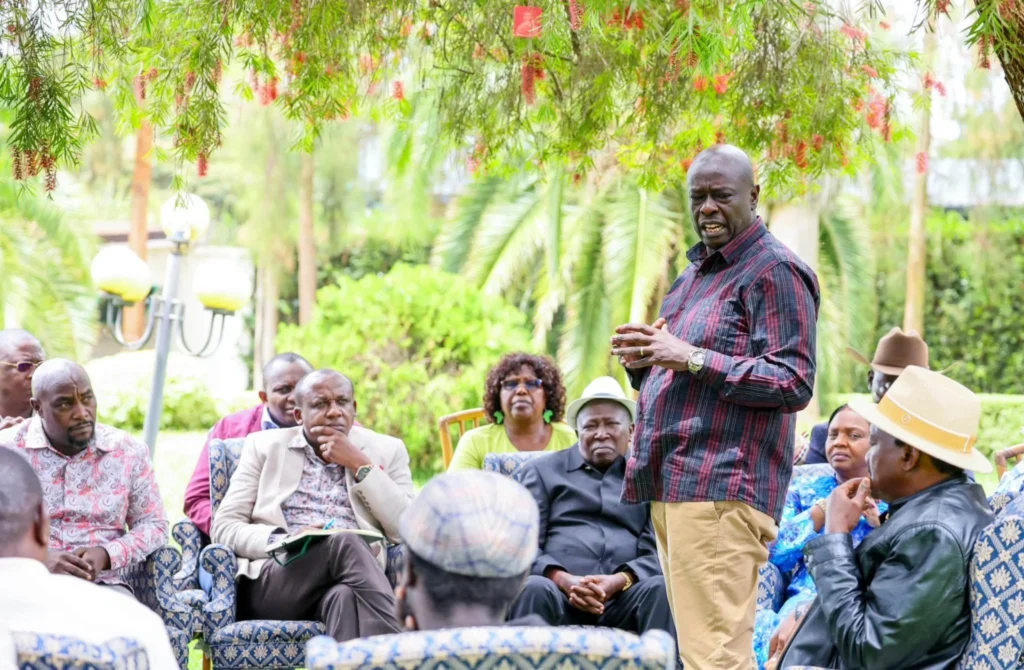
Former Deputy President Rigathi Gachagua has threatened to mobilise 10,000 Kenyans to occupy the offices of the Independent Electoral and Boundaries Commission (IEBC) if it fails to explain voter registration figures in border counties.
Speaking during a media interview on Wednesday, October 28, Gachagua said he had reached an agreement with Nairobi Senator Edwin Sifuna and Embakasi East MP Babu Owino to demand answers from the electoral commission.
The Democracy for the Citizens Party (DCP) leader said they wanted the IEBC to disclose the number of voters registered in Wajir, Mandera and other counties bordering neighbouring countries.
Gachagua warned that the group would mobilise thousands of Kenyans to the commission’s headquarters if its concerns were not addressed.
He said the planned action was intended to compel the electoral agency to provide a clear account of its voter registration activities.
The former deputy president further announced plans to encourage Kenyans to occupy IEBC constituency offices across the country until the commission’s chairperson, Erastus Ethekon, and other commissioners respond to their demands.
Gachagua also questioned the preparations for the planned audit of the voter register ahead of the 2027 General Election.
He challenged the commission to clarify whether it had contracted a firm to conduct the exercise, which is expected to be completed by February 2027.
The DCP leader sought details of the procurement process and the steps being taken to ensure the audit is completed within the stipulated timeframe.
Gachagua’s Remarks Follow IEBC Summons to UDA Secretary General
Gachagua’s statements come days after the IEBC summoned United Democratic Alliance (UDA) Secretary General Hassan Omar to appear before its Electoral Code of Conduct Enforcement Committee over remarks he allegedly made concerning deceased voters participating in elections.
During his appearance before the committee, Omar maintained that his comments were intended to encourage UDA supporters to turn out in large numbers during elections.
Also Read: UoN Given 14 Days to Account for KSh10.6 Billion in Pension and Tax Arrears
He argued that it was impossible for deceased individuals to cast ballots and reiterated that the IEBC had a constitutional responsibility to oversee free, fair and credible elections.
Omar also defended the remarks as political rhetoric, saying they were intended to promote voter mobilisation rather than suggest that deceased people could participate in elections.
The developments have placed renewed attention on voter registration, the integrity of the electoral roll and preparations for the 2027 General Election.