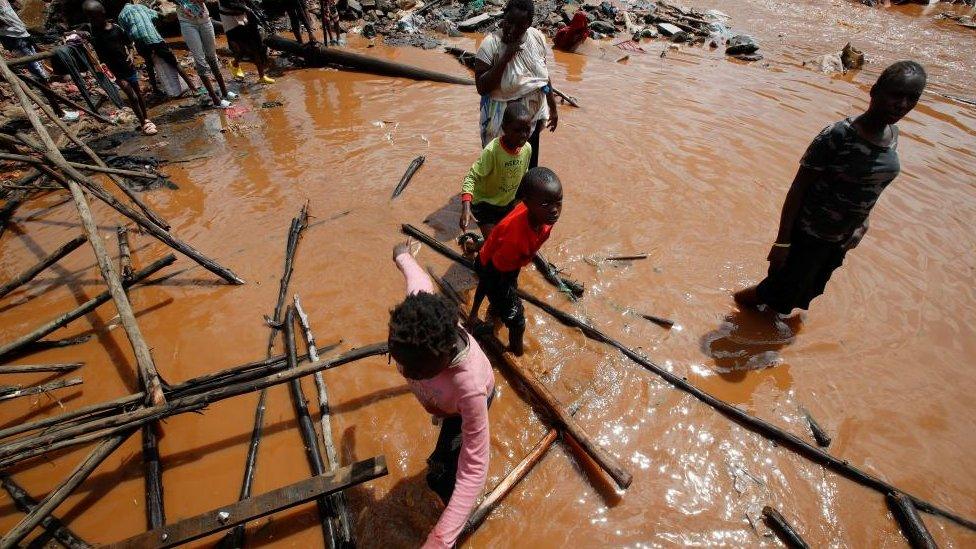
Kenya is grappling with a twin climate emergency as intense rainfall has unleashed severe flooding across Nairobi, the Rift Valley, Western, Eastern, Nyanza and Coastal regions, even as persistent drought continues to batter communities in arid and semi-arid lands (ASALs).
Floodwaters have claimed 42 lives nationwide, with low-lying neighbourhoods submerged, vehicles swept away and informal settlements inundated.
Across several counties, rivers have burst their banks, roads have become impassable and thousands of residents have been forced to flee their homes. The flooding has worsened an already fragile situation in drought-hit regions, where more than three million people are facing food shortages, heightening the urgency for swift and large-scale intervention.
In response, the National Treasury has proposed a supplementary budget of KSh 13.5 billion for the State Department for Special Programmes in the 2025/26 financial year, sharply higher than the initial allocation of KSh 653.7 million.
The proposal, which still awaits parliamentary approval, represents a net increase of KSh 12.9 billion, nearly twenty times the original budget. Most of the additional funding is earmarked for recurrent spending.
The Relief and Rehabilitation programme under Special Initiatives stands to receive the bulk of the funds, with KSh 12.6 billion set aside to support emergency response during humanitarian disasters. The programme plans to provide food assistance to about 3.4 million households and distribute non-food relief items to roughly 200,000 households, reflecting a nationwide effort to reach both rural and urban communities affected by floods and drought.
A significant portion of the funds, about KSh 11.99 billion, will be channelled as transfers to government agencies, suggesting that implementation will largely rely on partner institutions rather than direct execution by the state department. A further KSh 600.2 million is allocated for goods and services, covering logistics, transport and other operational needs critical for rapid disaster response.
Meanwhile, the Accelerated ASAL Development programme, which targets drought-prone areas, is set for a KSh 270.5 million increase, pushing its total allocation to KSh 924.2 million. Of this amount, KSh 758.6 million is designated for recurrent spending, while KSh 165.6 million remains earmarked for capital grants.
Also Read: KenGen Cuts Board Size by a Third in Governance Shake-Up
Spending priorities within the programme include staff compensation, which is set to nearly double from KSh 21.97 million to KSh 42.1 million, as well as transfers to agencies rising by KSh 150.4 million to support community-level interventions in vulnerable regions. The programme aims to ensure full coverage of disaster response operations, strengthen coordination efforts and provide post-disaster assistance to affected households and institutions.
The supplementary estimates point to a government strategy focused squarely on rapid response and broad coverage, with heavy reliance on partner agencies. Capital spending remains unchanged at KSh 165.6 million, signalling that the immediate priority lies in deploying resources and operational support where disasters are unfolding now rather than investing in long-term infrastructure.