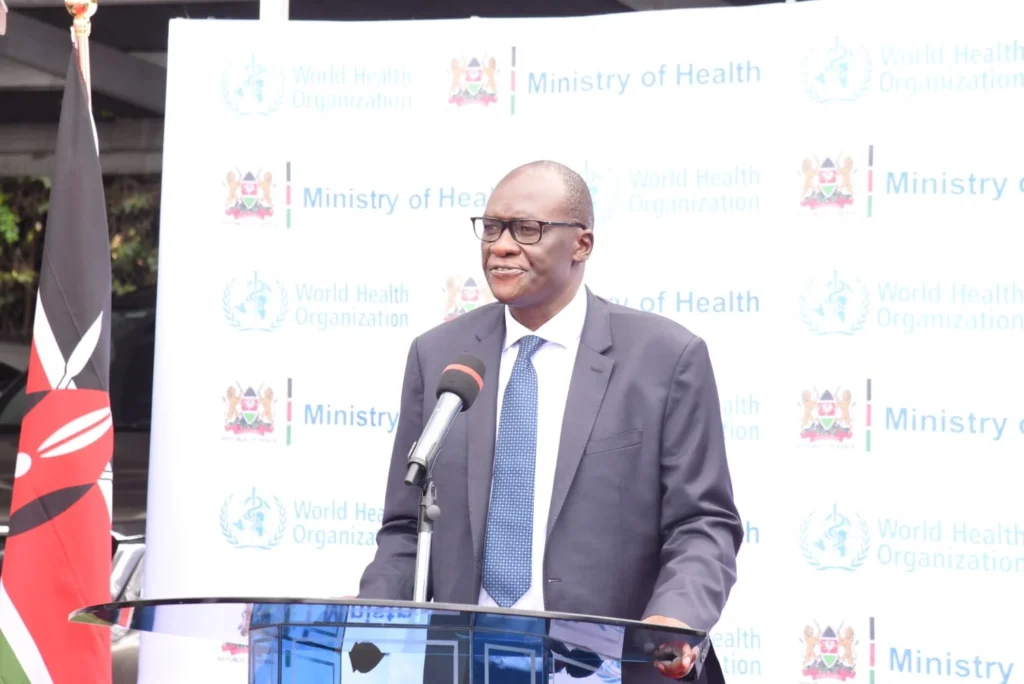
The Director General for Health, Patrick Amoth, has outlined how Ebola is transmitted and the symptoms members of the public should watch out for following Kenya’s confirmation of its first imported case.
Speaking during an interview on Tuesday, October 6, Amoth said Ebola is primarily spread through direct contact with an infected person or the body of someone who has died from the disease.
He explained that transmission can also occur when an individual comes into contact with a contaminated surface through broken skin or mucous membranes.
According to Amoth, Ebola is not transmitted through the air or respiratory droplets.
He listed the common symptoms of the disease as fever, headache, fatigue, muscle pain, vomiting, diarrhoea, abdominal pain and bleeding.
Amoth further noted that three Ebola strains are known to cause major outbreaks: Zaire, Sudan and Bundibugyo.
He explained that the Bundibugyo strain does not currently have a vaccine or specific treatment, meaning patients are primarily managed through supportive care.
The Health DG urged Kenyans to take precautionary measures, including regularly washing their hands with soap or using sanitiser, avoiding crowded areas and maintaining distance from people displaying Ebola-like symptoms.
He also advised the public to temporarily avoid physical greetings such as handshakes and hugs.
“We can avoid handshakes and hugging; we can just wave,” Amoth said.
He urged anyone experiencing symptoms associated with Ebola to seek medical attention at the nearest health facility as soon as possible.
Amoth stressed that early reporting improves the chances of effective supportive management and survival.
Kenya Red Cross CEO Ahmed Idris similarly called for greater cooperation from communities, saying public participation is essential to detecting cases, reporting symptoms and stopping further transmission.
His remarks come after the Ministry of Health confirmed Kenya’s first imported case of Bundibugyo Ebola virus disease.
The patient was a Kenyan national who had lived in the Democratic Republic of Congo (DRC) for seven years. The ministry said he became ill approximately one month earlier and sought treatment at several health facilities in the DRC.
Also Read: Kenya Confirms Its First Ebola Death As Outbreak Spreads
He later travelled by road from the DRC to Kampala before boarding Jambo Jet flight 8523 to Nairobi. He arrived at Jomo Kenyatta International Airport (JKIA) at approximately 1:10pm on Saturday, October 3, where he underwent routine health and immigration screening.
From the airport, a relative and a friend transported him directly to Nairobi Hospital in a Toyota Fielder.
He was immediately isolated in a separate room within the hospital’s Accident and Emergency department before being moved to the East Wing Isolation Facility.
The patient exhibited several symptoms, including fever, chills, severe fatigue and weakness, muscle pain, painful swallowing, a sore throat and bleeding beneath the skin at injection sites.
The Ministry of Health said he received supportive treatment but later died.
The ministry conveyed its condolences to his family and friends following his death.