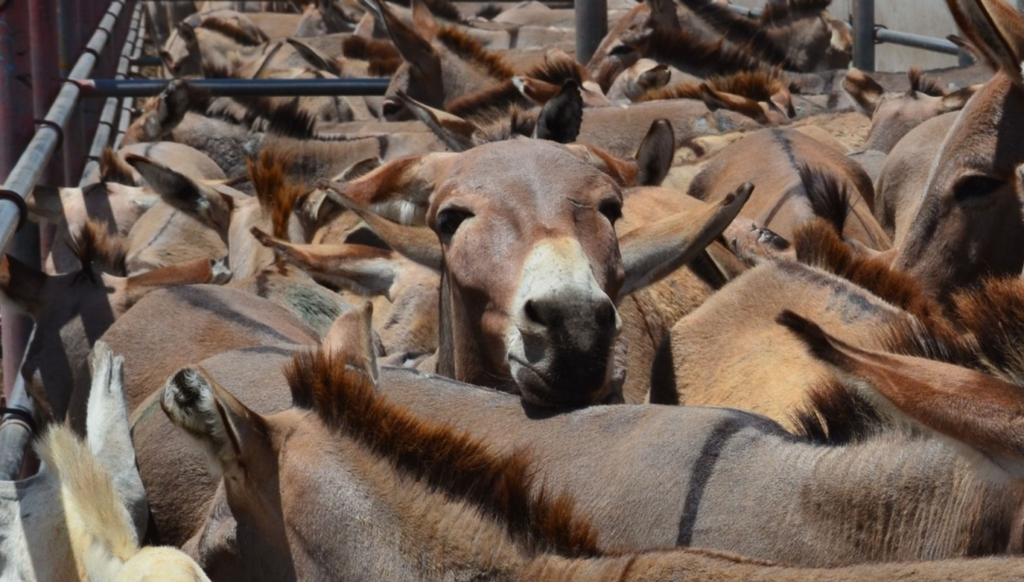
The illegal trade in donkey skins and related products has evolved into a sophisticated organised crime network that is exploiting legal loopholes, weak enforcement and international demand, posing a growing threat to Kenya’s rural economy, public health and national security, a new study has found.
The report says the illicit trade has transformed from isolated cases of livestock theft into a well-coordinated enterprise driven largely by demand for ejiao—a traditional gelatin product made from donkey hides—and other donkey-derived products destined for local and international black markets.
According to the findings, criminal syndicates have developed an efficient “zero-waste” business model in which every part of the animal, including the skin, meat and specialised body parts, is commercialised.
Researchers say the networks exploit porous borders, prolonged drought, institutional weaknesses and contradictions within existing regulations to maintain a steady supply chain while evading authorities.
The study found that the criminal enterprise operates through a layered hierarchy involving local scouts, youth groups and thieves who identify and steal donkeys before passing them through clandestine slaughterhouses and brokers.
Senior financiers and urban-based traders reportedly coordinate logistics and marketing while remaining insulated from direct law enforcement action.
The National Crime Research Centre (NCRC) on Thursday launched a landmark report detailing the extent of theft and illegal trade in donkey skins and related products in Kenya, shedding light on what it describes as an emerging security and socio-economic challenge.
The report, titled Theft and Illegal Trade in Donkey Skins and Related Products in Kenya, is the first comprehensive national study examining the scale, drivers and impacts of donkey theft and the illicit trade in donkey skins.
According to the NCRC, the findings expose the complex nature of the illegal trade, including the involvement of organised criminal actors, sophisticated supply chain networks and the growing threat posed by transnational organised crime.
The study also outlines a raft of recommendations aimed at strengthening law enforcement responses, enhancing policy and legislative frameworks, improving inter-agency coordination, promoting regional cooperation and safeguarding Kenya’s donkey population.
The report says the syndicates rely on forged movement permits, fraudulent documentation, bribery and what researchers describe as “legal mimicry” to disguise illegally acquired animals as legitimate livestock, enabling them to bypass regulatory controls.
Despite periodic police operations, the study concludes that enforcement remains largely reactive and fragmented.
Researchers attribute this to inadequate resources, poor coordination among enforcement agencies, outdated legislation, insufficient forensic capacity and the absence of gazetted holding grounds for recovered animals.
The report also highlights a lack of species-specific legislation governing donkey theft and trade, making prosecutions difficult, particularly once stolen animals have been slaughtered and ownership becomes difficult to establish.
Institutional corruption and intimidation of witnesses further weaken investigations, while cultural beliefs surrounding the medicinal and commercial value of donkey products continue to fuel demand in some regions.
The study notes that prevention efforts currently involve multiple agencies, including the National Police Service, National Government Administration Officers and veterinary departments, working alongside community initiatives such as Nyumba Kumi and animal welfare organisations.
Among the interventions cited are community surveillance groups, night patrols, highway interception operations and digital platforms such as “Punda-Wangu,” which have shown success in some areas. However, researchers say these initiatives suffer from inconsistent implementation, inadequate funding and the absence of integrated intelligence-sharing systems.
Beyond criminality, the report warns that the illegal trade is causing profound social and economic disruption in rural communities.
As donkey populations decline, traditional systems of mutual support are breaking down, giving way to mistrust, vigilantism and increased insecurity. Families that depend on donkeys for farming, transport and access to water are becoming more vulnerable, with many forced to abandon agricultural activities or migrate in search of alternative livelihoods.
The researchers caution that the continued depletion of donkey populations could have irreversible consequences because the animals reproduce slowly, taking three to four years to recover their numbers.
Without stronger intervention, the report warns, Kenya risks losing a vital livestock resource that underpins agricultural productivity and rural livelihoods across large parts of the country.
The study recommends comprehensive legal reforms, stronger cross-border cooperation, enhanced intelligence sharing among security agencies, improved veterinary oversight, increased funding for enforcement agencies and tougher penalties targeting organised criminal networks behind the illicit trade.
It also calls for better community awareness, improved protection for whistleblowers and the establishment of a coordinated national strategy to dismantle criminal syndicates and safeguard Kenya’s remaining donkey population before the crisis worsens.
READ ALSO;
Toddler Burned To Death As Man Sets Mother’s House Ablaze In Kisii