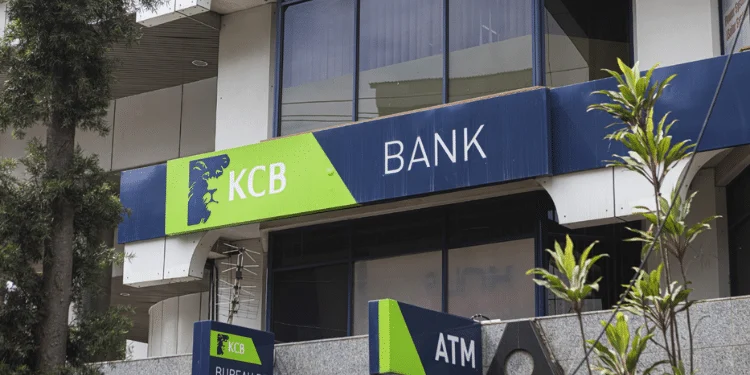
KCB Group has recorded a strong performance in the first half of 2026, becoming the second Kenyan banking group to surpass KSh100 billion in half-year operating income after Equity Group achieved the milestone in 2025.
The lender’s operating income rose 9.5% to a record KSh108.09 billion, while profit before tax increased 20.8% to KSh49.32 billion. The growth was supported by higher funded and non-funded income, reduced loan impairment charges and improved cost efficiency.
For the six months to June 2026, consolidated profit after tax grew 14% to KSh36.87 billion, up from KSh32.33 billion a year earlier. Profit attributable to shareholders rose 14.5% to KSh36.07 billion, marking KCB’s strongest first-half earnings on record.
The Group’s balance sheet also expanded by 16.8% to KSh2.30 trillion, more than triple the KSh746.52 billion recorded in the first half of 2019.
However, the slower growth in net profit compared with pre-tax earnings was partly due to a 46% rise in the tax bill to KSh12.46 billion.
KCB’s board approved a 50% increase in the interim dividend to KSh3 per share, resulting in a total payout of KSh9.64 billion. Shareholders on the register as at September 2 will receive the dividend on November 10. Earnings per share rose 14% to KSh22.45.
Lower funding costs support income growth
Net interest income increased 7% to KSh74 billion, despite total interest income growing by a more modest 4% to KSh104.47 billion.
Interest expenses fell 2.9% to KSh30.46 billion after the bank repriced expensive deposits and reduced its cost of funds from 3.9% to 3.4%.
Non-interest income delivered stronger growth, rising 15.4% to KSh34.08 billion and accounting for 31.5% of total income, up from 29.9% previously.
Net fees and commissions increased by 18%, with lending fees jumping 30% on the back of higher loan volumes. Foreign exchange income also climbed 22% to KSh6.35 billion as transaction volumes increased.
Operating expenses, excluding impairment charges, rose 6% to KSh47.99 billion, reflecting continued investment in technology as well as costs linked to business and branch expansion.
Despite the higher expenses, faster revenue growth helped KCB improve its cost-to-income ratio to 44.4% from 46%.
Loan impairment charges declined 13.6% to KSh10.77 billion, while the cost of risk improved to 1.7% from 2.2%.
Loan book expands as bad debts fall
KCB’s gross loan portfolio increased 14.2% to KSh1.35 trillion, while net loans rose 13.3% to KSh1.24 trillion.
Customer deposits grew 15.1% to KSh1.71 trillion, supported by the acquisition of new customers across the corporate and retail segments. Deposits accounted for 74% of the Group’s funding.
At the same time, asset quality improved significantly. Gross non-performing loans fell by KSh17.24 billion to KSh203.83 billion from KSh221.07 billion, reducing the NPL ratio to 15.1% from 18.7%.
KCB attributed the improvement to loan recoveries, rehabilitation of distressed facilities, settlements, government engagements and strategic write-offs. These measures have helped reduce the stock of bad loans by roughly KSh30 billion over the past 15 months.
Manufacturing and trade continued to experience the greatest pressure, while real estate and personal lending showed notable improvement.
KCB’s regional businesses also remained a key contributor to earnings. Operations outside KCB Bank Kenya generated KSh15 billion in profit before tax, representing a 10% increase, with Tanzania, Uganda, South Sudan and the Group’s non-banking businesses supporting the growth.
Also Read: Sanlam Allianz Holdings (Kenya) PLC Posts S124.6 Million Half-Year Net Profit
KCB Investment Bank recorded a particularly strong performance, with profit before tax surging 227% to KSh503 million. KCB Corporate Trustee Services also posted an 80% increase to KSh142 million.
Digital lending continued to expand, with mobile loan disbursements rising 25% to KSh314 billion, equivalent to roughly KSh1.7 billion per day.
KCB closed the half-year with a return on equity of 21.1%. Management is targeting a full-year return on equity of between 20% and 22%, an NPL ratio of 14% to 16% and a cost-to-income ratio of 42% to 44%.
Loan and deposit growth had already exceeded the bank’s full-year guidance by the end of June, pointing to continued momentum in the second half of the year.