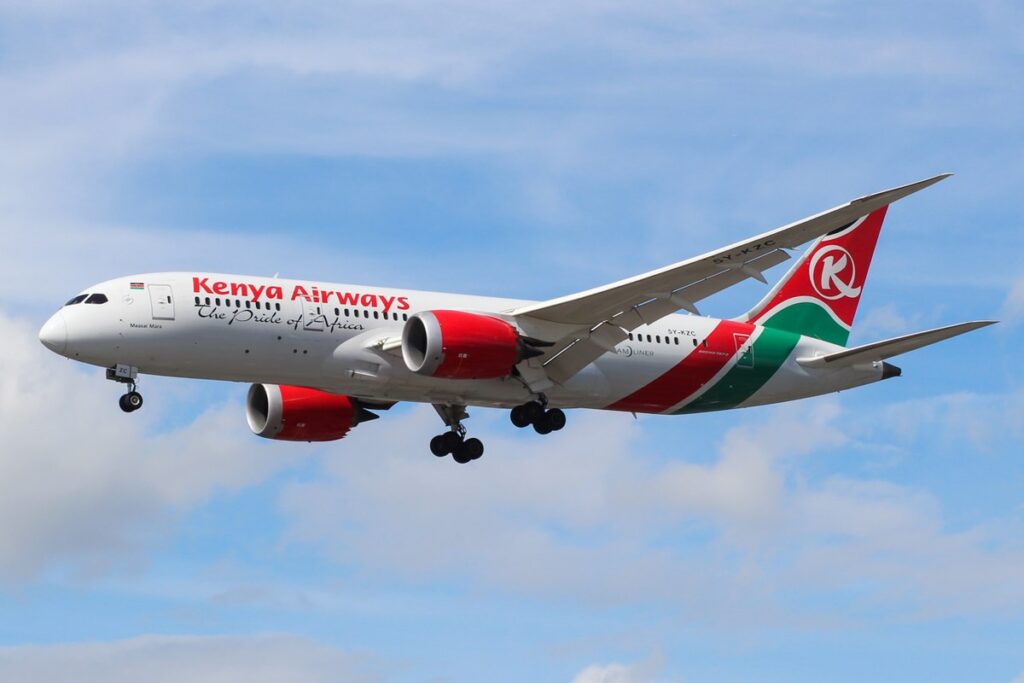
Kenya Airways has cautioned shareholders that its earnings for 2025 will be at least a quarter lower than last year, after three Boeing 787-8 Dreamliners were grounded, cutting long-haul capacity and depressing passenger numbers and revenue.
The carrier’s board, in a notice to investors, said forecasts for the year ending 31 December 2025 point to a significant deterioration in performance. The move follows a dramatic swing in fortunes: Kenya Airways made a KSh 5.4 billion profit in 2024, only to sink into a KSh 12.1 billion net loss in the first half of 2025 as income and available seats fell.
The airline attributed the warning to severe operational disruptions linked to the grounded aircraft and ongoing supply chain constraints. Despite a global rebound in international travel, the sector is still hamstrung by engine shortages, scarce spare parts and a tight market for replacement aircraft. Kenya Airways confirmed that three Dreamliners, roughly a third of its wide-body fleet, remain out of service, a blow that has directly eroded earnings.
Also Read: FAO Hands Over KIAMIS To Ministry As Kenya Moves To Digitize Agricultural And Livestock Data
Even with the setbacks, the board says management is pressing on with recovery measures. These include work to return the grounded jets to service, tighter cost control, and efforts to secure new partnerships and raise capital.
Last year had offered a glimmer of stability. Kenya Airways reported KSh 188.5 billion in total income for 2024 and an operating profit of KSh 16.6 billion, while trimming its liabilities from KSh 317.9 billion to KSh 297.3 billion. That momentum faltered in 2025, with first-half revenue sliding to KSh 75 billion following the capacity crunch and a fall in passenger traffic. The airline posted an operating loss of KSh 6.2 billion, driven higher by fleet ownership costs, though it remains cautiously optimistic as one Dreamliner is already back in service and the remaining two are expected to return later in the year.
The profit warning was issued with the Capital Markets Authority’s approval.