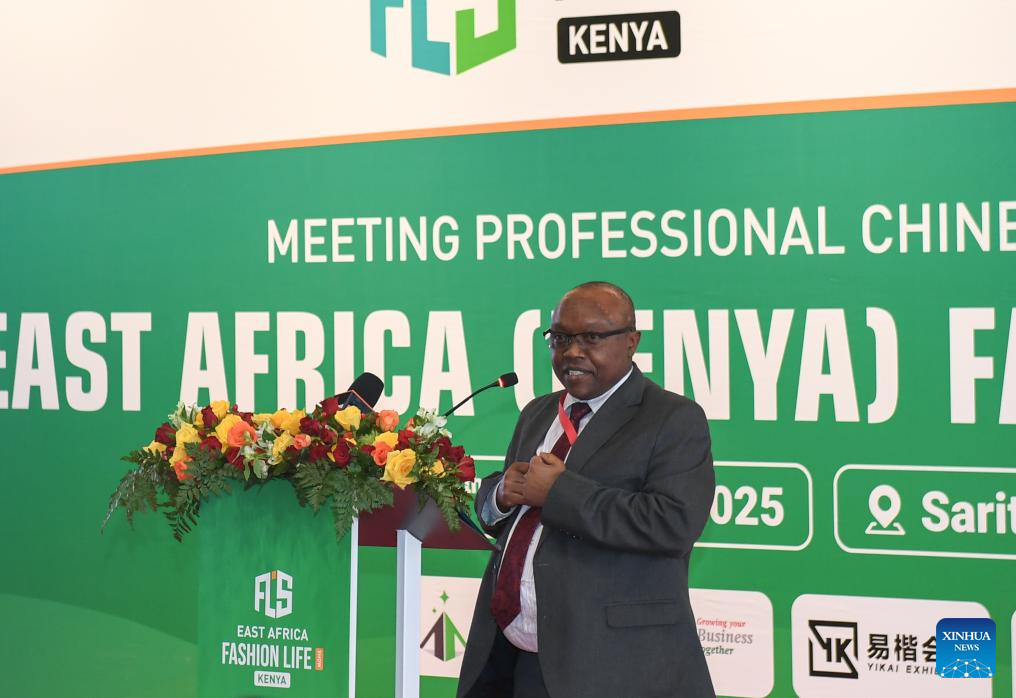
Kenya’s fashion industry is seeking to tap China’s advanced manufacturing, technology and e-commerce ecosystem to expand production, strengthen competitiveness and help local brands access regional and international markets.
The opportunity took centre stage at the third East Africa (Kenya) Fashion Life Show held at the Sarit Expo Centre in Nairobi, which brought together manufacturers, designers, retailers, distributors, importers, exporters and professional buyers.
The three-day event, held from August 13 to 15, attracted nearly 120 companies, including close to 100 Chinese exhibitors and about 20 Kenyan firms.
The exhibition turned Nairobi into a trading hub for textiles and apparel, footwear, fashion accessories, watches, beauty products, home and lifestyle goods, electronics, lighting and packaging solutions.
For Kenya’s fashion sector, however, the bigger opportunity lies beyond importing finished goods. Industry players are looking to use China’s manufacturing capabilities, technology and supply chains to strengthen local production and develop Kenyan brands that can compete globally.
Afripeak Expo Kenya managing director Gao Wei said the growing exhibition demonstrated increasing demand for direct engagement between African businesses and international manufacturers.
He said organisers expected the event to generate sourcing deals, distribution agreements, investment and broader commercial partnerships.
The expo also connected Kenyan designers and fashion institutions with Chinese suppliers of fabrics, accessories, garment-making machinery and other production inputs. Such partnerships could enable local designers to scale beyond small-scale operations while preserving their distinctive African designs.
Kenya National Chamber of Commerce and Industry national director Ken Onditi said closer ties with Chinese companies could give Kenyan businesses access to technology, manufacturing expertise, investment and international markets.
He urged fashion businesses to move beyond sourcing finished products and instead explore technology transfer, manufacturing partnerships, design collaboration and access to global markets.
According to Onditi, such cooperation could help Kenyan enterprises climb the value chain, expand domestic production and develop internationally competitive brands.
The scale of China’s fashion manufacturing industry highlights the opportunity available to Kenya. China exported clothing and apparel accessories worth $151.18 billion (Sh19.5 trillion) in 2025, cementing its position as one of the world’s leading fashion manufacturing centres.
Kenya does not need to replicate China’s model wholesale. Instead, businesses can adopt relevant production technologies, manufacturing systems, digital commerce platforms and supply-chain practices while combining them with Kenyan creativity, cultural identity and access to the wider African market.
Also Read: ODM-Clad Youths Attack And Loot Tourist Hotel In Homa Bay
Industry experts say Kenya must also move beyond cut-make-and-trim operations and increase local value addition in areas including fabric production, design, branding, accessories, packaging, digital retail and distribution.
KNCCI president Erick Rutto said the exhibition gave Kenyan businesses an opportunity to showcase their products, build international relationships and identify new markets.
He encouraged companies in textiles, apparel, fashion, cosmetics, home décor and consumer goods to use such platforms to establish commercial links and explore export and expansion opportunities.
A buyer-supplier matchmaking programme was among the key features of the expo, connecting Chinese manufacturers with Kenyan and regional importers, distributors, retailers and professional buyers.
Discussions covered watches and clocks, home appliances and consumer electronics, with participants exploring sourcing, pricing, distribution, market access and long-term partnerships.
Wei said Chinese companies could offer machinery, fabrics, production technology and supply-chain expertise, while Kenyan firms could provide local designs, market knowledge and access to Africa’s expanding consumer base.
With Africa’s population, urbanisation and middle class continuing to grow, Kenya is well placed to serve as a gateway to the East African Community and the broader African Continental Free Trade Area.
Onditi said combining Chinese manufacturing expertise with Kenya’s creative strengths could help transform the country’s fashion industry.
The next challenge will be turning connections made at the expo into concrete investments, technology transfers, manufacturing partnerships and export opportunities that deepen Kenya’s fashion value chain.