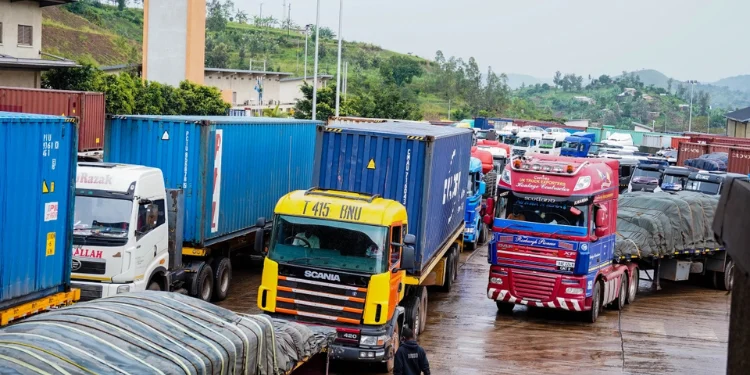
Kenyan long-distance truck drivers are stopping cargo journeys to the Democratic Republic of Congo (DRC) following the killing of four colleagues by suspected rebels along the Beni-Kisangani route.
The latest attacks, which claimed the lives of two drivers and their co-drivers, have raised fresh concerns over the safety of the Northern Corridor and the potential disruption of regional trade.
Transport associations have advised drivers to avoid the Beni-Kisangani route until security improves. Several Kenyan truckers already in the DRC have parked their vehicles in Mambasa, Ituri Province, as they wait for the situation to stabilise.
Kenya Long Distance Truck Drivers Union official Roman Waema said drivers in Mambasa had been forced to suspend their journeys, while those yet to enter the DRC were being advised to stay away for the time being.
The disruption could affect cargo moving from the Port of Mombasa to the DRC, which is Kenya’s third-largest transit destination. The DRC accounts for 7.2% of total transit cargo handled at the port, behind Uganda at 83.2% and South Sudan at 9.9%.
The 1,700-kilometre Northern Corridor connects Mombasa to Uganda, Rwanda, Burundi and eastern DRC, serving as a vital trade route for manufactured goods, food, fuel and industrial supplies destined for landlocked markets.
Transporters say worsening insecurity, combined with poor roads in the DRC, has made the route increasingly costly and difficult to predict.
Kenya Long Distance Truck Drivers Association Secretary-General Nicholas Mbugua said poor infrastructure and insecurity make it difficult for drivers to estimate journey times or even determine whether they will return safely.
A truck immobilised along the route can cost a transporter at least $247, or about KSh31,951, each day. During peak disruptions, as many as 1,500 trucks have reportedly been stranded, potentially resulting in losses running into tens of millions of shillings daily.
Cargo owners also face additional expenses from delays, including demurrage charges averaging about $70, equivalent to KSh10,885, per container for every day beyond the free period.
The Kenya Transporters Association has blamed poor roads and prolonged delays for mounting losses, while the Shippers Council of Eastern Africa has called for urgent investment in transport infrastructure.
South Sudan also poses security risks
The security concerns extend beyond the DRC, with Kenyan truckers continuing to report attacks, harassment and extortion in South Sudan.
More than 60 cases involving assaults, extortion, flogging and other forms of abuse have reportedly been recorded this year.
Drivers say they are routinely subjected to illegal payments at roadblocks, including demands to transport charcoal and pay for livestock allegedly killed elsewhere and placed along the road. Some truckers have also accused security personnel of assaulting them.
Also Read: Co-op Bank Profit Climbs 28% to KSh18 Billion in Record Half-Year Performance
Foreign truck drivers are estimated to lose about $500, or KSh64,680, in illegal payments while travelling along the 125-kilometre stretch between Aru Junction and Nesitu.
The drivers’ association says at least 10 foreign truckers have been killed in South Sudan since 2021, while dozens more have suffered gunshot wounds and other permanent injuries.
Previous protests by truckers over insecurity have disrupted the supply of food, fuel and other essential commodities to South Sudan.
Continued insecurity in both markets risks increasing transport costs, delaying deliveries and discouraging traders from using the Northern Corridor.
Industry stakeholders say restoring security in the DRC and South Sudan is crucial for protecting truck drivers, maintaining regional trade and preserving Mombasa’s role as a key gateway to East Africa.


