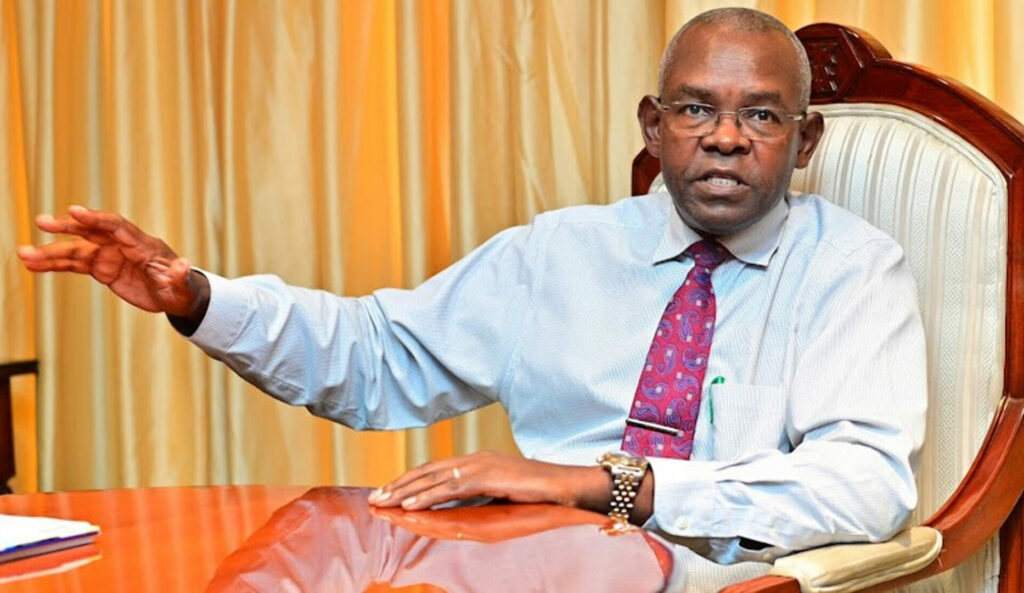
Kenya’s foreign exchange reserves are projected to reach a record $16 billion (Sh2.06 trillion), strengthening the country’s ability to cushion the shilling against global economic shocks while reinforcing investor confidence.
Central Bank of Kenya (CBK) Governor Kamau Thugge said the reserves could increase to the equivalent of seven months of import cover, comfortably above the international benchmark of four months, supported by expected foreign currency inflows.
Speaking at the Kenya Bankers Association conference in Mombasa, Thugge attributed the anticipated growth in reserves to proceeds from the government’s sale of its 15 per cent stake in Safaricom to Vodacom, alongside Nedbank’s investment in NCBA Group. He noted that the stronger reserve position would help stabilise the exchange rate and shield the economy from external shocks, including geopolitical tensions in the Middle East and climate-related risks.
CBK data indicates the country’s reserves have already risen to $14.1 billion (Sh1.82 trillion), equivalent to six months of import cover, after increasing by nearly $954 million (Sh123 billion) within two weeks. The rise was largely driven by $750 million (Sh97 billion) in World Bank financing aimed at supporting Kenya’s fiscal reforms, debt management and economic resilience.
Treasury Cabinet Secretary John Mbadi recently said more than Sh200 billion from the Safaricom stake sale is expected to be deposited into the government’s accounts, with the funds earmarked for the National Infrastructure Fund at the CBK, joining Sh103 billion from the Kenya Pipeline Company transaction.
Kenya’s improved external position has also been supported by tighter monetary policy, stronger diaspora remittances, rising tourism earnings, successful Eurobond liability management, multilateral financing and sustained reserve accumulation. These factors have helped stabilise the foreign exchange market, with the shilling trading at about 129.2 to the US dollar for nearly two years, easing inflationary pressures and lowering the cost of servicing external debt.
Also Read: Kenya’s Import Bill Outpaces Export Growth as Grain Purchases Surge
A stronger reserve position enables the CBK to intervene more effectively in the foreign exchange market during periods of heightened demand for dollars, reducing volatility and reassuring investors of Kenya’s ability to meet its external obligations. Thugge said this confidence supports foreign direct investment, lowers borrowing costs and encourages business expansion.
The positive outlook comes despite mounting global uncertainty. Ongoing tensions in the Middle East have disrupted key shipping routes, pushing up oil prices, freight costs and insurance premiums, factors that could increase Kenya’s import bill and fuel inflation. The World Bank and the United Nations Conference on Trade and Development have warned that prolonged instability could weigh on household spending, private investment and import-dependent economies.
Thugge acknowledged that Kenya’s current account deficit has widened due to weaker exports and slower remittance inflows from the Gulf, which accounts for about 10 per cent of the country’s annual remittances and exports. Nevertheless, the CBK expects continued capital inflows to sustain the country’s external position.
According to the latest UN Trade and Development World Investment Report, Kenya attracted $3.2 billion (Sh413 billion) in foreign direct investment in 2025, up from $2.3 billion (Sh297 billion) the previous year, with investments concentrated in digital infrastructure, renewable energy, manufacturing and financial services. The CBK expects continued foreign investment and multilateral financing to keep reserves comfortably above six months of import cover.