Kenya’s public and publicly guaranteed debt climbed by KSh1.2 trillion during the 2025/26 financial year, reaching KSh13.01 trillion by June 2026, according to the National Treasury.
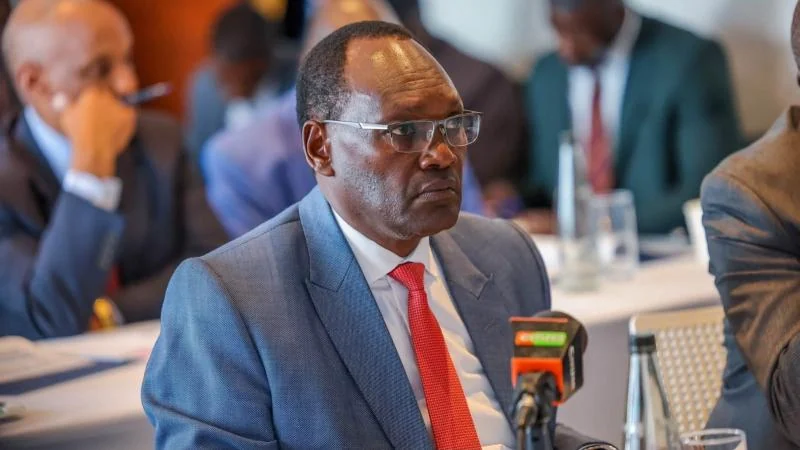
Treasury Principal Secretary Chris Kiptoo disclosed the figures on Tuesday, October 27, while appearing before the National Assembly’s Departmental Committee on Finance and National Planning.
Kiptoo said the country’s debt had risen from KSh11.81 trillion in the previous financial year, increasing pressure on government finances amid mounting debt repayments, pending bills and borrowing costs.
He revealed that the government spent KSh716.1 billion servicing external debt during the 2025/26 financial year, comprising KSh504.3 billion in principal repayments and KSh211.8 billion in interest payments.
Despite the growing debt burden, Kiptoo told the committee that the National Treasury had met all its public debt servicing obligations during the period. He also reported that the government had published a comprehensive External Public Debt Register.
However, the Treasury chief acknowledged that rising debt levels and outstanding financial commitments had reduced the government’s fiscal space, limiting its ability to fund other development priorities.
Kiptoo attributed the 2025/26 financial year’s performance to continued economic resilience, stable macroeconomic conditions, improved domestic revenue mobilisation and ongoing efforts to manage public debt and fiscal pressures.
Treasury Reports 93.3% Budget Absorption
Beyond the debt figures, the National Treasury recorded an overall budget absorption rate of 93.3% during the 2025/26 financial year.
Kiptoo said the State Department had an approved budget of KSh127.1 billion, of which KSh118.6 billion had been spent by June 30, 2026.
Recurrent expenditure recorded an absorption rate of 95.2%, with KSh85.5 billion spent against an approved allocation of KSh89.9 billion.
The Treasury also reported improved economic growth during the first quarter of 2026, with real gross domestic product (GDP) expanding by 5.3%, up from 4.9% during the corresponding period in 2025.
According to Kiptoo, the growth was supported by expansion across several sectors, including agriculture, manufacturing, real estate and financial services.
Other achievements highlighted by the State Department included the enrolment of 1,495,865 informal sector workers in the voluntary pension scheme and the integration of 22,042 government services into the e-Citizen platform.
The department also facilitated antiretroviral therapy for 1.36 million adults and children under the Global Fund Programme. Kiptoo further reported 100% HIV testing and treatment coverage among tuberculosis patients.
MPs Question KSh475 Billion in Pending Bills
During the session, members of the committee raised concerns about the government’s outstanding bills and its growing reliance on domestic borrowing to finance the budget.
Committee chairperson and Molo MP Kuria Kimani questioned when businesses that had supplied goods and services to the government would receive payment for outstanding claims estimated at KSh475 billion.
The lawmakers warned that increased domestic borrowing could restrict access to credit for private businesses by absorbing funds that would otherwise be available to the private sector.
Butula MP Joseph Oyula called on the government to reduce domestic borrowing and prioritise settling pending bills, arguing that concessional external loans could offer a more favourable financing option in certain circumstances.
Oyula said domestic financing had continued to increase annually and urged the government to take measures to reverse the trend while clearing its outstanding obligations.
Kesses MP Julius Rutto also sought clarification on the amount of pending bills accumulated by county governments. He questioned why the liabilities remained unsettled despite counties receiving funds from the national government.
Rutto argued that pending bills were obligations that had to be honoured and called for greater clarity on the outstanding amounts across the country.
Treasury Outlines Plan to Clear Pending Bills
In response, Kiptoo said the government’s adoption of an accrual accounting system a year earlier had helped limit the accumulation of new pending bills.
He added that the National Treasury had issued firm instructions requiring pending bills to be treated as a first charge on government budgets.
Kiptoo further disclosed that the Treasury was processing KSh255 billion in pending bills that had been verified and recommended for settlement.
Also Read: LSK Appeals In Supreme Court Over Ruling Granting IG Power To Recruit Police Officers
Of this amount, KSh80 billion had already been cleared through securitisation, with the remaining balance expected to be settled by the end of 2026.
The Treasury Principal Secretary also revealed that county governments had accumulated KSh173 billion in pending bills, with Nairobi County accounting for approximately half of the total.
The disclosures come amid growing scrutiny of Kenya’s debt levels, the cost of servicing government loans and the accumulation of unpaid bills owed to businesses that provide goods and services to public institutions.