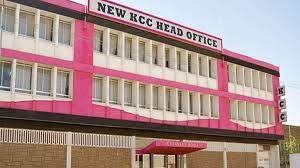
The government has signalled that New Kenya Co-operative Creameries (New KCC) could be handed over to private operators under a leasing arrangement if the latest round of financial support fails to turn the company around.
Over the last three years, the State has poured roughly KSh6 billion into the dairy processor to keep it afloat, settle farmers’ arrears and revive its commercial performance. However, President William Ruto says the injections have produced little improvement, prompting the government to consider a different model, similar to what was done in the sugar industry.
“Despite releasing Sh6 billion to KCC, the company is still struggling financially. This mirrors what we saw in the sugar sector, where public funds were repeatedly spent with no meaningful results,” Ruto said.
He announced that the Treasury will release a further Sh2 billion this month, but warned that it would be the final direct bailout unless reforms begin to deliver.
“If we do not see the results we want, we will move to leasing just as we did with sugar millers. I have instructed the ministry in charge to implement reforms at KCC,” the President added.
The approach would follow the government’s sugar sector overhaul, where in May last year Nzoia, Chemelil, Sony and Muhoroni sugar companies were leased to private millers on 30-year contracts. West Kenya Sugar took over Nzoia, Kibos Sugar and Allied Industries assumed control of Chemelil, Busia Sugar Industry Ltd leased Sony, and West Valley Sugar Company took over Muhoroni.
Agriculture and Livestock Development CS Mutahi Kagwe said leasing represents a break from earlier privatisation plans that were shelved after public consultations and parliamentary review.
“The aim is to let private investors inject capital, expertise and efficiency, while the government concentrates on regulation and accountability,” Kagwe said. “The sugar industry consumed billions of shillings in public money. Strategic investment was needed to change its fortunes.”
Audit red flags
The push to restructure New KCC follows a troubling audit by Auditor-General Nancy Gathungu for the year ending June 30, 2022. She issued a qualified opinion after failing to verify assets worth Sh3.65 billion due to missing ownership documents and unresolved land disputes.
The audit found that 18 properties valued at Sh853.9 million had no title deeds. Other parcels, including disputed land in Nairobi and properties registered under third parties, were neither valued nor disclosed in the accounts. At the Coast, five acres belonging to the Miritini milk processing plant had been encroached by informal settlers, putting ownership at risk.
“As a result, the valuation and ownership of land recorded in the financial statements could not be confirmed,” Gathungu said.
Also Read: National Assembly Opens Public Hearings on Proposed Safaricom Stake Sale
She also flagged trade and other receivables totalling Sh1.89 billion, with more than Sh1.01 billion overdue for over 120 days. A further Sh175 million was owed by a company that had since shut down, while documentation for a Sh334.5 million provision for bad and doubtful debts was missing.
The Auditor-General warned that New KCC was technically insolvent, with current liabilities of Sh4.02 billion exceeding current assets of Sh3.3 billion, leaving a negative working capital position of Sh711.7 million that was not disclosed.
“The company’s ability to continue operating depends on continued support from the national government and its creditors,” the report said.
Other issues included unresolved bank debit errors of Sh3.3 million dating back to 2015, revenue shortfalls of Sh2.8 billion, and underspending of Sh1.95 billion, all of which may have affected service delivery.
Governance weaknesses were also cited, including 38 staff holding acting positions beyond the legal six-month limit and earning Sh11.6 million in allowances, as well as payroll deductions that left some employees earning below the statutory one-third of their basic salary.
Even so, the Auditor-General said that internal controls, risk management and governance systems were generally sound, and that public funds were largely used lawfully and for their intended purposes, aside from the noted breaches.