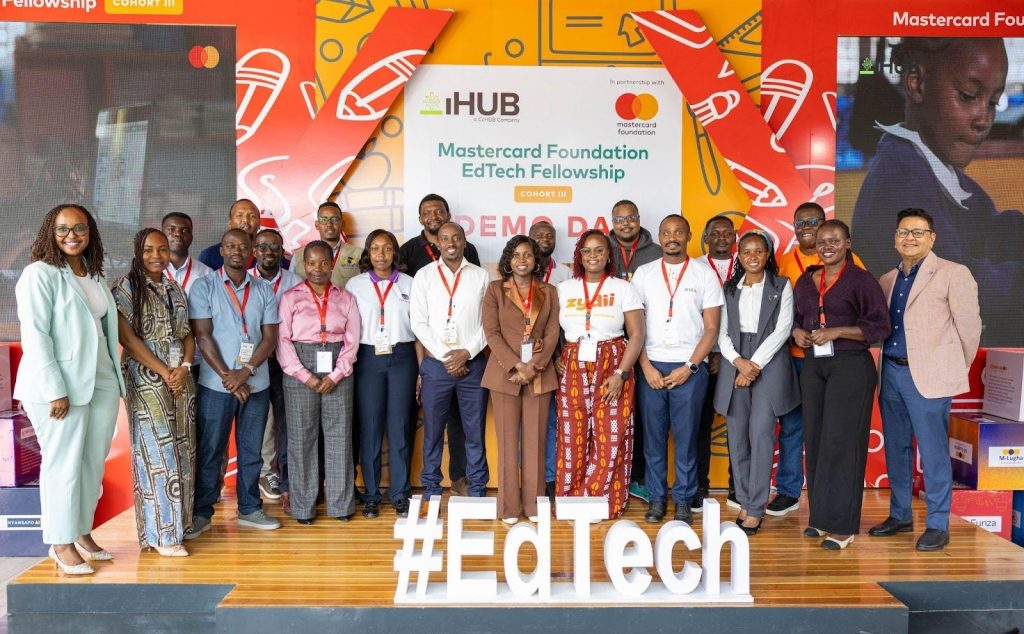
Twelve Kenyan education technology startups developing solutions for learners with disabilities, refugees and other underserved groups have been selected for the latest Mastercard Foundation EdTech Fellowship, reflecting growing investment in digital innovations aimed at making education more accessible.
The fourth cohort features 12 startups, with half focused on creating technologies for people living with disabilities, underscoring increasing efforts to bridge accessibility gaps in education through innovation.
Unlike previous editions that lasted eight months, the new fellowship will run for 18 months, allowing founders additional time to validate their products, measure impact and strengthen their business models.
Each startup will receive up to US$100,000 in equity-free funding, as well as technical support in product development, business strategy, communications and pilot implementation.
“Innovation delivers the greatest impact when it starts with learners who have long been left behind,” said Nissi Madu, Managing Partner at iHUB. “These founders are addressing some of education’s most persistent challenges with solutions built around inclusion.”
Among the selected ventures are DEAFHEALTH, AssistiveMath, Signvrse, Deaf Outreach Program, SmartSteamMinds Edtech and Chipurobo, which are developing assistive technologies, sign language platforms, accessible mathematics tools, specialised learning programmes and digital skills solutions for learners with disabilities.
Also Read: 15 Elephants At Amboseli Died Of Cyanide Poisoning After Eating Tomatoes From Nearby Farms
Another four startups, Neurollect Audread, JUZA AI Ltd, Ubuntu Universe Limited and RYEH CBO, are designing multilingual, AI-powered and offline learning technologies for refugees, displaced populations and underserved rural communities. Gwiji for Women and Tausi App are focused on expanding access to vocational training, entrepreneurship and digital skills for girls and young women.
The fellowship, implemented by iHUB in partnership with the Mastercard Foundation, has shifted its approach from supporting relatively established businesses to nurturing early-stage innovators tackling structural barriers to education.
One of the programme’s previous beneficiaries, M-Lugha, says the fellowship enabled it to expand its language-learning platform to more than 14,000 learners across 35 Kenyan counties, with its application now downloaded in 130 countries.
Wariko Waita, Director of the Centre for Innovative Teaching and Learning at the Mastercard Foundation, said the success of education technology should be judged by how effectively it expands access to learning, rather than simply digitising classrooms.