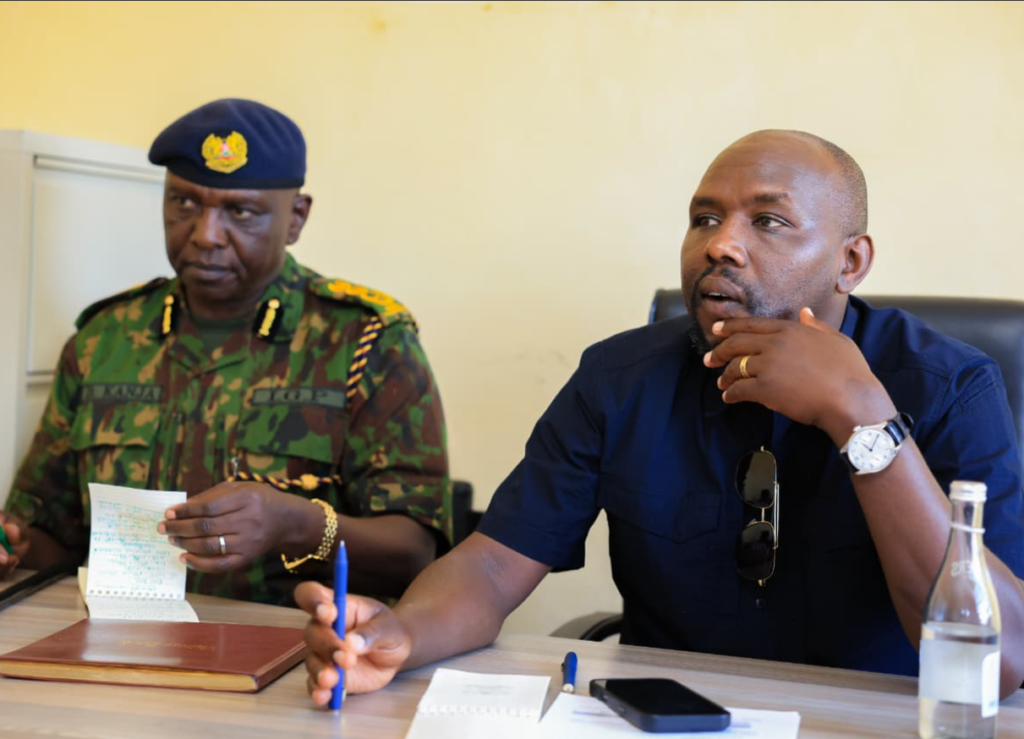
Interior Cabinet Secretary Onesimus Kipchumba Murkomen and Inspector General of Police Douglas Kanja are set to appear before the National Assembly’s Departmental Committee on Administration and Internal Security next week to address the country’s deteriorating security situation.
His appearance comes amid growing concern over a surge in politically instigated violence reported in several regions, where organised groups of youths have allegedly been hired to disrupt public gatherings, intimidate perceived opponents and, in some cases, engage in confrontations with security agencies.
The summons also follows an escalation in banditry attacks, particularly in pastoralist areas, where armed raiders have made away with large herds of cattle, camels, goats and sheep.
The incidents have not only resulted in significant economic losses for affected communities but have, at times, led to fatalities.
Members of the committee are expected to press the Interior ministry to outline concrete measures being taken to restore order, curb political violence and contain the persistent threat of banditry, which continues to undermine security and livelihoods in vulnerable parts of the country.
Speaking on the floor on Thursday, Narok West MP Gabriel Tongoyo, who chairs the Departmental Committee on Administration and Internal Security, acknowledged the gravity of the issue but urged patience ahead of a comprehensive ministerial statement.
“I do not want to pre-empt the minister’s response, but I want to assure the country that security agencies are actively addressing the situation,” he said, pointing to improved calm in parts of the North Rift.
“While we remain seized of emerging concerns in Meru and other parts of the country, I wish to affirm that our state agencies are equal to the task.
I urge Members of Parliament, particularly those available, to attend the session on Tuesday at 10am in the Mini Chamber to interrogate both the Cabinet Secretary and the Inspector-General of Police on these critical security issues,” Tongoyo added.
National Assembly Speaker Moses Wetang’ula directed that the Interior Cabinet Secretary appear before the committee on Tuesday to respond to the concerns raised by MPs.
He asked Members of Parliament who have been affected to come and explain their issues directly during the meeting.
This is expected to lead to a tense session because of the many ongoing security problems seen recently.
“So when the minister appears before you on Tuesday, members with issues, whether you are Samburu or Meru, go before the committee…the minister will be in the mini chamber with the committee and prosecute your case,” said Speaker Wetang’ula.
The urgency of the summons was emphasized by Samburu County Woman Representative Pauline Lenguris, who detailed a recent deadly attack in her county.
She told the House that armed bandits suspected to have originated from neighbouring Baringo County attacked Lorian village on April 13, killing a resident identified as Anthony and making away with more than 700 livestock.
“These incidents continue to disrupt livelihoods and heighten fear among communities,” she said, describing a pattern of violence that has led to deaths, displacement and destruction of property.
Lenguris demanded answers on the circumstances surrounding the attack, including what she termed as a failure by security agencies to prevent it, as well as measures being taken to apprehend perpetrators and recover stolen livestock.
She also called for immediate interventions to secure affected areas and long-term strategies to end cross-border cattle rustling in Samburu and neighbouring counties.
Lawmakers from affected regions painted a grim picture of a security apparatus struggling to contain banditry despite ongoing operations.
Turkana Central MP Joseph Namuar Emathe questioned the effectiveness of the Special Operations Group deployed in volatile, noting that attacks persist even with security personnel on the ground.
“Banditry is ongoing even when we have SOG on the ground… we are still experiencing death and loss of livelihood,” he said.
Igembe Central MP Daniel Karitho echoed the concerns, saying cattle rustlers continue to strike with impunity despite heightened operations.
“We are told operations are ongoing, but rustlers cross from different counties, kill our people and steal animals.
It appears as if someone is sleeping on the job,” he said.
Borabu MP Patrick Osero highlighted logistical challenges facing the Anti-Stock Theft Unit, arguing that lack of vehicles and equipment is undermining its effectiveness.
“In my constituency, I had to hire vehicles for officers to track stolen animals.
They are trained, but they are ill-equipped,” he said.
Samburu East MP Jackson Lekumontare described cattle rustling as having become “normalised,” with little follow-up to recover stolen livestock or support affected families.
Debate in the House also exposed growing tensions between communities, with some MPs trading accusations over the origins of banditry.
North Imenti MP Rahim Dawood linked livestock theft in Meru to routes passing through Isiolo into Samburu, while Buuri MP Mugambi Rindikiri cited lack of cooperation between county leaderships as a major impediment to tackling the menace.
However, other lawmakers cautioned against profiling entire communities.
Kilgoris MP Julius Sunkuli warned that cattle rustling cuts across ethnic lines and should not be politicised.
“It is not good to profile one community… these thieves are from everywhere. Let the minister tell us why they are not being arrested,” he said.
Wajir Woman Representative Fatuma Jehow and Marsabit Woman Representative Naomi Waqo described similar losses in their counties, underscoring the national scale of the crisis.
“This is not just a pastoralist issue, it is a national issue,” said Jehow, revealing that her constituents had lost over 25 camels in just over a month.
The debate laid bare widespread frustration among MPs, with many accusing security agencies of failing to decisively deal with banditry networks despite intelligence on their operations.
Tigania West MP John Mutunga claimed local administrators often know the perpetrators but little action is taken, while Nominated MP Dorothy Ikara emphasised the human cost of the violence.
“We are talking about the loss of human beings and livelihoods. This is a matter of national importance,” she said.
READ ALSO;
Court Stops Githunguri Affordable Housing Project Disputed By Kikuyu Elders