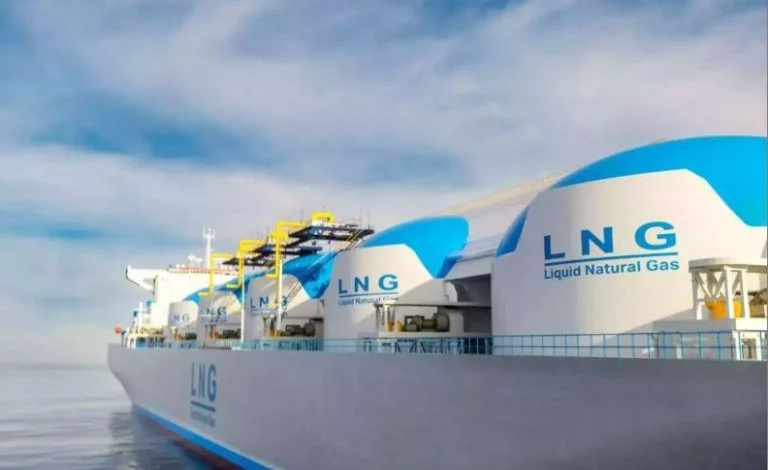
Tanzania is edging closer to finalising a KSh 5.4 trillion ($42 billion) liquefied natural gas (LNG) project expected to strengthen its position as a major energy exporter in East Africa.
Finance Minister Khamis Mussa Omar confirmed that negotiations for the project were nearing completion, despite an earlier target to sign a formal agreement before June 2026.
The development is spearheaded by energy companies Equinor and Shell, alongside ExxonMobil, Pavilion Energy, Medco Energi and the state-owned Tanzania Petroleum Development Corporation (TPDC).
Inside Tanzania’s KSh 5.4 Trillion Gas Project
The proposed LNG project aims to develop Tanzania’s offshore natural gas reserves, estimated at 47.13 trillion cubic feet. Most of the gas produced is intended for export markets, while a portion will be reserved for domestic consumption.
The investment forms a central part of Tanzania’s strategy to establish itself as a regional energy powerhouse, attracting foreign capital, creating employment opportunities and expanding government revenue.
Other developments are also reshaping East Africa’s energy landscape. Uganda is preparing to commence its first oil exports through Tanzania’s Port of Tanga in early 2027, potentially strengthening the region’s participation in international petroleum trade.
Tanzania has also set an ambitious target of increasing its electricity generation capacity to 8,000 megawatts by 2030, nearly doubling current levels.
The government further plans to raise the contribution of energy sources classified as clean to approximately 75 per cent, with hydropower, solar, wind and natural gas forming part of the strategy.
Tanzania Opens Domestic Bond Market to Foreign Investors
Away from the energy sector, Tanzania is implementing financial reforms designed to attract international investment and diversify its sources of funding.
The government has expanded foreign investors’ access to the domestic bond market, established a sovereign yield curve and encouraged companies to issue debt securities.
However, authorities have yet to decide whether to float an international bond. The central bank is also examining the potential risks associated with increased foreign participation in the domestic debt market.
Domestic revenue currently finances approximately two-thirds of Tanzania’s 62.3 trillion shilling ($23.7 billion) national budget, as development assistance from foreign partners continues to decline.
The government has also been considering a new lending arrangement with the International Monetary Fund (IMF), with a decision previously expected by June. Tanzania’s earlier $1.7 billion IMF programme concluded in July.
If finalised, the LNG agreement could unlock substantial foreign investment and provide the government with additional revenue to support infrastructure and other public development initiatives.
Tanzania and Uganda Advance Regional Energy Plans
Tanzania and Uganda are also advancing plans for a KSh 2.6 trillion ($20 billion) Tanga Regional Energy Hub.
A joint technical committee has handed over the Chongoleani project site to Worley Consulting Group to conduct feasibility studies.
Also Read: Man Impersonating Treasury PS Kiptoo Defrauds Businessman Of Sh7 Million In Nairobi
The proposed development is backed by the Uganda National Oil Company, TPDC and Vitol Bahrain. It will undergo preliminary assessments and is closely linked to the 1,443-kilometre East African Crude Oil Pipeline, which was approximately 93 per cent complete in late September 2026.
Meanwhile, Kenya is preparing plans for a KSh 2.1 trillion ($16 billion) refinery in Lamu County. The proposed facility is expected to process up to 700,000 barrels of crude oil daily, generate as much as 1,000 megawatts of electricity and create up to 60,000 direct and indirect jobs.
The competing investments have fuelled discussions about which country will emerge as East Africa’s leading petroleum hub.
However, Uganda National Oil Company official Tony Otoa has argued that the proposed Hoima and Tanga refineries could complement one another. Uganda’s potential direct investment in the planned Lamu refinery, however, remains uncertain.
As the projects advance, competition for investment and influence in the regional energy market is expected to intensify, with Tanzania seeking to capitalise on its natural gas reserves and strategic position along the Indian Ocean.