Projects that cannot demonstrate commercial viability will not qualify for financing under the proposed Sh340 billion National Infrastructure Fund (NIF), as the Treasury moves to ring-fence the facility from politically influenced investments.
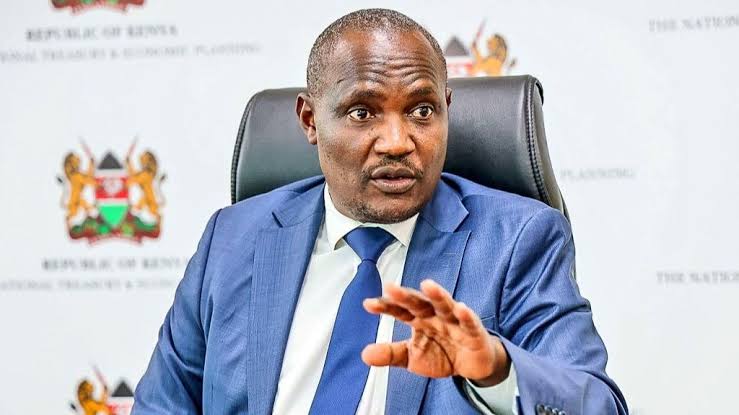
Treasury Cabinet Secretary John Mbadi told Parliament that the fund will operate on strict commercial principles, requiring investments to preserve capital, generate returns and attract private sector financing.
He said projects with strong social value but weak financial returns would continue relying on Exchequer funding rather than the NIF.
“A project may be socially important, but if it is not commercially viable, it is not a candidate for NIF,” Mbadi told the Finance and National Planning Committee.
The government is establishing the fund using proceeds from the privatisation and divestiture of state assets, with the aim of creating a new vehicle for financing infrastructure outside the normal national budget.
While the planned upgrade of Jomo Kenyatta International Airport is among the first projects seeking support from the fund, Mbadi said it will be subjected to the same commercial tests as every other proposal.
Under the proposed framework, projects must prove commercial viability, long-term financial sustainability and an ability to mobilise additional capital before receiving approval. They will also undergo technical and financial feasibility assessments, with the NIF board having the final say on investments.
To reinforce commercial discipline, the Treasury expects at least 60 per cent of a project’s financing to come from debt, meaning lenders must be satisfied that the investment can generate sufficient returns before providing non-recourse financing.
“If the project is not properly appraised and found to be commercially viable with adequate internal rates of return, investors will not be convinced,” Mbadi said.
Also Read: Kenya Targets UK Textile Market as Apparel Exports Eye Fresh Growth
The fund will prioritise investments in transport, energy, agriculture, livestock, water and irrigation, alongside other sectors approved under government policy.
To limit risk, no sector will account for more than 40 per cent of the fund’s portfolio, while investment in a single project will be capped at 20 per cent of the fund’s total value. Based on the current Sh340 billion estimate, the maximum exposure to one project would be Sh68 billion.
Each project will also be placed under a separate special purpose vehicle (SPV), shielding the wider fund from liabilities arising from individual projects.
Centum Investment CEO James Mworia told lawmakers that the fund’s risk would be limited to its equity stake in each SPV, while project debt would remain non-recourse to shareholders.
He added that money awaiting investment would be placed in government securities, with expected annual returns of about 12.5 per cent. The Treasury estimates this could generate around Sh38 billion annually to support new investments while preserving the fund’s capital.
According to Mworia, successful recycling of investments could eventually grow the National Infrastructure Fund to about Sh1 trillion.