Uganda has reinstated nationwide internet connectivity after last week’s general elections, but restrictions on social media platforms and mobile money services remain in place, extending financial disruption for millions of users.
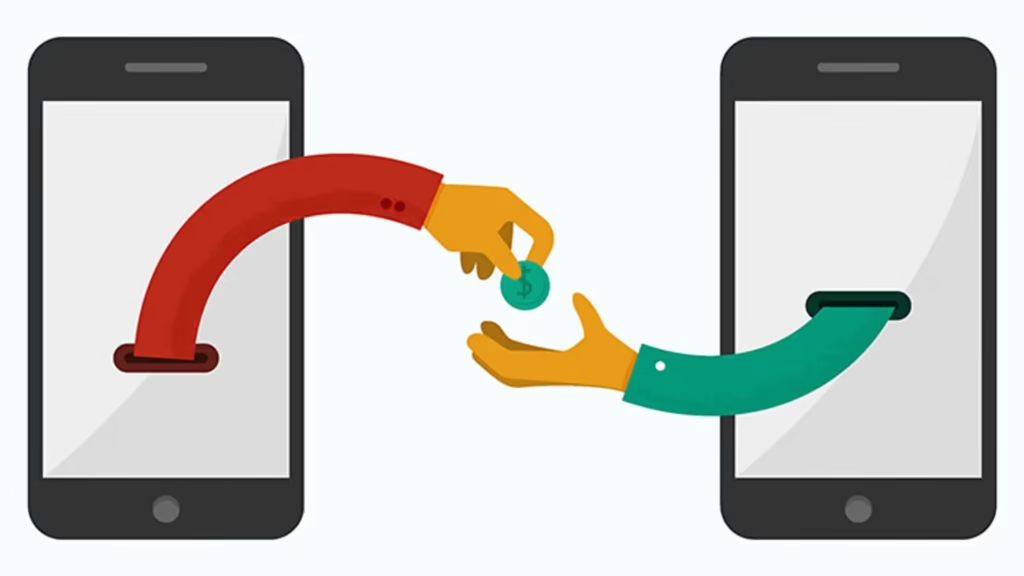
Media reports indicate that residents in the eastern border district of Busia are crossing into Kenya to access cash, as government-imposed curbs continue to limit domestic mobile money transactions. With most agents unable to operate, users are moving funds from Ugandan MTN and Airtel wallets to Kenyan platforms such as M-Pesa and Airtel Money, withdrawing Kenyan shillings and then exchanging them back into Ugandan currency.
While this workaround has helped households in border towns manage cash shortages, it has deepened losses for Ugandan mobile money agents and small traders who rely on daily commissions from frequent, low-value transactions. Telecom firms have confirmed that the restrictions remain in force under regulatory instructions, with no clear timeline for a full resumption of services.
“Mobile money restrictions are still in place in line with UCC directives. There is currently no defined timeline for full restoration. We regret the inconvenience caused,” MTN Uganda, the country’s largest telecom operator, said in a statement.
Also Read: Kenya Pushes KSh 25bn Debt Repayment to 2037 Through Bond Switch
In an economy where mobile money underpins everyday trade, transport and household spending, the continued inability to access funds has effectively locked many individuals and small businesses out of normal economic activity.
The Uganda Communications Commission (UCC) said internet access was partially restored after voting and tallying concluded, describing the five-day shutdown as a security measure aimed at curbing misinformation and preventing unrest during a politically sensitive period.
Uganda’s electoral commission announced on Saturday that long-serving President Yoweri Museveni won Thursday’s vote with 71.6 percent, while his main challenger, musician-turned-politician Robert Kyagulanyi, known as Bobi Wine, secured 24 percent.
Although core services such as web browsing, email, government portals, and access to news and educational sites are now available, social media platforms, messaging apps, and mobile money services operated by MTN and Airtel remain restricted.
UCC executive director Nyombi Thembo said the continued limits were intended to prevent misuse that could threaten public order. The regulator has also warned against using virtual private networks (VPNs) to bypass the restrictions, signalling tighter monitoring and the possibility of permanent disconnection for those who attempt to circumvent controls.
Pressure on the authorities has intensified after two lawyers filed a petition in the Ugandan High Court on Monday against the regulator and telecom companies, arguing that the shutdown lacked legal justification, violated constitutional rights, and caused widespread economic harm.
The legal challenge adds to growing domestic and regional criticism of internet shutdowns, which human rights groups say are increasingly used across Africa during elections and periods of political tension.
The blackout also followed a regulatory dispute with Starlink, the satellite internet provider owned by Elon Musk, which was ordered weeks before the election to halt operations over licensing issues.