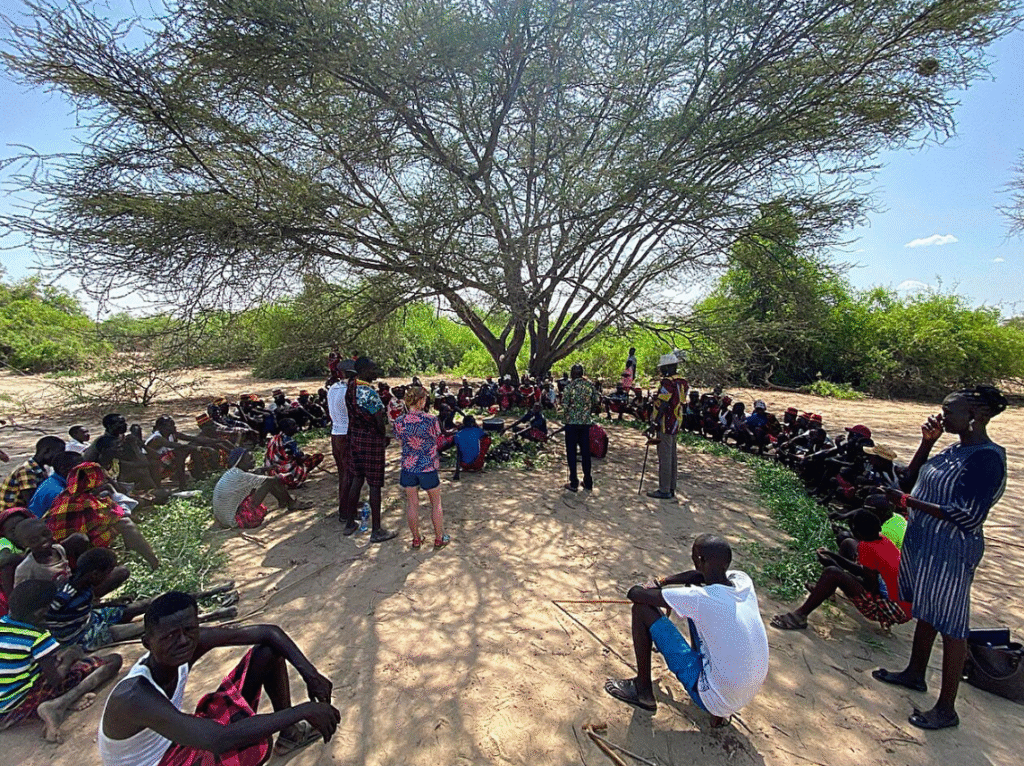
A groundbreaking international study conducted in partnership with the Turkana community of northern Kenya revealed how humans have genetically adapted to
survive in an extremely harsh environment.
The study, published in Science, shows that thousands of years of natural selection have shaped remarkable physiological adaptations in the Turkana, enabling them to thrive in a landscape defined by
extreme heat, water scarcity, and limited vegetation.
The research was conducted through the Turkana Health and Genomics Project (THGP), a collaborative initiative bringing together researchers from Kenya and the United States, including Kenya Medical
Research Institute (KEMRI), the Turkana Basin Institute (TBI), Vanderbilt University, and the University of California, Berkeley.
It combines genomics, anthropology, and biology, and is rooted in mutual respect and co-production of local knowledge to study how human populations adapt to extreme environments.
“Working with the Turkana has been transformative for this study,” said Dr. Sospeter Ngoci Njeru, co-PI and KEMRI’s Deputy Director, Centre for Community Driven Research.
“Their insights into their environment, lifestyle, and health have been essential to connecting our genetic findings to real-world biology and survival strategies.”
Through sequencing of 367 whole genomes and analysis of more than 7 million genetic variants, researchers identified several regions of the genome under natural selection.
Google Announces Shh1.1 Billion Funding For African Universities, Free AI Pro Student Plan
